Solving unreliable grid: Smart Solar Streetlight Systems…

SOLARTODO Editorial Team
Solar Energy & Infrastructure Expert Team
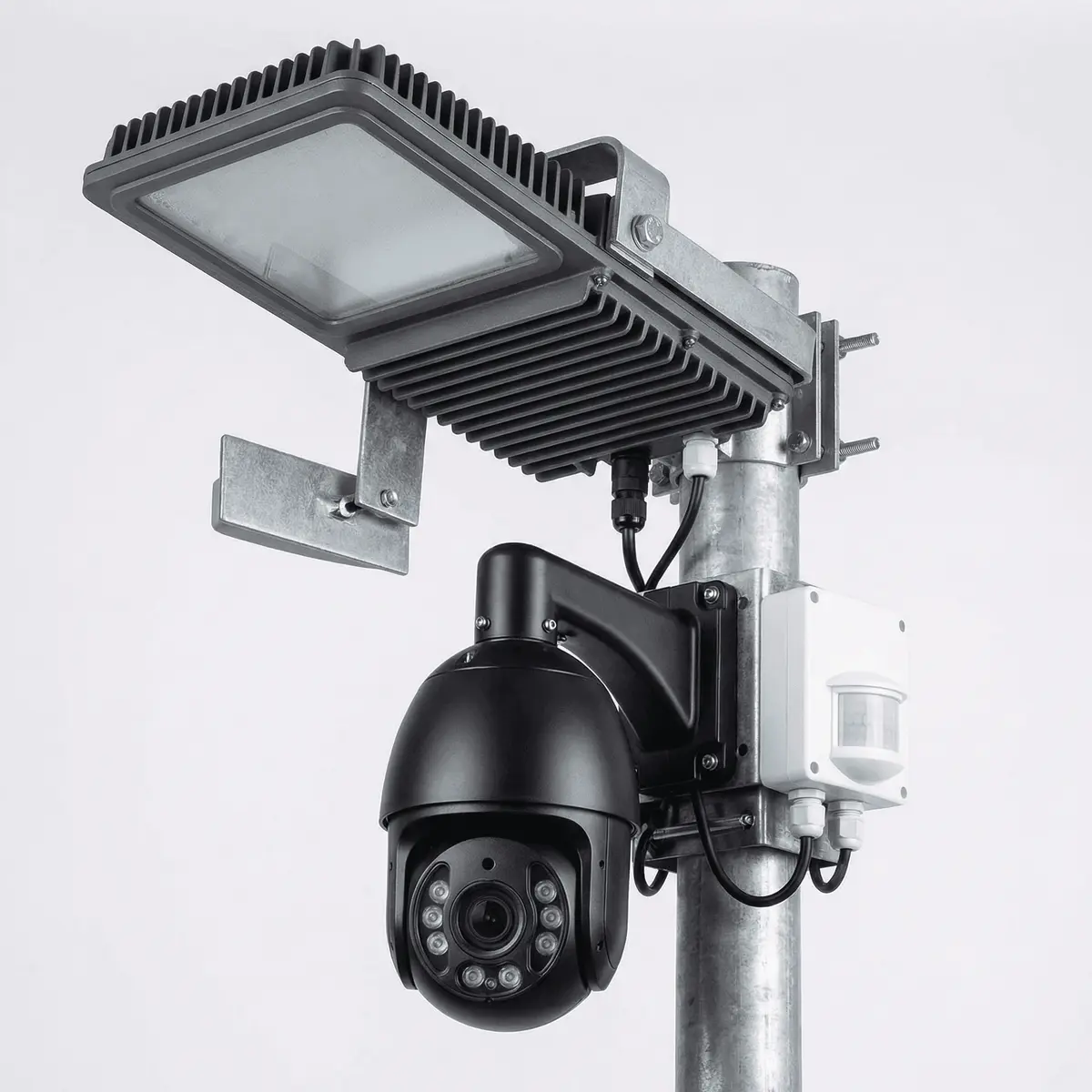
Watch the video
TL;DR
If the grid is unreliable, smart solar streetlights work best when the LED load, dimming schedule, PV module, and battery are sized as one system. Most projects target 8-12 hours of nightly lighting, 2-3 nights of autonomy, and 20-40% energy reduction through smart control. For B2B buyers, the biggest cost drivers are battery chemistry, autonomy days, pole function count, and EPC scope.
Smart solar streetlight systems solve unreliable-grid lighting by combining 80-200 W LED loads, 4-12 hour smart dimming profiles, and battery autonomy of 2-3 nights. Proper sizing cuts outage risk, lowers trenching by 30-45%, and supports 25-year pole life with IP66 protection.
Summary
Smart solar streetlight systems solve unreliable-grid lighting by combining 80-200 W LED loads, 4-12 hour smart dimming profiles, and battery autonomy of 2-3 nights. Proper sizing cuts outage risk, lowers trenching by 30-45%, and supports 25-year pole life with IP66 protection.
Key Takeaways
- Calculate nightly energy demand first: an 80 W LED running 12 hours uses about 0.96 kWh/day before controller and battery losses.
- Size battery autonomy at 2-3 nights for weak-grid roads, campuses, and parks to maintain lighting during repeated outages.
- Apply smart lighting control with 30-50% dimming in low-traffic hours to reduce battery capacity and PV size by 20-40%.
- Select LED luminaires at about 170 lm/W and IP66 protection to improve usable lux output and reduce maintenance intervals.
- Match pole height to use case: 8 m suits campus_park paths, 9 m suits commercial streets, and 10 m supports tunnel entrance applications.
- Compare integrated poles against separate assets because one smart pole can replace 4-6 field devices and reduce civil interfaces by 30-60%.
- Evaluate EPC pricing in three layers: FOB supply, CIF delivered, and turnkey EPC, with typical installed smart-pole budgets from USD 1,400 to 2,200 per unit.
- Verify compliance with IEC 60598, IEC 62722, UL 62133, and local wind-loading rules before procurement above 150 km/h design wind zones.
Why Smart Solar Streetlights Solve Unreliable Grid Problems
Smart solar streetlights maintain 8-12 hours of nightly lighting with 2-3 nights of battery autonomy, making them a practical answer where grid uptime falls below acceptable municipal service levels.
Unreliable distribution networks create three recurring failures for public lighting: blackouts, low voltage, and high maintenance dispatch frequency. On roads, parks, and commercial corridors, even a 2-4 hour evening outage can reduce visibility, increase security complaints, and disrupt traffic flow. A standalone or hybrid smart solar streetlight avoids dependence on unstable feeders because generation, storage, and control are local to each pole.
The main design logic is simple. The LED load, battery bank, solar module, controller, and dimming schedule must be sized as one electrical system rather than as separate catalog items. For example, an 80 W luminaire operating for 12 hours consumes 960 Wh/day, but the battery must support controller losses, temperature derating, and depth-of-discharge limits, so the practical storage requirement is higher than the nominal lamp wattage suggests.
According to the International Energy Agency, "digitalization can improve power system reliability and operational efficiency." That statement matters at the streetlight level because smart control reduces wasted runtime and gives operators fault visibility per pole. According to NREL (2024), solar resource and load-matching analysis remains the basis for reliable off-grid system sizing, especially where seasonal irradiance can vary by more than 20%.
SOLAR TODO uses this system view across integrated smart poles. In campus and park projects, the 8m Campus/Park Environmental Smart Streetlight combines an 80 W LED, AI camera, environmental sensor, WiFi module, and USB charging interface in one IP66 structure. In commercial corridors, SOLAR TODO also offers a 9 m Commercial Street 6-in-1 with 120 W LED lighting, 4K camera surveillance, display, WiFi, and public audio, reducing visible street furniture by up to 60% compared with separate assets.
System Design: Load Calculation, Smart Lighting Control, and Battery Sizing
Battery sizing for smart solar streetlights starts with daily watt-hour demand, then adds controller losses, battery derating, and 2-3 nights of autonomy to reach a usable storage target.
The most common procurement mistake is choosing battery capacity from a generic pole height or panel wattage instead of actual nightly energy use. A correct design starts with five numbers: LED wattage, operating hours, dimming schedule, days of autonomy, and allowable depth of discharge. If any one of these is missed, the system may work in month 1 but fail in cloudy periods or after 12-24 months of battery aging.
Step 1: Calculate daily energy demand
Daily energy demand is the LED power multiplied by runtime, adjusted by the dimming profile and controller efficiency. Sample deployment scenario (illustrative):
- 80 W LED at 100% for 5 hours = 400 Wh
- 80 W LED at 50% for 7 hours = 280 Wh
- Total LED energy = 680 Wh/day
- Add 8-12% controller and wiring losses = about 734-762 Wh/day
This is why smart lighting control matters. Without dimming, the same 80 W fixture over 12 hours would consume 960 Wh/day. With a staged profile, demand drops by roughly 21-29%, which directly reduces required battery Ah and PV module size.
Step 2: Size battery storage correctly
A practical battery formula is: battery usable energy = daily load x autonomy days. Battery nominal energy must then be divided by permitted depth of discharge and adjusted for temperature. For lithium iron phosphate systems using 80-90% depth of discharge, the nominal battery can be much smaller than lead-acid systems limited to 50% depth of discharge.
Sample deployment scenario (illustrative):
- Daily adjusted load = 750 Wh
- Autonomy = 3 nights
- Usable storage needed = 2,250 Wh
- If LiFePO4 DoD = 85%, nominal battery = about 2,647 Wh
- Add 10-15% aging and cold-weather margin = about 2.9-3.1 kWh
For a 12.8 V architecture, that means roughly 230-240 Ah. For a 25.6 V architecture, capacity falls to about 115-120 Ah, often improving cable efficiency. UL notes in UL 62133 battery safety guidance that rechargeable battery systems must be evaluated for electrical, thermal, and enclosure safety, which is especially relevant in sealed outdoor cabinets exposed to +55°C daytime conditions.
Step 3: Match PV module power to local solar resource
PV sizing must cover the average daily load during the worst practical solar month, not the best month. According to NREL (2024), solar production models should use site irradiance, system losses, and seasonal variation rather than annual averages alone. In many tropical and subtropical markets, using 4.0-5.5 peak sun hours as a planning range is more realistic than assuming 6.0 hours year-round.
Sample deployment scenario (illustrative):
- Daily adjusted load = 750 Wh
- Peak sun hours in design month = 4.2 h
- Total derating factor = 0.75
- Required PV = 750 / (4.2 x 0.75) = about 238 W
- Add 15-25% reserve = 275-300 W module array
This reserve is not excess. It helps recover battery state of charge after 1-2 cloudy days and offsets dust, high module temperature, and aging. The International Renewable Energy Agency states, "Renewables are increasingly the most economic option for new power generation," and that principle applies to distributed lighting where diesel backup and trench-fed grid reinforcement are expensive per kilometer.
Smart Pole Configurations and Application Fit
Integrated smart poles reduce field devices from 4-6 assets to 1 pole while combining lighting, sensing, and communications functions suited to 8 m, 9 m, and 10 m deployment classes.
When the grid is weak, lighting projects often become broader infrastructure projects. Operators want light, surveillance, environmental data, and public communication from the same pole because each extra mast adds foundations, wiring, and maintenance records. That is why integrated smart pole selection should be tied to road class, mounting height, and service function rather than only luminaire wattage.
For campus_park deployments, SOLAR TODO's 8m Campus/Park Environmental Smart Streetlight is a practical reference. It uses an 80 W LED luminaire, 1 AI camera, 1 professional environmental sensor, 1 WiFi access module, and 1 USB charging interface, with IP66 protection, 170 lm/W efficacy, operation from -40°C to +55°C, and a 25-year design life. This configuration is useful where pedestrian safety and environmental monitoring matter more than high-speed traffic illumination.
For retail streets and mixed-use roads, SOLAR TODO's 9m Commercial Street 6-in-1 with Display adds a 120 W LED, 4K camera, environmental sensing, LED display, WiFi, and IP public audio on a 9 m octagonal tapered steel pole. The recommended spacing is 28 m, and wind resistance exceeds 150 km/h. Compared with separate lighting, CCTV, speaker, air-quality, and signage assets, this can reduce trenching interfaces by 30-40%.
For threshold lighting near tunnels, the 10m Tunnel Entrance Smart Pole uses a 200 W LED module at 170 lm/W, producing about 34,000 lumens, with AI camera, environmental sensor, and LED display in a 10 m galvanized octagonal pole. The design target is 300 lux in the critical approach zone, with IP66 protection and a 25-year structural design life. While this variant is usually grid-powered due to the high 200 W load and strict luminance transition needs, its control logic illustrates how smart dimming and monitoring improve reliability in critical zones.
Comparison and Selection Guide
A well-selected smart solar streetlight balances 80-120 W lighting loads, 2-3 nights of autonomy, and pole height of 8-10 m to fit the road class, solar resource, and monitoring requirement.
The table below gives a practical comparison for buyers evaluating integrated smart poles and battery-sizing implications.
| Configuration | Typical Use Case | Pole Height | LED Load | Integrated Functions | Battery Sizing Complexity | Typical Installed Budget |
|---|---|---|---|---|---|---|
| 8m Campus/Park Environmental | campus_park paths, plazas, green corridors | 8 m | 80 W | LED + AI camera + environmental sensor + WiFi + USB | Moderate; 2.5-3.5 kWh often practical with smart dimming | USD 1,400-1,600/unit |
| 9m Commercial Street 6-in-1 | commercial streets, campuses, mixed-use roads | 9 m | 120 W | LED + 4K camera + sensor + display + WiFi + audio | Higher; 3.5-5.0 kWh often needed off-grid | Project dependent |
| 10m Tunnel Entrance Smart Pole | tunnel entrance and threshold lighting | 10 m | 200 W | LED + AI camera + environmental sensor + display | High; often better as grid or hybrid due to 300 lux target | USD 1,800-2,200/unit |
Selection should also consider standards and environmental stress. IEC 60598 covers luminaire safety, IEC 62722 addresses LED luminaire performance, and wind loading must match local civil rules or equivalent structural standards. In coastal or desert regions, fluorocarbon coating, galvanized steel, and IP66 enclosure protection are not optional details; they materially affect corrosion rate and maintenance cost over 10-25 years.
A second comparison is control strategy. Fixed-output systems are simple but oversize the battery. Motion-aware or time-scheduled dimming can reduce nightly energy by 20-40%, which often lowers battery cost more than any single hardware substitution. For procurement managers, that means the controller algorithm deserves the same review attention as the panel and battery datasheets.
EPC Investment Analysis and Pricing Structure
EPC turnkey delivery for smart solar streetlights typically includes design, supply, foundations, erection, commissioning, and control setup, with volume discounts of 5-15% and payback commonly driven by avoided cabling, diesel backup, and outage maintenance.
For B2B buyers, pricing must be compared in three layers because a low supply price does not equal a low installed cost. The first layer is FOB Supply, covering pole, luminaire, PV module, battery, controller, brackets, and integrated smart modules. The second layer is CIF Delivered, which adds freight and insurance to the destination port. The third layer is EPC Turnkey, which includes engineering, procurement, civil works, erection, commissioning, testing, and handover documents.
A practical pricing framework for integrated smart poles is:
- FOB Supply: hardware-only price, best for buyers with local installation teams
- CIF Delivered: useful where import logistics are centralized
- EPC Turnkey: best where civil coordination, control setup, and commissioning risk must be transferred to one contractor
Known reference budgets from SOLAR TODO product configurations help anchor planning. The 8m Campus/Park Environmental Smart Streetlight fits a turnkey range of about USD 1,400-1,600 per installed unit. The 10m Tunnel Entrance Smart Pole fits about USD 1,800-2,200 per installed unit. Final pricing depends on battery chemistry, PV wattage, control modules, foundation design, and local labor.
Volume guidance for project budgeting:
- 50+ units: about 5% discount
- 100+ units: about 10% discount
- 250+ units: about 15% discount
Payment terms commonly used in export projects are 30% T/T with 70% against B/L, or 100% L/C at sight. Financing is available for large projects above USD 1,000K. For quotations, EPC scope review, or financing discussion, contact [email protected] or call +6585559114.
ROI should be measured against the real alternative, not against a zero-cost baseline. If the conventional option requires trenching, armored cable, transformer extension, and repeated outage dispatches, the smart solar option can produce a shorter payback than a simple hardware comparison suggests. Sample deployment scenario (illustrative): replacing a grid-fed lighting layout with integrated smart solar poles can avoid 30-45% of civil interfaces and reduce maintenance dispatch points from 5 assets to 1 asset location, improving total cost of ownership over 5-8 years depending on local labor and fuel costs.
Implementation Risks, Maintenance, and Procurement Checks
Reliable smart solar streetlights depend on correct battery thermal design, IP66 enclosure integrity, and commissioning checks that verify charging, dimming, and autonomy under real 12-hour night profiles.
Most field failures come from four causes: undersized batteries, poor solar orientation, weak enclosure sealing, and unverified control settings. A system that looks acceptable on paper can still fail if the battery compartment overheats above +55°C, if the controller low-voltage disconnect is set incorrectly, or if shading cuts module output by 10-20% during the design month. Commissioning should therefore include night testing, battery state-of-charge logging, and fault alarm verification.
Maintenance planning is simpler than with grid-fed multi-asset streetscapes, but it is not zero. A practical inspection cycle is every 6-12 months for lens cleaning, fastener torque checks, cable gland inspection, battery health review, and controller log download. According to IEA and municipal digital infrastructure studies cited in product guidance, networked monitoring can lower outage response times by more than 20% compared with non-connected assets.
Procurement teams should request these documents before approval:
- Luminaire compliance to IEC 60598 and performance data aligned with IEC 62722
- Battery safety and cycle-life data, preferably with UL 62133 or equivalent test basis
- Pole material and coating details, including galvanized steel and corrosion protection
- Wind-load design data for the project wind zone, especially above 150 km/h
- Controller logic showing dimming schedule, low-voltage disconnect, and telemetry functions
- GA drawings, foundation loads, and cable diagrams for EPC review
SOLAR TODO typically supports inquiry, offline quotation, and project-level technical clarification rather than online checkout. That matters for smart solar streetlights because battery sizing, pole spacing, and control logic must be checked project by project. For engineers and procurement managers, the right question is not only "What is the unit price?" but also "What autonomy, dimming profile, and lux target does this price assume?"
FAQ
Q: What is a smart solar streetlight system? A: A smart solar streetlight system is an outdoor lighting unit that combines a PV module, battery, LED luminaire, controller, and often sensors or communications modules on one pole. Typical LED loads range from 80 W to 120 W, and the system uses scheduled or adaptive dimming to extend battery autonomy during weak-grid or off-grid operation.
Q: How do smart solar streetlights help in areas with unreliable grid power? A: They keep lighting local to each pole, so blackouts on the distribution feeder do not immediately switch the road dark. With 2-3 nights of battery autonomy and 8-12 hours of nightly runtime, they maintain service during repeated outages and reduce dependence on trenching, transformers, and unstable low-voltage lines.
Q: How do I calculate the right battery size for a solar streetlight? A: Start with daily watt-hour demand, then multiply by 2-3 autonomy nights and divide by allowable depth of discharge. For example, a 750 Wh/day load with 3 nights of autonomy and 85% LiFePO4 depth of discharge needs about 2.65 kWh nominal storage before adding 10-15% design margin.
Q: Why is smart lighting control important for battery sizing? A: Smart control reduces energy use during low-traffic hours, which directly lowers required battery and PV capacity. An 80 W luminaire running 12 hours at full output uses 960 Wh/day, but a staged profile such as 5 hours at 100% and 7 hours at 50% can cut demand to about 680 Wh before system losses.
Q: What battery chemistry is usually better for smart solar streetlights? A: LiFePO4 is usually preferred because it supports higher usable depth of discharge, longer cycle life, and lower maintenance than lead-acid. In many designs, 80-90% usable discharge is practical for LiFePO4, while lead-acid often needs to stay near 50%, which increases nominal battery size and cabinet weight.
Q: How many autonomy days should I specify in procurement documents? A: For weak-grid or off-grid projects, 2-3 nights is a common baseline. If the site has long cloudy seasons, heavy shading risk, or critical security requirements, 3 nights is safer, but it raises battery cost and cabinet size. The correct value should be tied to the worst solar month, not the annual average.
Q: What standards should a smart solar streetlight system meet? A: Buyers should check luminaire safety under IEC 60598, LED performance under IEC 62722, battery safety under UL 62133 or equivalent, and local structural rules for wind loading. If the pole includes communications, cameras, or displays, enclosure rating such as IP66 and surge protection data should also be reviewed before award.
Q: How does an integrated smart pole compare with separate lighting and CCTV assets? A: An integrated pole can replace 4-6 separate devices, which reduces foundations, brackets, and maintenance points. In practical street projects, this can lower trenching interfaces by about 30-40% and reduce visible street furniture by up to 60%, depending on how many functions are consolidated into one pole.
Q: What is included in EPC turnkey delivery for smart solar streetlights? A: EPC turnkey delivery usually includes design review, hardware supply, foundations, erection, wiring, controller setup, testing, and commissioning. Buyers should confirm whether pole foundations, battery programming, telemetry setup, lux verification, and as-built drawings are included, because those items often determine whether the system performs as specified after handover.
Q: What are the typical prices and payment terms for these systems? A: Installed budgets depend on configuration, but reference ranges include about USD 1,400-1,600 per unit for an 8 m campus_park smart pole and USD 1,800-2,200 per unit for a 10 m tunnel entrance pole. Common export terms are 30% T/T plus 70% against B/L, or 100% L/C at sight, with financing available above USD 1,000K.
Q: How often do smart solar streetlights need maintenance? A: A 6-12 month inspection interval is practical for most municipal and campus sites. The service visit should check module cleanliness, lens condition, fastener torque, battery health, cable glands, controller logs, and communications status. Networked monitoring can shorten fault response time because the operator sees low-battery or luminaire alarms before a night outage is reported.
Q: When should I choose hybrid or grid-assisted smart poles instead of fully solar poles? A: Hybrid or grid-assisted designs are often better when lighting loads are high, such as 200 W tunnel entrance applications with 300 lux targets, or where shading limits PV area. They also make sense when communications, displays, and surveillance loads are continuous and battery-only sizing would become too large or too costly.
References
- NREL (2024): PVWatts and solar resource methodology used for estimating PV output, derating, and seasonal production.
- IEC 60598 (2024): Luminaire safety requirements for general outdoor lighting equipment.
- IEC 62722 (2023): LED luminaire performance requirements relevant to output, endurance, and photometric reporting.
- IEA (2023): Digitalization and power system reliability guidance supporting smart control and operational visibility.
- IRENA (2024): Renewable power cost and deployment analysis showing distributed renewables as an economic supply option.
- UL 62133 (2024): Safety requirements for portable sealed secondary cells and batteries, commonly referenced for lithium battery evaluation.
- CIE (2019): Tunnel lighting practice relevant to entrance-zone luminance transition and visibility requirements.
Conclusion
Smart solar streetlight systems deliver reliable 8-12 hour lighting with 2-3 nights of autonomy when battery sizing, PV sizing, and dimming logic are calculated together rather than purchased as separate parts.
For unreliable-grid roads, campuses, and commercial corridors, SOLAR TODO smart poles offer the strongest value when the project targets 20-40% energy reduction through control, IP66 outdoor durability, and integrated functions that cut civil interfaces by 30-60%.
About SOLARTODO
SOLARTODO is a global integrated solution provider specializing in solar power generation systems, energy-storage products, smart street-lighting and solar street-lighting, intelligent security & IoT linkage systems, power transmission towers, telecom communication towers, and smart-agriculture solutions for worldwide B2B customers.
About the Author

SOLARTODO Editorial Team
Solar Energy & Infrastructure Expert Team
SOLAR TODO is a professional supplier of solar energy, energy storage, smart lighting, smart agriculture, security systems, communication towers, and power tower equipment.
Our technical team has over 15 years of experience in renewable energy and infrastructure, providing high-quality products and solutions to B2B customers worldwide.
Expertise: PV system design, energy storage optimization, smart lighting integration, smart agriculture monitoring, security system integration, communication and power tower supply.
Cite This Article
SOLARTODO Editorial Team. (2026). Solving unreliable grid: Smart Solar Streetlight Systems…. SOLARTODO. Retrieved from https://solartodo.com/knowledge/solving-unreliable-grid-smart-solar-streetlight-systems-implementation-with-smart-lighting-control-and-battery-sizing
@article{solartodo_solving_unreliable_grid_smart_solar_streetlight_systems_implementation_with_smart_lighting_control_and_battery_sizing,
  title = {Solving unreliable grid: Smart Solar Streetlight Systems…},
  author = {SOLARTODO Editorial Team},
  journal = {SOLARTODO Knowledge Base},
  year = {2026},
  url = {https://solartodo.com/knowledge/solving-unreliable-grid-smart-solar-streetlight-systems-implementation-with-smart-lighting-control-and-battery-sizing},
  note = {Accessed: 2026-10-13}
}
Published: April 24, 2026 | Available at: https://solartodo.com/knowledge/solving-unreliable-grid-smart-solar-streetlight-systems-implementation-with-smart-lighting-control-and-battery-sizing
Subscribe to Our Newsletter
Get the latest solar energy news and insights delivered to your inbox.
View All Articles