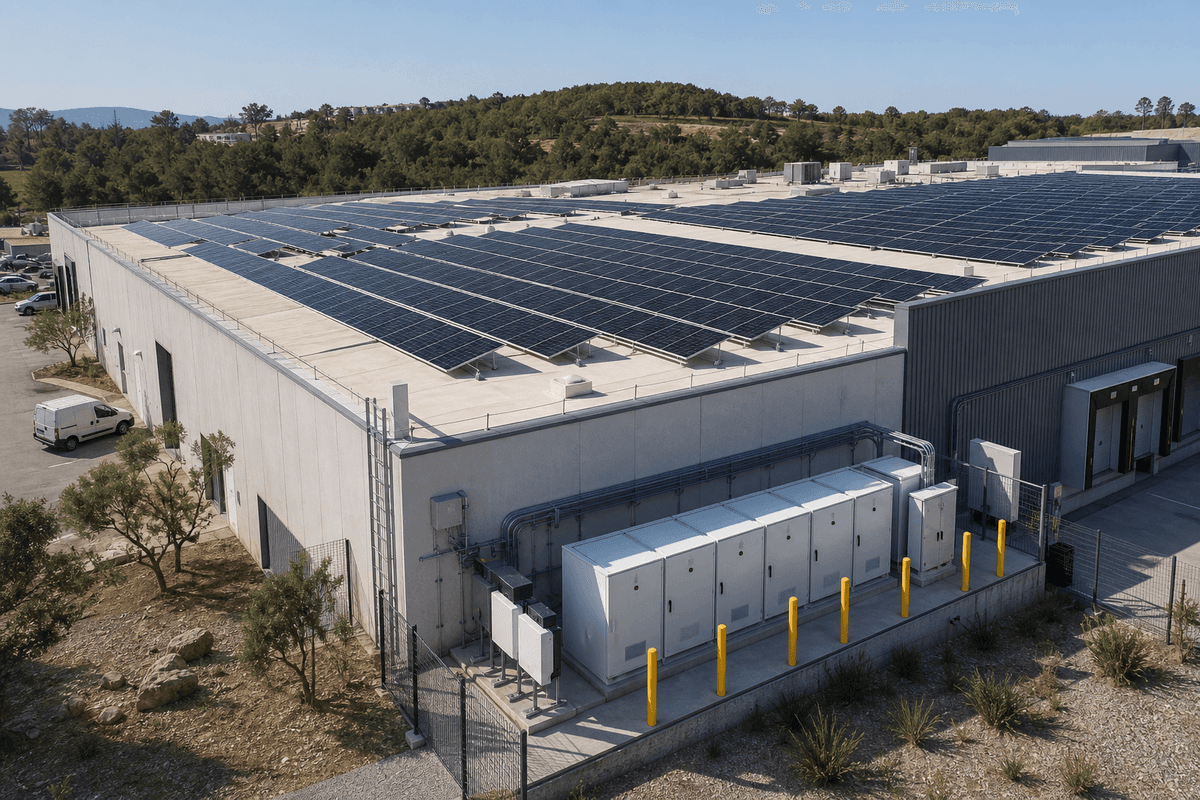
100kW + 200kWh Commercial Solar+Storage System - Peak Shaving & Energy Independence
Key Features
- 100kWp N-type TOPCon solar array with 22.5-24.5% module efficiency and 30-year warranty at 87.4% capacity retention
- 200kWh LFP battery system with 6,000+ cycle life and 15-year warranty for peak shaving and backup power
- 158 MWh estimated annual generation offsetting 110 tons of CO₂ emissions per year
- 4-7 year payback period with $180,000-$240,000 investment range, LCOE below $0.03/kWh in optimal locations
- Full IEC 61215, UL 1703, UL 9540 certification with 25+ year design life and grid-compliant IEEE 1547 inverters
The SOLARTODO 100kW + 200kWh Commercial Solar+Storage System is designed for commercial and industrial applications, priced between $180,000 and $240,000. It features a high-efficiency 100kWp solar array with up to 24.5% efficiency and a robust 200kWh battery system. Certified under IEC and UL standards, it ensures reliability and safety for long-term energy independence.
Description
SOLARTODO 100kW + 200kWh Commercial Solar+Storage System
Unlocking Energy Independence for Commercial Enterprises
The SOLARTODO 100kW + 200kWh Commercial Solar+Storage System represents the pinnacle of decentralized energy generation and management technology, engineered for commercial and industrial (C&I) applications. This fully integrated solution combines a high-output 100kWp solar photovoltaic (PV) array with a robust 200kWh battery energy storage system (BESS), providing businesses with a strategic asset for reducing operational costs, ensuring energy resilience, and achieving corporate sustainability goals. By harnessing the power of N-type TOPCon solar modules and Tier-1 Lithium Iron Phosphate (LFP) battery chemistry, this system delivers a Levelized Cost of Energy (LCOE) competitive with utility-scale power, with projections reaching below $0.03/kWh in optimal locations by 2026. It is designed to meet stringent international standards, including IEC 61215 and UL 9540, ensuring reliability and safety for a design life exceeding 25 years.
Photovoltaic Power Generation Subsystem
At the core of the system's generation capacity is a 100kWp array of next-generation N-type Tunnel Oxide Passivated Contact (TOPCon) solar modules. These modules, featuring 700W+ power class ratings, leverage large-format 210mm N-type silicon wafers and advanced passivated contact cell technology to achieve mass-production efficiencies between 22.5% and 24.5%. This high efficiency minimizes the required installation footprint, making it ideal for commercial rooftops or limited ground space. The system is projected to occupy an area of approximately 500-550 square meters.
The bifacial nature of the TOPCon cells allows for an additional energy yield, or "bifacial gain," of 10-20% by capturing reflected light from the rear side of the module, further enhancing the total annual energy production. Performance is guaranteed with an industry-leading 30-year linear power warranty, ensuring the array retains at least 87.4% of its nominal power capacity after three decades. The degradation is minimal, with a first-year rate of less than 1.0% and subsequent annual degradation below 0.4%, a significant improvement over traditional P-type PERC technologies.
The PV array is coupled with high-efficiency commercial string inverters, which convert the DC output to grid-compliant AC power. These inverters operate at over 98.5% efficiency and conform to critical grid interconnection standards such as IEEE 1547 and IEC 62116, ensuring seamless and safe integration with the local utility grid. The entire array is mounted on a robust fixed-tilt structure, engineered from corrosion-resistant materials to withstand diverse weather conditions for over 25 years.
Energy Storage Subsystem (ESS)
The 200kWh Energy Storage Subsystem is the cornerstone of the system's flexibility and financial return. It utilizes Lithium Iron Phosphate (LFP) battery chemistry, renowned for its superior safety, thermal stability, and long cycle life, capable of over 6,000 cycles at 80% depth of discharge. This translates to a warrantied lifespan of over 15 years under typical daily cycling operations. The BESS is housed in a containerized, climate-controlled enclosure, ensuring optimal performance and longevity.
A sophisticated Battery Management System (BMS) and Power Conversion System (PCS) govern the ESS. The BMS provides real-time monitoring and control of individual cell voltages, temperatures, and state-of-charge, preventing thermal runaway and optimizing performance. The hybrid PCS, with a continuous power rating of 100kW, manages the bidirectional flow of energy, enabling a suite of advanced applications:
- Peak Shaving: Discharge the battery during periods of high facility demand to avoid expensive peak demand charges from the utility, which can account for up to 50% of a commercial electricity bill.
- Load Shifting (Energy Arbitrage): Store low-cost solar energy generated during midday and discharge it during evening hours when utility rates are highest, maximizing the economic value of the solar generation.
- Demand Response: Participate in utility or grid operator programs by curtailing grid consumption or exporting stored energy, generating additional revenue streams.
- Backup Power: In the event of a grid outage, the system can automatically island itself and provide up to 200kWh of uninterruptible power to critical loads, ensuring business continuity.
System Performance and Financial Viability
Based on typical meteorological year data for a mid-latitude location, the 100kW PV system is estimated to generate approximately 158 MWh of clean energy annually, achieving a capacity factor of around 18%. This output directly translates to significant electricity bill savings and can offset approximately 110 metric tons of CO₂ emissions per year, equivalent to removing 24 gasoline-powered passenger vehicles from the road.
The integration of the 200kWh BESS dramatically improves the project's financial metrics. With an estimated price range of $180,000 to $240,000, the system offers a compelling payback period, often between 4 to 7 years, depending on local utility rates, demand charge structures, and available incentives. The robust design and low degradation rates ensure a reliable return on investment over the 25+ year operational life of the system, hedging against volatile and rising energy costs.
Technical Specifications
| System Capacity (DC) | 100kWp |
| Battery Energy Capacity | 200kWh |
| Battery Power Rating | 100kW |
| Module Type | N-type TOPCon Bifacial |
| Module Efficiency | 22.5-24.5% |
| Module Power Rating | 700W |
| Number of Modules | 143pcs |
| Array Configuration | Fixed-Tilt Ground/Roof Mount |
| Inverter Type | Commercial String + Hybrid PCS |
| Inverter Efficiency | >98.5% |
| Battery Chemistry | Lithium Iron Phosphate (LFP) |
| Battery Cycle Life | >6000cycles @ 80% DOD |
| Est. Annual Generation | 158MWh |
| Capacity Factor | 18% |
| System Area Required | 500-550m² |
| CO₂ Offset | 110tons/year |
| Estimated Payback Period | 4-7years |
| LCOE (Optimal Location) | <0.03$/kWh |
| Module Warranty | 30 years @ 87.4% |
| Inverter Warranty | 10years |
| Battery Warranty | 15years |
| Design Life | >25years |
Price Breakdown
| Item | Quantity | Unit Price | Subtotal |
|---|---|---|---|
| 700W N-type TOPCon Bifacial Solar Modules | 143 pcs | $154 | $22,022 |
| Commercial String Inverter (100kW) | 1 pcs | $5,000 | $5,000 |
| Fixed-Tilt Mounting System (Commercial Grade) | 1 set | $8,000 | $8,000 |
| 200kWh LFP Battery Energy Storage System | 1 set | $80,000 | $80,000 |
| Hybrid Inverter/PCS (100kW Bidirectional) | 1 pcs | $15,000 | $15,000 |
| Battery Management System (BMS) | 1 set | $8,000 | $8,000 |
| DC Cables, Combiner Box & Connectors | 1 set | $2,000 | $2,000 |
| AC Infrastructure & Distribution Panel | 1 set | $3,000 | $3,000 |
| Energy Management System & Monitoring | 1 system | $2,500 | $2,500 |
| Grid Connection Equipment & Transfer Switch | 1 set | $3,500 | $3,500 |
| Installation Labor & Commissioning | 1 project | $25,000 | $25,000 |
| Engineering, Permitting & Documentation | 1 project | $8,000 | $8,000 |
| Total Price Range | $180,000 - $240,000 | ||
Frequently Asked Questions
What is the physical footprint of the entire system?
How does the N-type TOPCon technology benefit my investment?
Can the system operate during a grid outage?
What kind of maintenance is required for this system?
What certifications and standards does the system meet?
Certifications & Standards


Data Sources & References
- •Fraunhofer ISE Photovoltaics Report 2024
- •NREL PVWatts Calculator 2025
- •IEC 61215:2021 Terrestrial PV Modules - Design Qualification
- •UL 9540:2020 Energy Storage Systems and Equipment
- •IEEE 1547-2018 Standard for Interconnection and Interoperability
Interested in this solution?
Contact us for a customized quote based on your specific requirements.
Contact Us