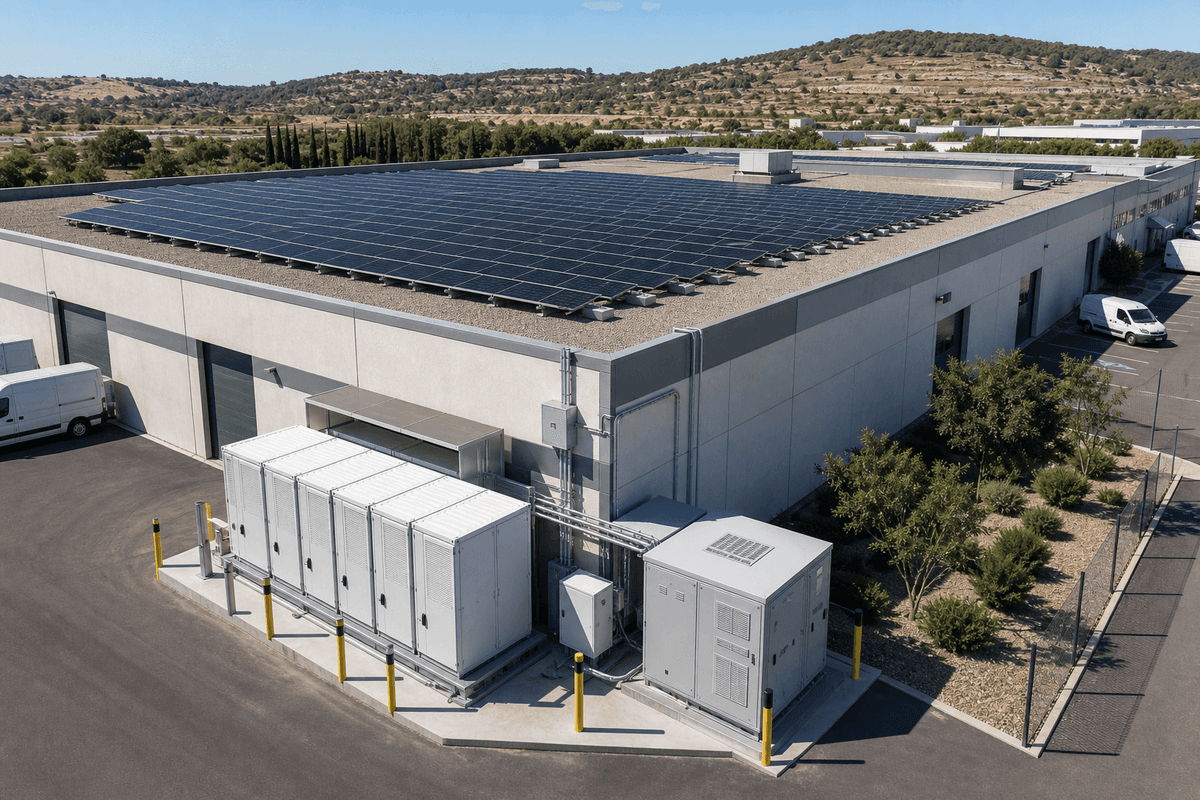
100kW + 200kWh Commercial Solar+Storage System - N-Type TOPCon with LFP Battery
Key Features
- 100kWp N-type TOPCon solar array with 22.5-24.5% module efficiency and 700W+ class panels
- 200kWh LFP battery storage with 6,000+ cycle life and 15-year warranty
- Generates 150 MWh annually, offsetting 105 metric tons of CO₂ emissions per year
- Payback period of 4-6 years with LCOE below $0.03/kWh in optimal locations
- 30-year solar warranty (87.4% output guarantee) with <0.4% annual degradation
The SOLARTODO 100kW + 200kWh Commercial Solar+Storage System is designed for C&I applications, featuring a high-efficiency N-type TOPCon solar array with 22.5% to 24.5% efficiency. Priced between $180,000 and $240,000, it meets IEC and TÜV certifications, ensuring reliability and safety for facilities like manufacturing plants and data centers.
Description
SOLARTODO 100kW + 200kWh Commercial Solar+Storage System: The Apex of Energy Independence
Introduction: Powering the Future of Commerce
The SOLARTODO 100kW + 200kWh Commercial Solar+Storage System represents a paradigm shift in decentralized energy generation and management for commercial and industrial (C&I) applications. This fully integrated solution combines a high-output 100kWp solar photovoltaic (PV) array with a robust 200kWh Battery Energy Storage System (BESS), engineered to deliver unparalleled energy resilience, significant operational savings, and a substantial reduction in carbon footprint. Designed for facilities such as manufacturing plants, data centers, large retail outlets, and agricultural operations, this system provides a reliable, 24/7 power supply by harnessing solar energy during the day and storing it for use during peak hours, at night, or during grid outages. By leveraging cutting-edge N-type TOPCon solar technology and the market-leading safety of Lithium Iron Phosphate (LFP) batteries, this solution ensures a Levelized Cost of Energy (LCOE) competitive with, and often lower than, traditional utility rates, with projections showing LCOE figures falling below $0.03/kWh in optimal locations by 2026.
The Photovoltaic Powerhouse: 100kWp TOPCon Array
The foundation of the system is a 100kWp solar array built upon the next generation of photovoltaic technology: Tunnel Oxide Passivated Contact (TOPCon) cells. This technology is rapidly dominating the market, projected to hold over 60% market share by 2025, due to its superior efficiency and performance characteristics.
Advanced N-type TOPCon Modules
Our system utilizes premium N-type TOPCon modules, achieving mass production efficiencies between 22.5% and 24.5%. We specify 700W+ class modules, such as the Trina Solar Vertex N series, which leverage large 210mm N-type silicon wafers. This advanced cell structure features a tunneling oxide layer and a polysilicon layer on the rear side, which significantly reduces surface recombination losses—a primary limiting factor in older PERC technology. This results in a higher open-circuit voltage (Voc) and fill factor, boosting overall module power.
Furthermore, the bifacial nature of these cells allows for an additional energy gain of 10-20% from the rear side by capturing reflected and diffuse light from the mounting surface (albedo). This makes the system exceptionally productive, especially when installed over reflective rooftops or ground cover. The modules are certified to rigorous international standards, including IEC 61215 (Design Qualification and Type Approval) and UL 1703 (Flat-Plate Photovoltaic Modules and Panels), ensuring they meet the highest levels of safety, quality, and reliability.
Unmatched Durability and Longevity
N-type TOPCon technology offers a significant advantage in long-term performance. The modules exhibit a first-year power degradation of less than 1.0% and a subsequent annual degradation rate of under 0.4%. This superior stability is backed by a 30-year linear power performance warranty, guaranteeing at least 87.4% of the nominal power output after three decades of operation. The system's physical integrity is ensured by a robust fixed-tilt mounting structure, engineered from high-grade aluminum and galvanized steel to withstand extreme weather conditions for over 25 years, compliant with regional building codes and structural standards.
The Energy Core: 200kWh LFP Battery Storage
At the heart of the system's flexibility and resilience is the 200kWh Battery Energy Storage System (BESS). We have standardized on Lithium Iron Phosphate (LFP) chemistry, the industry benchmark for safety and longevity in stationary storage applications.
Superior LFP Chemistry
LFP (LiFePO4) batteries offer a distinct safety advantage over other lithium-ion chemistries like Nickel Manganese Cobalt (NMC). The phosphate-based cathode is chemically and thermally more stable, virtually eliminating the risk of thermal runaway, even if punctured or overcharged. This makes LFP the ideal choice for commercial installations where safety is paramount. The BESS is designed for high performance, capable of a 0.5C continuous charge/discharge rate (100kW) and a cycle life exceeding 6,000 cycles at an 80% Depth of Discharge (DoD). This translates to a warrantied operational lifespan of over 15 years under typical daily cycling scenarios.
Intelligent Energy Management
The BESS is governed by a sophisticated Battery Management System (BMS) that complies with standards like IEEE 1547 for grid interconnection. The BMS provides real-time monitoring of cell voltage, temperature, and state of charge, ensuring optimal performance and safety. It enables advanced energy management strategies:
- Peak Shaving: Discharge the battery to offset high-demand charges from the utility, reducing electricity bills by up to 30%.
- Load Shifting: Store low-cost solar energy generated during the day and use it during expensive evening peak hours.
- Backup Power: In the event of a grid outage, the BESS can seamlessly island the facility, providing uninterrupted power to critical loads.
System Integration and Performance
The seamless integration of the solar array, inverters, and BESS is managed by a central energy management system (EMS). High-efficiency, three-phase string inverters, compliant with IEC 62116 for anti-islanding protection, convert the DC power from the solar panels to AC for immediate use or storage. The system is projected to generate approximately 150 MWh of clean energy annually, offsetting over 105 metric tons of CO₂ emissions each year. With a minimal footprint of approximately 500-600 square meters, the system offers an attractive payback period of 4-6 years in many markets, making it a financially sound investment in sustainable energy.
Technical Specifications
| System Capacity | 100kWp |
| Battery Storage Capacity | 200kWh |
| Module Type | N-type TOPCon Bifacial |
| Module Power Class | 700W+ |
| Module Efficiency | 23.5% |
| Battery Chemistry | LiFePO4 (LFP) |
| Battery Cycle Life | 6000cycles @ 80% DoD |
| Array Configuration | Fixed-Tilt Ground/Roof Mount |
| Estimated Annual Generation | 150MWh |
| Capacity Factor | 17% |
| System Footprint Area | 550m² |
| Annual CO₂ Offset | 105metric tons |
| Payback Period | 4-6years |
| Levelized Cost of Energy (LCOE) | 0.028$/kWh |
| Module Warranty | 30 years (87.4% output) |
| Inverter Warranty | 10years |
| Battery Warranty | 15years |
| Operating Temperature Range | -40 to +85°C |
| Maximum System Voltage | 1500VDC |
| Grid Connection | 3-Phase 400/480V AC |
Price Breakdown
| Item | Quantity | Unit Price | Subtotal |
|---|---|---|---|
| 700W N-type TOPCon Bifacial Solar Modules | 143 pcs | $154 | $22,022 |
| 100kW Three-Phase String Inverters | 2 units | $2,500 | $5,000 |
| Fixed-Tilt Mounting System (Aluminum/Steel) | 1 set | $8,000 | $8,000 |
| 200kWh LFP Battery Energy Storage System | 1 system | $80,000 | $80,000 |
| Battery Management System (BMS) & EMS | 1 system | $12,000 | $12,000 |
| DC Cables, Combiner Box & Connectors | 1 set | $2,000 | $2,000 |
| AC Infrastructure & Distribution Panel | 1 set | $3,000 | $3,000 |
| Monitoring & Communication System | 1 system | $1,500 | $1,500 |
| Installation Labor & Commissioning | 1 project | $18,000 | $18,000 |
| Grid Connection & Permitting | 1 project | $3,500 | $3,500 |
| Shipping & Logistics | 1 shipment | $4,500 | $4,500 |
| Engineering Design & Documentation | 1 project | $5,000 | $5,000 |
| Warranty & Technical Support (5 years) | 1 package | $6,000 | $6,000 |
| Total Price Range | $180,000 - $240,000 | ||
Frequently Asked Questions
What is the expected lifespan of the complete system?
How does the system perform during cloudy days or grid outages?
What are the primary financial benefits of installing this system?
What kind of maintenance does the system require?
How does N-type TOPCon technology compare to older PERC technology?
Certifications & Standards

Data Sources & References
- •NREL PVWatts Calculator 2025
- •IEC 61215:2021 Standard
- •IEEE 1547-2018 Standard
- •Trina Solar Vertex N Series Datasheet 2025
- •BNEF Lithium-ion Battery Price Survey 2025
Interested in this solution?
Contact us for a customized quote based on your specific requirements.
Contact Us