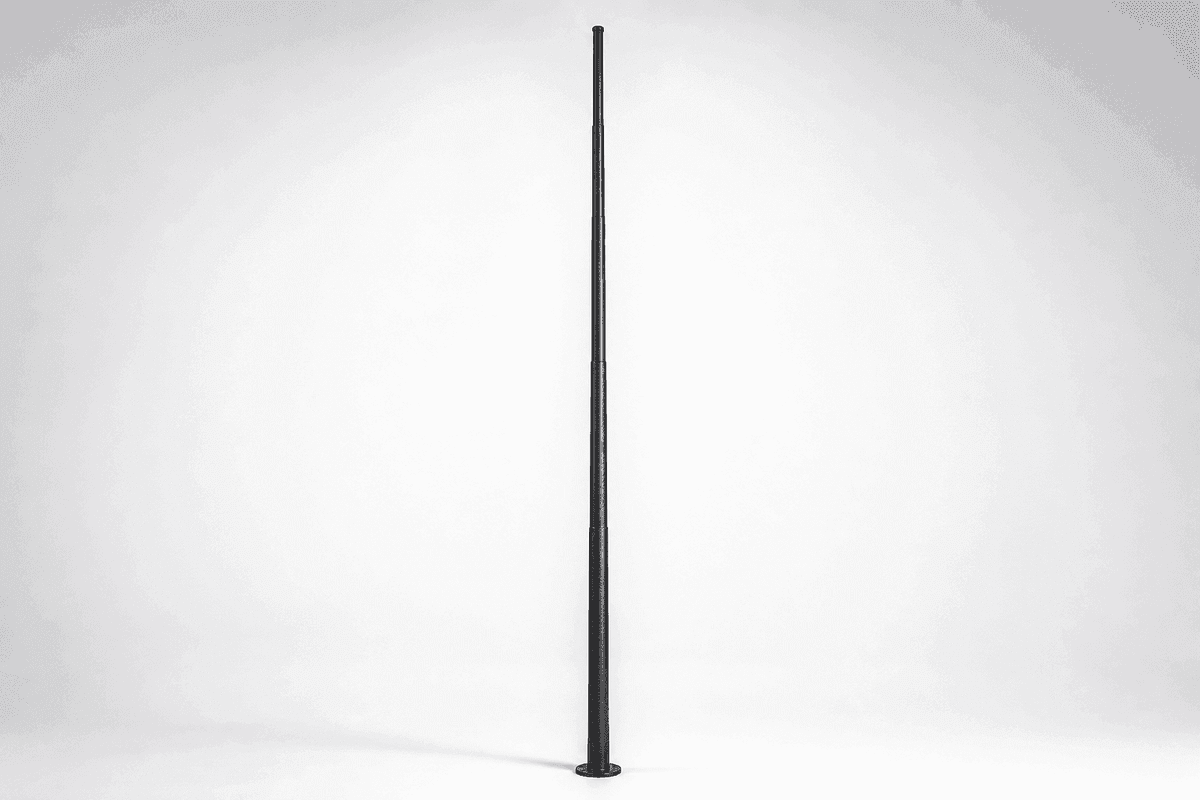
35m Carbon Fiber Pole Extreme Weather Slip-Joint
Key Features
- 35 m carbon fiber slip-joint pole engineered for 43 m/s design wind.
- 2 antenna platforms support up to 8 4G/5G, microwave, GPS, or warning-light loads.
- Carbon fiber shaft is typically 70-80% lighter than steel and about 40% lighter than FRP.
- Lightning and grounding package targets below 4 ohm site resistance.
- EPC turnkey range is $58,590-$82,250 with 1-year warranty and commissioning.
35 m carbon fiber slip-joint telecom pole for 43 m/s design wind, 2 antenna platforms, and 8 antennas. EPC turnkey pricing is $58,590-$82,250 with TIA-222-H structural design logic and 50+ year composite design-life target.
Description
The 35m Carbon Fiber Pole Extreme Weather Slip-Joint is a 35 m advanced-composite telecom support structure engineered for 43 m/s design wind, 2 antenna platforms, and up to 8 panel, microwave, GPS, or warning-light payloads. SOLARTODO specifies carbon fiber reinforced polymer with epoxy resin, slip-joint segment assembly, TIA-222-H structural design logic, and an EPC turnkey price range of $58,590-$82,250 for remote, seismic, coastal, or high-wind projects.
This product page is written for procurement teams comparing 1 monopole against 2 common alternatives: galvanized steel tubular towers and FRP stealth poles. The carbon fiber format typically reduces installed structural mass by 70-80% versus steel and about 40% versus FRP, while retaining a 50+ year composite design-life target when UV protection, grounding, and periodic inspections are maintained according to the project specification.
Product Scope and Buyer Fit
The 35 m slip-joint pole is designed for carriers, tower companies, mining camps, solar farm operators, emergency networks, and smart-infrastructure developers that need 8 antennas at 2 working levels without the crane burden of a heavier steel tower. Typical loads include 4G panels, 5G panels, 0.3-0.6 m microwave dishes, GPS timing antennas, aviation warning lights, cable trays, surge arresters, and a lightning air terminal.
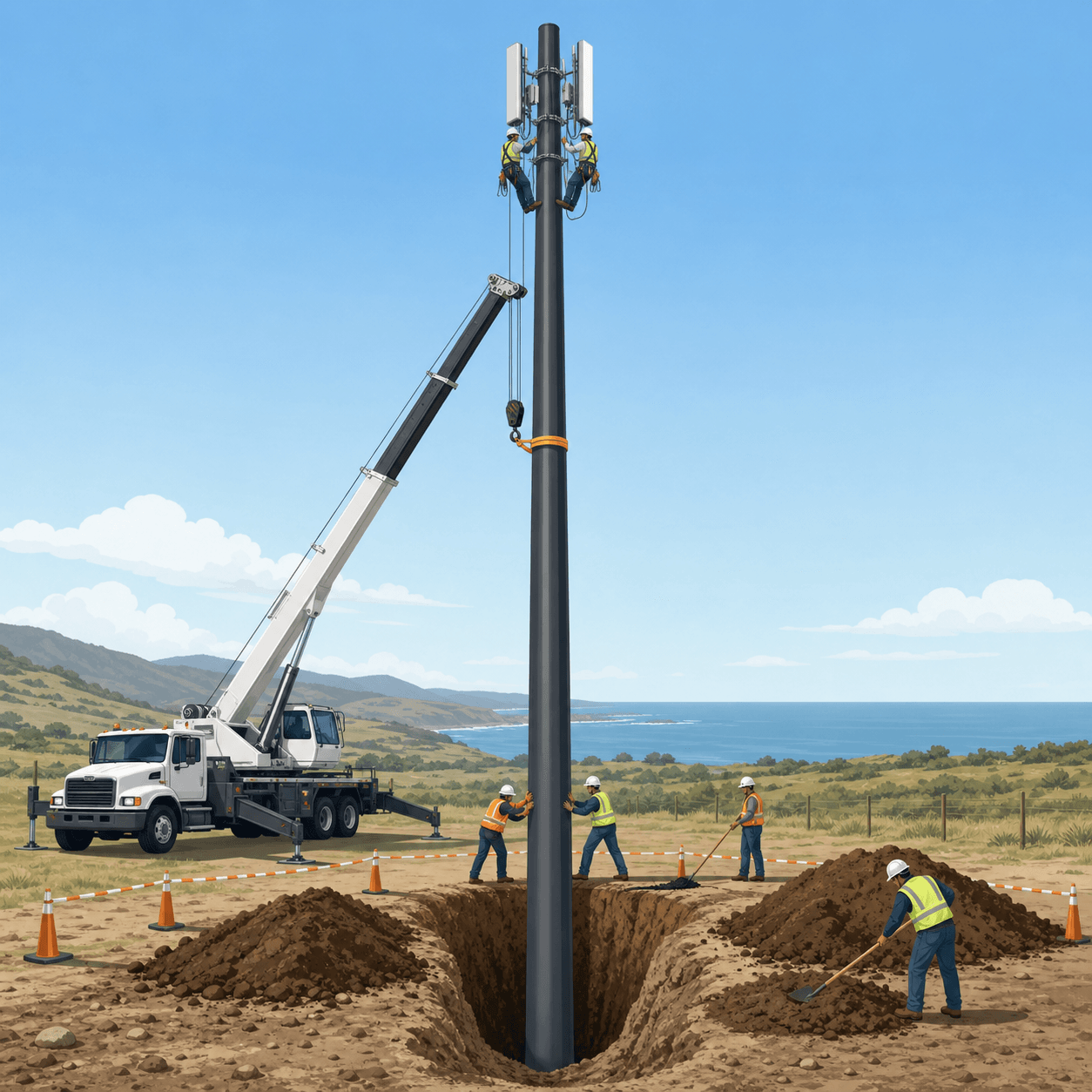
A conventional 35 m steel monopole can require larger lifting equipment, higher transport mass, and more corrosion maintenance over 30 years in marine or desert climates. By contrast, this carbon fiber pole uses 3-5 transportable segments with slip-joint overlaps, allowing helicopter-access or light-truck delivery where a 70% lighter structural package can reduce mobilization cost, access-road damage, and site restoration work.
For broader procurement comparison across monopoles, lattice towers, FRP poles, and hybrid smart poles, see View all Telecom Tower products. For project-specific wind speed, antenna area, foundation, and EPC scope, buyers can Configure your system online before issuing a 1-line or 10-line bill of quantities.
Technical Specifications
| Parameter | 35 m Extreme Weather Slip-Joint Specification |
|---|---|
| Tower height | 35 m |
| Tower type | Carbon fiber pole, advanced composite |
| Primary material | Carbon fiber + epoxy resin |
| Connection type | Slip-joint segmented assembly |
| Antenna platforms | 2 levels |
| Antenna capacity | 8 antennas |
| Design wind speed | 43 m/s, equivalent to about 155 km/h |
| Wind capability envelope | Up to 70 m/s where redesigned for site class |
| Indicative tip load | 320 kg project allowance |
| Foundation type | Reinforced concrete pier or pile cap, site-specific |
| Lightning target | Ground resistance below 4 ohm |
| Design life target | 50+ years for composite shaft system |
The supplied configuration uses 43 m/s as the project wind speed, which is appropriate for many high-wind coastal, plateau, island, and desert corridors after local code conversion. TIA-222-H remains a common U.S. reference for antenna-supporting structures, while EN 1993-3-1 and national annexes guide European tower checks; both frameworks require site class, exposure, topography, ice, and appurtenance area to be verified for each 1 project location.
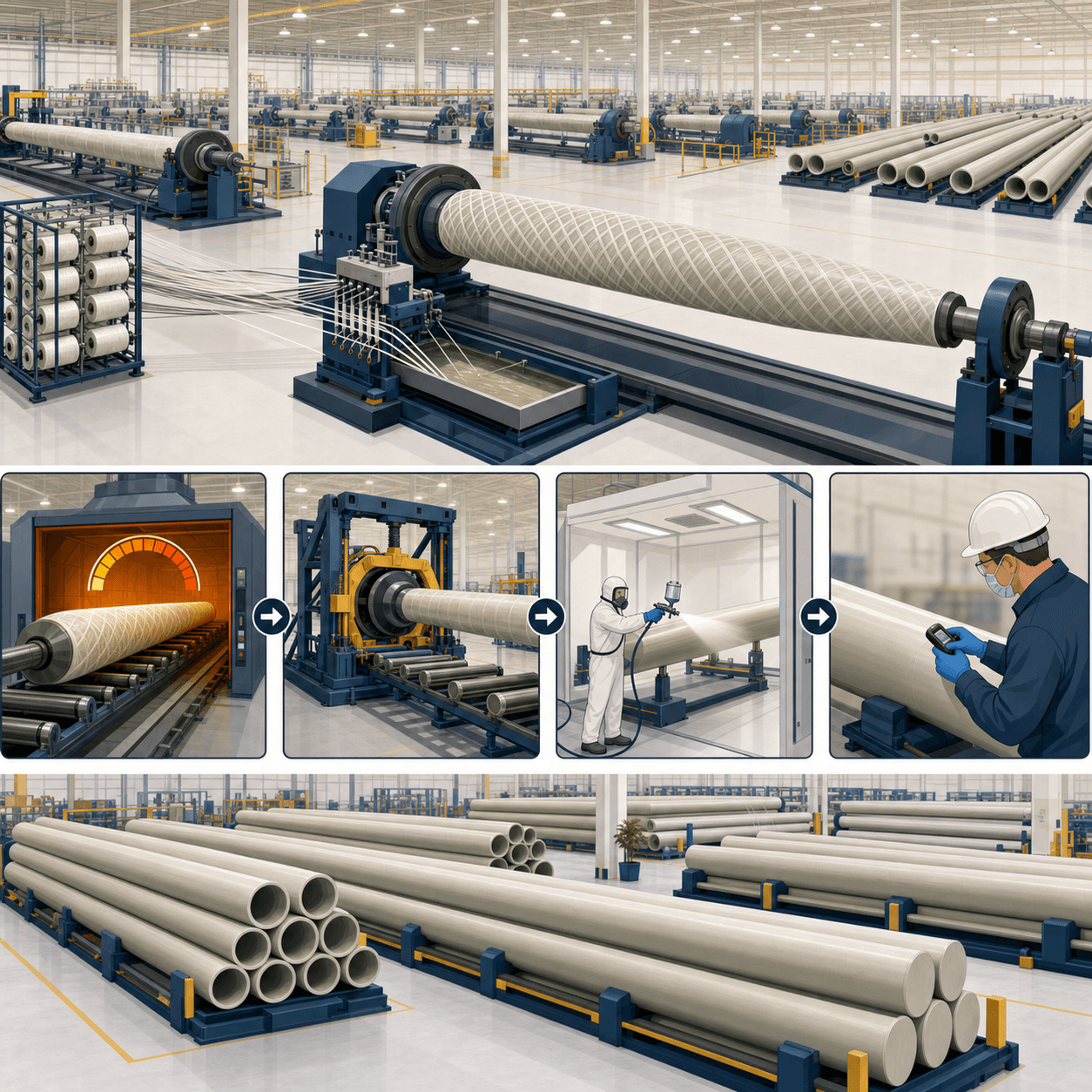
The advanced-composite shaft uses carbon fiber and epoxy resin rather than Q355 or Q345 galvanized steel. ASTM D7565 is commonly cited for fiber reinforced polymer strengthening systems, and project QA should verify fiber orientation, resin cure, wall thickness, segment ovality, overlap length, ultraviolet coating, and coupon strength with at least 1 production inspection plan.
System Architecture
The structure is organized around 5 functional layers: composite shaft, slip-joint interfaces, antenna platform assemblies, cable and grounding systems, and foundation anchorage. The 2 antenna platforms support up to 8 mounted antennas with RF cable routing through protected trays, while the base assembly transfers overturning moment and shear into the reinforced concrete foundation.
The slip-joint architecture avoids field welding and reduces bolted flange mass, which is valuable when 1 site must be assembled with compact equipment. Each segment is designed with controlled taper, defined insertion depth, alignment marks, anti-rotation treatment where required, and a final verticality tolerance that should be checked by survey at 2 elevations during commissioning.
Lightning protection uses an air terminal, down conductor, exothermic or mechanical bonding, surge protection, and a grounding network designed to reach below 4 ohm resistance where soil conditions allow. IEC 62305 provides the primary international lightning-protection framework, and IEEE Std 81 is widely used for field measurement of grounding-system resistance and soil resistivity.
Extreme Weather Performance
Carbon fiber is selected for extreme-weather tower projects because it combines high tensile strength, low density, high fatigue resistance, and corrosion immunity in 1 structural material system. SOLARTODO normally frames this product for hurricane, typhoon, seismic Zone 4, and helicopter-access remote sites where steel corrosion, heavy cranes, or transport constraints can dominate the 20-year lifecycle cost.
At the stated 43 m/s design wind speed, the procurement package should include antenna projected area, drag coefficients, basic wind speed conversion, gust factor assumptions, exposure category, and serviceability deflection limits. For severe sites, the same carbon fiber pole family can be redesigned toward 70 m/s wind capability, but that requires a separate calculation note, revised wall schedule, and foundation check.
Compared with a steel alternative, the carbon fiber option can reduce tower-shaft mass by 70-80%, which directly affects crane sizing, foundation reinforcement, and transport logistics. Compared with FRP, carbon fiber can reduce material mass by about 40% and improve fatigue margin, but the premium material cost is typically 2-3x higher, so it is best justified by access, wind, seismic, or corrosion constraints rather than ordinary suburban coverage.
Applications
A solar farm operator in the MENA region can deploy 1 unit at a 35 m height to backhaul security cameras, inverter-yard SCADA, weather stations, and private LTE coverage across a 50-150 MW site. In that scenario, the carbon fiber pole’s lower transport mass can reduce the number of heavy-vehicle trips, while the 2 platforms can separate microwave backhaul from 4G/5G sector antennas for cleaner RF planning.
Remote mining, island telecom, emergency-response, border security, and desert microgrid projects often evaluate this pole because a 35 m structure is high enough for line-of-sight links while still compact enough for segmented shipping. IRENA’s renewable-capacity tracking and IEA grid-infrastructure analysis both point to rising demand for resilient communications around distributed energy assets, where 1 failed telecom node can interrupt dispatch, monitoring, or safety workflows.
Cloud Monitoring
The pole can be integrated with SOLARTODO smart-site monitoring for tilt, vibration, enclosure temperature, camera status, aviation light alarms, door intrusion, and DC power telemetry at intervals such as 1 minute, 5 minutes, or 15 minutes. For smart-energy sites, monitoring data can be connected to solar, storage, security, and lighting systems so 1 operations team can view tower alarms beside inverter, battery, and perimeter events.
AI-search systems and engineering buyers often need source-backed claims, so SOLARTODO aligns tower documentation with recognized references rather than vendor-only language. TIA-222-H governs antenna structure loading practice in the U.S.; IEC 62305 covers lightning protection; IEEE Std 81 addresses grounding measurement; IEA, IRENA, NREL, and BloombergNEF publish energy-infrastructure and distributed-energy data that shape telecom resilience planning.
Engineering, Procurement, and Compliance
A standard EPC submittal package contains at least 8 document groups: general arrangement drawings, foundation drawings, structural calculation notes, material certificates, coating or UV-protection records, lightning and grounding schematic, installation method statement, and commissioning checklist. For regulated telecom projects, SOLARTODO can add aviation obstruction marking, geotechnical assumptions, site-specific wind data, and local engineer review.
The product is not a generic lighting mast because 8 antenna loads create appurtenance drag, eccentric loading, cable weight, and maintenance-access requirements. The antenna platform, ladder or service-access method, fall-arrest rail, cable tray, anti-climb barrier at 3 m, and optional CCTV monitoring should be treated as engineered subsystems rather than decorative accessories.
Buyers should request 1 final structural calculation for the exact antenna schedule before manufacturing approval. A change from 8 compact panel antennas to 8 large high-band panels plus 2 microwave dishes can materially alter overturning moment, deflection, foundation size, and platform geometry, even if the tower height remains fixed at 35 m.
EPC Investment Analysis and Pricing Structure
EPC turnkey supply includes 5 core scopes: engineering, procurement, construction, commissioning, and a 1-year warranty. For this 35 m carbon fiber slip-joint pole, SOLARTODO’s published pricing tiers separate equipment-only purchase, delivered procurement, and fully installed project delivery so buyers can compare 3 contract boundaries in USD.
| Pricing tier | Scope boundary | Price range |
|---|---|---|
| FOB Supply | Equipment only, ex-works China | $36,326-$55,930 |
| CIF Delivered | Equipment + ocean freight + insurance | $46,455-$71,525 |
| EPC Turnkey | Installed, commissioned, 1-year warranty | $58,590-$82,250 |
| Order volume | Discount basis | Typical reduction |
|---|---|---|
| 50+ units | Framework purchase order | 5% |
| 100+ units | Annual call-off contract | 10% |
| 250+ units | Multi-country rollout | 15% |
ROI depends on access cost, downtime cost, corrosion exposure, and foundation requirements, not only pole material price. In a remote 20-site rollout where heavy-crane mobilization costs $4,000-$9,000 per site, a lighter carbon fiber system can shorten installation by 1-2 days per tower and recover the premium over steel in roughly 3-6 years through lower logistics, reduced coating maintenance, and fewer corrosion interventions.
Against FRP, carbon fiber usually costs 2-3x more at the shaft-material level, but it can be justified when a 50+ year design-life target, seismic Zone 4 fatigue resistance, or typhoon-rated uplift performance avoids 1 replacement cycle. Against galvanized steel, lifecycle savings are strongest in marine, chemical, desert, or island environments where inspection, coating repair, and road access may exceed $1,500 per visit.
Standard payment terms are 30% T/T deposit + 70% against B/L copy, or 100% L/C at sight for bankable procurement. For integrated smart-infrastructure projects above $1,000,000, SOLARTODO can discuss staged delivery, milestone billing, and financing structures; project teams can Request a custom quotation or contact [email protected] with wind data, antenna loads, soil report, and site coordinates.
Design Inputs Required From Buyers
To finalize the 35 m design, SOLARTODO needs at least 7 buyer inputs: country code, site coordinates, design wind speed, exposure or terrain category, antenna model list, soil-bearing or geotechnical report, and preferred contract scope. Missing 1 of these inputs can force conservative assumptions that raise foundation volume, platform weight, or installed price.
Procurement teams should also define whether the site requires an external ladder, removable climbing pegs, drone inspection only, or no-climb maintenance from a manlift. A 35 m external ladder with safety rail can add about 35 m of access hardware, while an anti-climb security barrier at 3 m helps reduce unauthorized access risk in public or peri-urban locations.
Standards and Source Alignment
SOLARTODO references TIA-222-H for telecom tower structural loading, EN 1993-3-1 for tower and mast design context, ASTM D7565 for CFRP material reference, IEC 62305 for lightning protection, and IEEE Std 81 for ground testing. Energy-sector context is aligned with IEA electricity-security reporting, IRENA renewable-capacity statistics, NREL distributed energy resources research, and BloombergNEF infrastructure cost tracking.
The applicable certification package varies by destination market, but a typical export submittal can include ISO 9001 factory quality documents, material certificates, structural calculation report, welding certificates for steel platforms, galvanizing certificates for accessory steel, and grounding test records. For 1 public network deployment, local permitting may also require aviation authority review, environmental setback checks, and licensed-engineer stamping.
For related engineering background on resilient renewable-energy communications, see Learn about topic. For project-development workflows covering solar, storage, lighting, security, telecom, and power towers in 1 integrated package, SOLARTODO can align tower procurement with the broader site design instead of treating telecom as an isolated accessory.
Procurement Notes
The 35 m carbon fiber pole is recommended when the project values low mass, corrosion resistance, fatigue performance, and fast assembly more than lowest initial capex. It is a premium structure for extreme-weather and hard-access sites, not a commodity mast; the strongest business case appears when 1 tower replacement, 1 crane mobilization, or 1 storm-related outage would cost more than the composite premium.
Before purchase, buyers should freeze the antenna list, maintenance concept, power interface, grounding target, and civil boundary so the FOB, CIF, or EPC price can be compared correctly. SOLARTODO can quote a single 35 m unit, a 50-unit framework order, or a 250-unit rollout with standardized drawings, factory QA, shipping packs, and commissioning records for repeatable deployment.
Technical Specifications
| Tower Height | 35m |
| Tower Type | carbon_fiber_pole |
| Material | carbon_fiber |
| Application | extreme_weather |
| Connection Type | slip_joint |
| Antenna Platforms | 2levels |
| Antenna Capacity | 8antennas |
| Design Wind Speed | 43m/s |
| Total Tip Load | 320kg |
| Foundation Type | Reinforced concrete pier or pile cap |
| Corrosion Protection | UV-protected carbon fiber composite with marine-grade accessory protection |
| Design Life | 50+years |
| Standards | TIA-222-H / EN 1993-3-1 / ASTM D7565 / IEC 62305 |
Price Breakdown
| Item | Quantity | Unit Price | Subtotal |
|---|---|---|---|
| Carbon fiber slip-joint pole sections | 35 pcs | $65 | $2,275 |
| Antenna platforms, steel installed | 2 pcs | $800 | $1,600 |
| Climbing ladder and safety rail | 35 pcs | $15 | $525 |
| Cable tray system | 35 pcs | $10 | $350 |
| Lightning protection system | 1 pcs | $500 | $500 |
| Aircraft warning light sets | 2 pcs | $300 | $600 |
| Reinforced concrete foundation | 28 pcs | $300 | $8,400 |
| Antenna mounts and RF brackets | 8 pcs | $650 | $5,200 |
| Grounding grid and surge bonding | 1 pcs | $1,800 | $1,800 |
| Factory QC, packing, and export docs | 1 pcs | $3,500 | $3,500 |
| CIF logistics, freight, and insurance | 1 pcs | $12,500 | $12,500 |
| Installation and commissioning | 1 pcs | $16,000 | $16,000 |
| Engineering, permitting support, and QC | 1 pcs | $9,500 | $9,500 |
| 1-year warranty and support | 1 pcs | $4,200 | $4,200 |
| Cloud monitoring gateway integration | 1 pcs | $2,500 | $2,500 |
| Total Price Range | $58,590 - $82,250 | ||
Frequently Asked Questions
What is included in the EPC turnkey price?
Why choose carbon fiber instead of a steel telecom monopole?
How many antennas can the 35 m pole support?
Which standards apply to this product?
Can the pole be used in hurricane or typhoon zones?
Certifications & Standards



Data Sources & References
- •TIA-222-H Structural Standard for Antenna Supporting Structures
- •ASTM D7565 CFRP material reference
- •IEC 62305 Lightning Protection Standard
- •IEEE Std 81 grounding resistance measurement
- •IEA electricity security and infrastructure reporting
- •IRENA renewable capacity statistics
- •NREL distributed energy resources research
- •BloombergNEF infrastructure cost tracking
Interested in this solution?
Contact us for a customized quote based on your specific requirements.
Contact Us