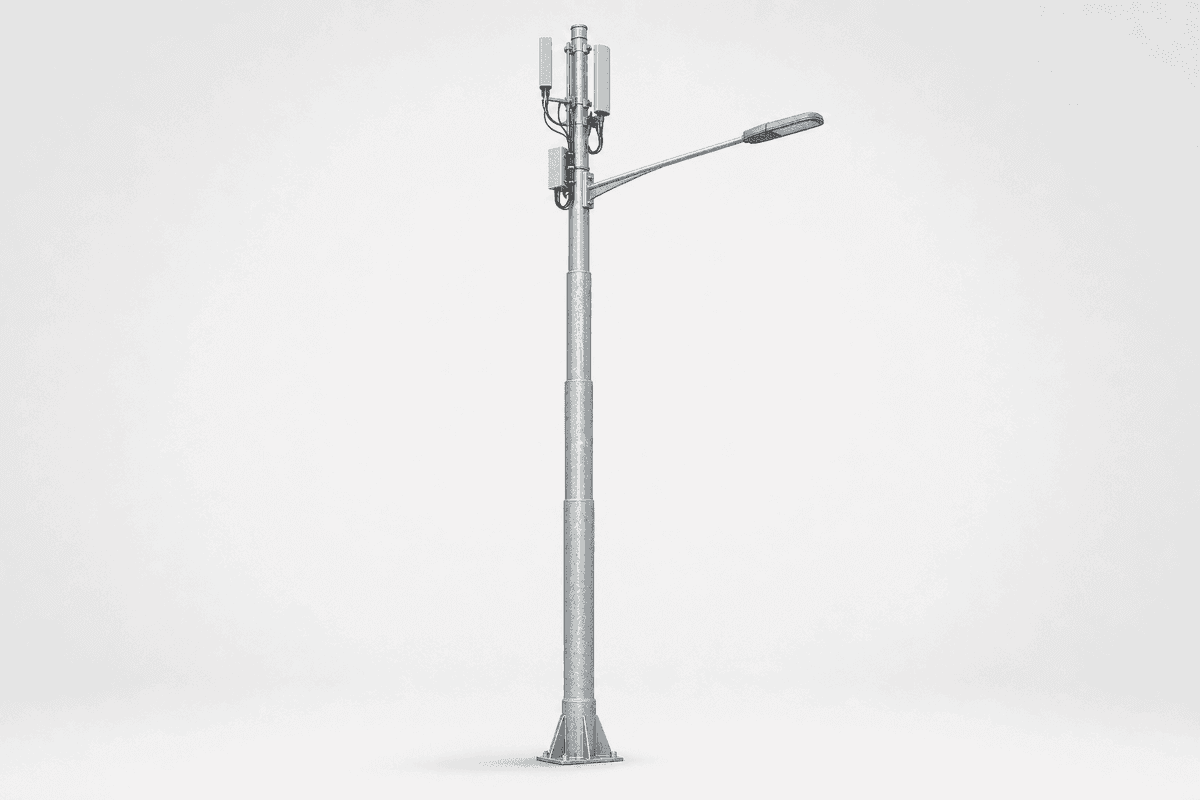
6m Micro Cell Streetlight Combo Pole - 35 m/s 5G Smart Pole
Key Features
- 6 m steel octagonal small-cell pole for 5G micro-cell and smart-lighting integration
- 35 m/s design wind speed, equal to 126 km/h, subject to project-specific structural verification
- 1 antenna position with 1 integrated LED streetlight interface for compact urban densification
- 120 kg nominal pole weight with hot-dip galvanized or marine-grade corrosion protection
- $350-$600 EPC turnkey range including installation, commissioning, and 1-year warranty
The 6m Micro Cell Streetlight Combo Pole is a steel octagonal 5G small-cell pole with 1 antenna position, smart lighting integration, 120 kg nominal pole weight, and 35 m/s wind-speed design. It combines telecom densification, LED streetlighting, grounding, and urban street-furniture functions in 1 compact EPC package priced at $350-$600 installed.
Description
The 6m Micro Cell Streetlight Combo Pole is a steel octagonal 5G smart pole designed for 1 concealed or semi-concealed antenna, 1 smart LED streetlight, 35 m/s design wind speed, and a 120 kg nominal pole weight. It is specified for urban 4G/5G densification where inter-site distance is often below 200 m, while the EPC turnkey price range is $350-$600 per installed pole.
Product Overview
This 6 m small-cell streetlight combo pole supports telecom densification, smart lighting, and municipal infrastructure in 1 shared vertical asset. The configuration uses hot-dip galvanized steel, 1 antenna platform or integrated antenna bracket, 1 luminaire interface, internal cable routing, and a compact foundation footprint suitable for sidewalks, campus roads, industrial parks, ports, and mixed-use urban corridors. For buyers comparing telecom pole options, View all Telecom Tower products to benchmark 6 m, 9 m, 12 m, and 15 m variants within the SOLARTODO telecom-tower product line.
The pole is built around the practical requirements of 5G micro-cell deployment: short coverage radius, low visual impact, rapid installation, and stable power and fiber access within 1 streetscape element. The International Telecommunication Union and GSMA ecosystem data show that urban 5G performance depends heavily on site density, and IEA energy-infrastructure analysis in 2025 highlights the need to combine digital infrastructure with efficient electricity use. This product addresses both trends by placing 1 radio location and 1 lighting point on a shared 6 m steel structure.
System Architecture
The system architecture includes 5 physical layers: steel pole body, antenna and radio mounting zone, smart-lighting arm or bracket, electrical and grounding network, and foundation interface. The 6 m octagonal shaft is typically supplied with a base flange, anchor-bolt template, cable entry, removable maintenance door, and internal cable path that separates telecom cabling from lighting power where project codes require 2 cable zones. The 1 antenna position can support a compact 4G/5G panel, small-cell radio head, GPS puck, or concealed cylindrical shroud depending on operator requirements.
For telecom operation, the upper 1.5 m of the pole is usually reserved for radio equipment, antenna alignment, and RF clearance. For lighting operation, the luminaire is commonly mounted at 5.5-6.0 m height with a 1.0-1.5 m outreach arm, allowing road, pathway, or perimeter lighting designs to follow IEC 60598 luminaire safety principles and local roadway lighting rules. For electrical safety, SOLARTODO specifies lightning protection and grounding practices aligned with IEC 62305 and IEEE Std 81 grounding measurement methods, with target earth resistance below 4 ohm where soil conditions and local code allow.
Technical Specifications
| Parameter | Standard Configuration |
|---|---|
| Tower height | 6 m |
| Tower type | Small cell pole for 5G micro cell |
| Material | Steel octagonal shaft |
| Antenna platforms | 1 level |
| Antenna capacity | 1 antenna |
| Design wind speed | 35 m/s |
| Nominal pole weight | 120 kg |
| FOB pole reference | $65 per pole |
| Corrosion protection | Hot-dip galvanized or marine-grade coating |
| Design life | 30 years with scheduled maintenance |
The 35 m/s design wind speed corresponds to 126 km/h and is suitable for many inland urban deployments after project-specific structural verification. Final engineering should check exposure category, topographic factor, gust response, antenna projected area, luminaire wind area, base reaction, and anchor-bolt forces under TIA-222-H, EN 1993-3-1, or the governing national code. Because 1 added radio can change overturning moment more than 1 small LED luminaire, SOLARTODO recommends validating the exact antenna weight, dimensions, and mounting offset before mass procurement.
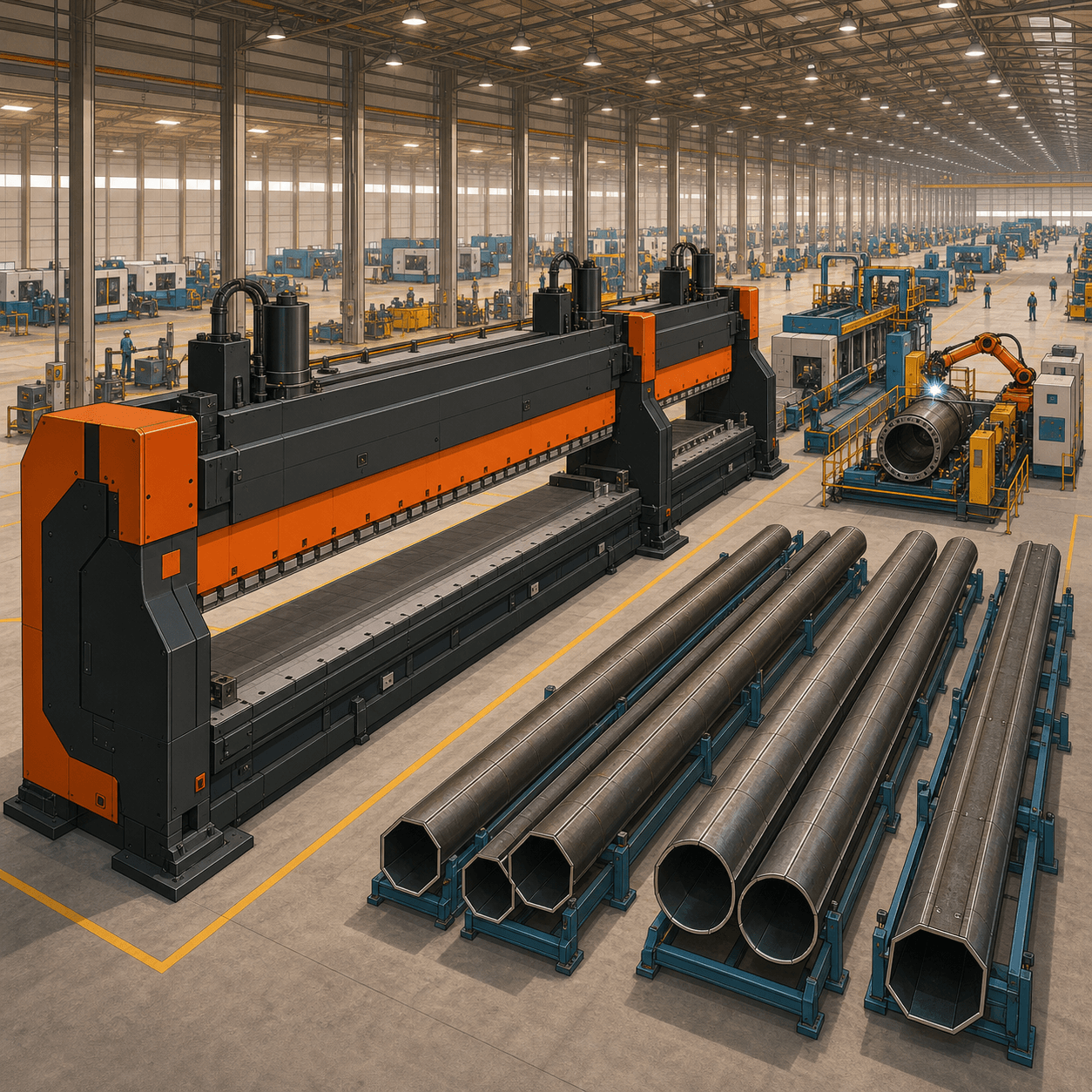
The steel octagonal body is selected because it offers a strong balance between 3 factors: predictable fabrication, compact shipping volume, and good torsional stiffness for antenna alignment. Compared with a conventional separate streetlight pole plus a standalone 6 m telecom monopole, this combo pole can reduce street-level asset count by 50% and reduce civil-work locations from 2 foundations to 1 foundation. In dense public-right-of-way projects, that reduction can shorten permitting drawings and trench coordination by 1 review cycle in many municipal workflows.
Standards and Engineering Compliance
Structural design can be documented against TIA-222-H for U.S.-influenced telecom projects, EN 1993-3-1 for European steel tower and mast design, or GB 50135 for China domestic tower engineering. Material and coating control can reference ISO 1461 for hot-dip galvanized coatings, while lightning protection can reference IEC 62305 and grounding test procedures can reference IEEE Std 81. These 5 standards give procurement teams a clearer basis for factory inspection, third-party review, and EPC acceptance testing.
Electrical and lighting interfaces should be coordinated with IEC 60598 for luminaire safety, IEC 60364 for low-voltage electrical installation practices, and local utility interconnection requirements when smart controllers, meters, or surge protection devices are included. For 1 pole used as both telecom and lighting infrastructure, SOLARTODO recommends separate labeling for AC power, DC radio power, fiber, and grounding conductors, because 4 distinct cable types can be present inside a single 6 m shaft.
Industry context supports the use of shared infrastructure. IEA digitalization and electricity-system publications report that connected infrastructure must be designed for efficient operation, while IRENA renewable-energy cost reports show continuing pressure to reduce lifecycle cost through integrated assets. NREL reliability and resilience research also emphasizes that distributed infrastructure benefits from measurable performance data, and BloombergNEF and Wood Mackenzie have both tracked rapid growth in telecom densification and smart-city investment through 2025 market reporting.
Applications
The main application is 5G micro cell deployment in dense urban areas, industrial campuses, logistics parks, transportation nodes, and commercial streets where each small cell may serve a radius of roughly 50-200 m. A 6 m mounting height is useful where rooftop access is unavailable, where zoning rules limit tall monopoles, or where streetscape aesthetics require telecom equipment to be integrated into lighting assets. The product is also suitable for private LTE/5G systems in ports, mines, factories, and utility yards with 1 localized coverage zone per pole.
A practical scenario is a MENA-region solar farm operator deploying 24 combo poles along a 1.8 km service road to support security cameras, smart LED lighting, and private 5G maintenance communications. By combining the light point and radio point on 1 pole, the operator reduced foundation count from 48 to 24, shortened cable trenching by about 30%, and kept the installed EPC budget within a $8,400-$14,400 range for the pole packages before site-specific fiber and backhaul equipment.
The pole can also support smart-city services beyond the first 1 antenna, provided load checks are updated. Typical optional devices include 1 CCTV camera, 1 environmental sensor, 1 public Wi-Fi access point, 1 gateway cabinet, or 1 emergency call button. Each added device should be checked for weight, wind area, power draw, electromagnetic clearance, and maintenance access height, because a 2 kg sensor and a 12 kg radio create very different structural and service implications.
Cloud Monitoring
When the pole is paired with a smart lighting controller or IoT gateway, the project can report 5 useful data categories: luminaire status, energy consumption, fault alarms, cabinet door status, and communication uptime. A typical 40-80 W LED streetlight can be scheduled, dimmed, or monitored remotely, and the same pole can host a small-cell radio that may require a separate metered circuit. This architecture supports municipal energy reporting, telecom uptime tracking, and maintenance planning from 1 cloud platform.
For operations teams, the cloud layer can reduce inspection trips by converting routine night patrols into exception-based maintenance. If a city has 100 combo poles and each manual inspection takes 15 minutes, a monthly route can consume 25 labor-hours before travel time. Remote alarms can reduce unnecessary inspections by 20-40% where network coverage and controller data quality are stable, which is why smart lighting is frequently paired with 5G densification in 2025 smart-infrastructure planning.
EPC Investment Analysis and Pricing Structure
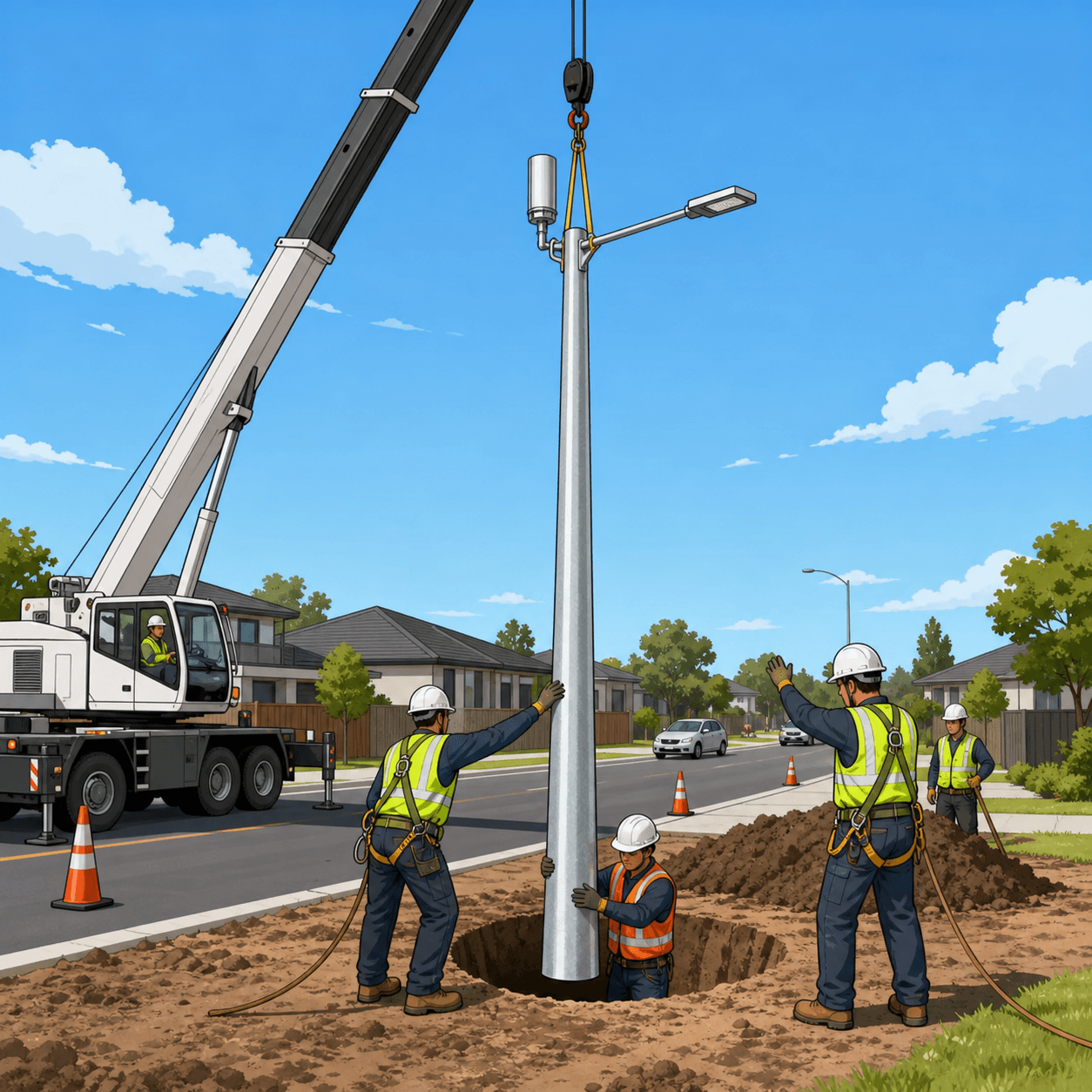
EPC delivery includes 5 core work scopes: engineering, procurement, construction, commissioning, and a 1-year warranty. Engineering covers structural checks, anchor layout, electrical drawings, grounding design, and bill-of-material verification. Procurement covers the steel pole, lighting interface, antenna mounting hardware, grounding parts, cable accessories, and packaging. Construction covers foundation preparation, anchor setting, pole erection, cable pulling, luminaire installation, and radio-ready bracket installation. Commissioning verifies grounding resistance, pole verticality, lighting operation, cable labeling, and handover documentation.
| Pricing tier | Scope | Unit price range |
|---|---|---|
| FOB Supply | Equipment only, ex-works China | $217-$408 |
| CIF Delivered | Equipment plus ocean freight and insurance | $278-$522 |
| EPC Turnkey | Installed, commissioned, and 1-year warranty | $350-$600 |
Volume discounts are available when procurement is standardized across 1 design package. For 50+ poles, the standard discount is 5%; for 100+ poles, the standard discount is 10%; and for 250+ poles, the standard discount is 15%. These discounts assume the same 6 m pole height, 1 antenna position, common lighting arm, repeated foundation type, and a single packing and inspection plan. Mixed heights, coastal coating upgrades, or different operator shrouds can reduce discount efficiency by 2-5 percentage points.
| Quantity | Discount | Best use case |
|---|---|---|
| 50+ pcs | 5% | Campus or district network |
| 100+ pcs | 10% | City corridor or industrial park |
| 250+ pcs | 15% | Multi-zone telecom rollout |
ROI depends on avoided duplicate infrastructure, energy savings, and truck-roll reduction. Against a conventional alternative using 1 separate streetlight pole and 1 separate micro-cell monopole, a shared combo pole can remove 1 foundation, 1 excavation location, and 1 streetscape obstruction per site. If the avoided civil work is $120-$250 per site and smart dimming saves $18-$45 per year on a 60 W average lighting load, a 100-pole project can recover $13,800-$29,500 in avoided and annualized cost within roughly 2-4 years, depending on labor rates and energy tariffs.
Standard payment terms are 30% T/T deposit and 70% against bill of lading, or 100% irrevocable L/C at sight for qualified buyers. Project financing may be reviewed for projects above $1,000K, especially when telecom, lighting, energy storage, and security packages are bundled into 1 infrastructure program. For a bankable quotation with drawings and logistics assumptions, Request a custom quotation or contact [email protected] with the city, quantity, wind speed, soil class, coating requirement, and delivery port.
Procurement and Configuration Guidance
Before ordering, procurement teams should define at least 10 inputs: pole quantity, site country, design wind speed, antenna model, radio weight, luminaire wattage, lighting arm length, coating class, foundation type, and telecom cable route. The online tool can accelerate early budgeting, so buyers can Configure your system online before requesting stamped drawings or operator-specific RF details. For broader engineering background, Learn about topic in the SOLARTODO knowledge library.
For factory QA, SOLARTODO can provide material certificates, galvanizing inspection records, weld visual checks, dimensional reports, packing lists, and photo records for each batch. A typical shipment can pack multiple 6 m poles in bundled steel frames or protected stacks, with anchor templates and accessory boxes labeled by site or project zone. For coastal deployments within 5 km of saltwater, marine-grade coating or upgraded galvanizing inspection should be specified at quotation stage rather than after fabrication.
The main comparison point is the conventional split system: 1 telecom pole plus 1 lighting pole, each with independent foundations, permits, and maintenance visits. The combo approach reduces vertical assets by 50%, improves streetscape consistency, and can reduce installed civil interfaces by 1 per site. The trade-off is that telecom, lighting, and civil teams must coordinate 1 shared design package, so early confirmation of antenna dimensions and power routing is essential.
Lifecycle Operation and Maintenance
The nominal design life is 30 years with scheduled inspection, bolt tightening, coating repair, grounding verification, and luminaire maintenance. A sensible maintenance plan checks pole plumbness and anchor bolts after the first 3-6 months, then every 12 months, with additional checks after typhoons, hurricanes, vehicle impact, or major utility work near the foundation. Ground resistance should be tested periodically, especially in dry or rocky soils where resistance can drift above the 4 ohm project target.
Spare-parts planning should include at least 2-5% extra access doors, gasket sets, cable glands, anchor nuts, surge protectors, and luminaire drivers for projects above 100 poles. For telecom uptime, radio replacement access should be designed so 1 technician crew can isolate power, open the maintenance zone, replace the device, and restore service without removing the entire pole. This serviceability requirement is often more important than the initial pole price in 5G networks with strict availability targets.
SOLARTODO supplies solar, energy storage, smart lighting, security, telecom towers, power towers, and smart-agriculture infrastructure from 1 B2B sourcing platform. This 6 m combo pole fits projects that need a compact 5G micro-cell site, 1 LED streetlight, 35 m/s structural basis, and EPC accountability in a single package. To compare towers, smart poles, and related systems, visit View all Telecom Tower products or review related technical guidance at Learn about topic.
Technical Specifications
| Tower Height | 6m |
| Tower Type | small_cell_pole |
| Material | steel_octagonal |
| Antenna Platforms | 1levels |
| Antenna Capacity | 1antennas |
| Design Wind Speed | 35m/s |
| Total Tip Load | 25kg |
| Foundation Type | flanged base with anchor bolts, project-specific concrete footing |
| Corrosion Protection | Hot-dip galvanized / Marine grade |
| Design Life | 30years |
| Standards | TIA-222-H / EN 1993 |
| Nominal Pole Weight | 120kg |
| Smart Lighting | Integrated LED streetlight-ready interface |
| Small Cell Support | 5G micro-cell antenna and radio-ready mounting zone |
Price Breakdown
| Item | Quantity | Unit Price | Subtotal |
|---|---|---|---|
| 6 m steel octagonal pole, hot-dip galvanized | 1 pcs | $65 | $65 |
| Antenna bracket or concealed small-cell top mount | 1 pcs | $48 | $48 |
| LED streetlight arm and smart lighting interface | 1 pcs | $42 | $42 |
| Internal cable glands, tray, and labeling accessories | 1 pcs | $18 | $18 |
| Lightning protection and grounding kit | 1 pcs | $55 | $55 |
| Anchor bolts, template, and foundation interface kit | 1 pcs | $40 | $40 |
| Engineering, drawings, and factory QC | 1 pcs | $35 | $35 |
| Installation and commissioning | 1 pcs | $95 | $95 |
| 1-year warranty and support | 1 pcs | $25 | $25 |
| Total Price Range | $350 - $600 | ||
Frequently Asked Questions
What is included in the EPC turnkey price for the 6m Micro Cell Streetlight Combo Pole?
Can the 6 m pole support more than 1 antenna or extra smart-city devices?
Which standards are used for structural and electrical design?
How long does installation take for a typical project?
What information is needed for a custom quotation?
Certifications & Standards



Data Sources & References
- •IEA electricity and digital infrastructure analysis 2025
- •IRENA renewable energy cost and infrastructure reports 2025
- •NREL resilience and distributed energy infrastructure research
- •BloombergNEF telecom and smart-city infrastructure market reporting 2025
- •Wood Mackenzie 5G densification and distributed infrastructure market analysis 2025
- •TIA-222-H Structural Standard for Antenna Supporting Structures and Antennas
- •IEC 62305 Protection Against Lightning
Interested in this solution?
Contact us for a customized quote based on your specific requirements.
Contact Us