Summary
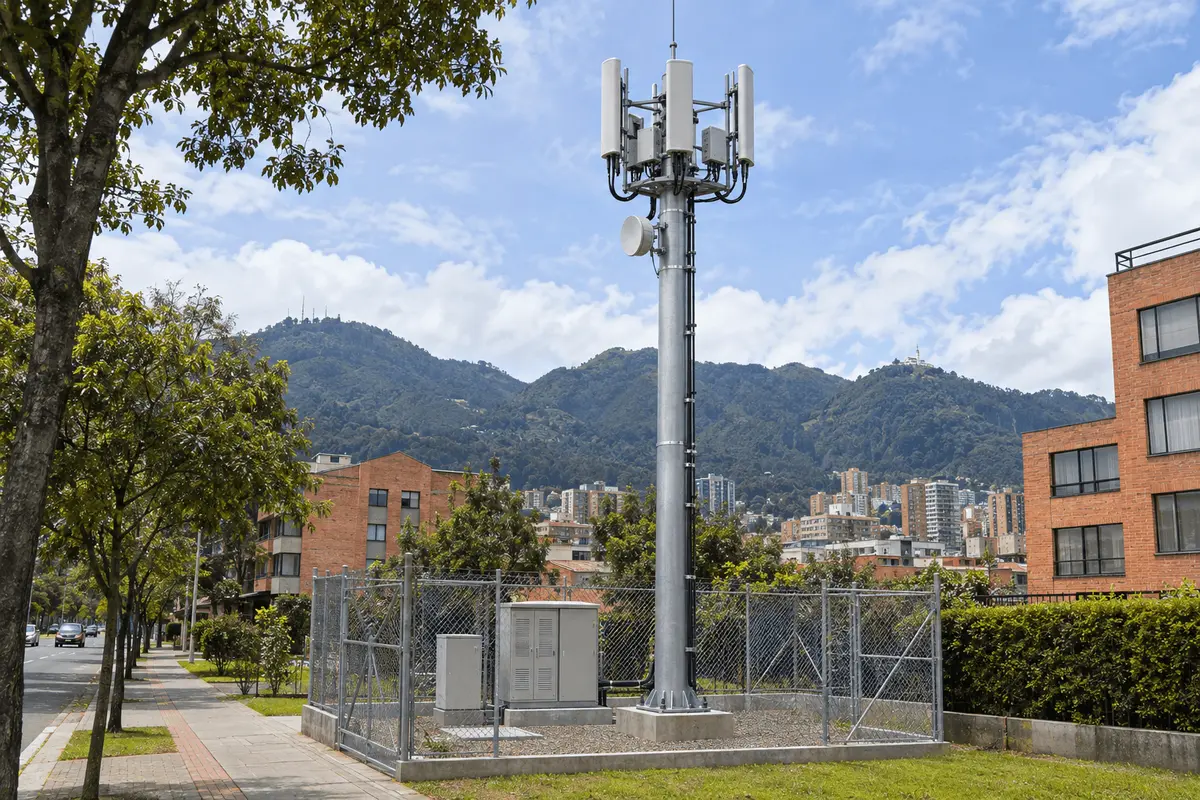
For a proposed SOLARTODO steel monopole installation in Bogotá, keep antenna configuration and public-access approval on hold until the buyer can review a verified Colombian applicability statement, a controlled equipment schedule, a site-specific RF exposure assessment and access drawings tied to its findings. Define the configuration and operating conditions submitted for approval, assign installation checks and establish any confirmation needed before transmission.
Bogotá is solely a proposed site. Applicable exposure limits, site geometry and emission inputs remain unverified; the supplied evidence does not establish compliance or local acceptance.
Key Takeaways
- Assign an assessor to identify applicable Colombian exposure provisions, accepted assessment procedures and any required qualifications before selecting acceptance criteria.
- Freeze the antenna, radio and backhaul schedule, relevant emission settings and mounting drawings for the proposed assessment.
- Survey public areas, accessible elevated locations and maintenance routes; provide traceable geometry and access information.
- Request location-specific findings covering simultaneous sources, operating assumptions, uncertainty and any proposed restrictions.
- Request the authoritative product model, PDF revision, pages and stated conditions; reconcile the submission with the equipment schedule and drawings.
- Record separate decisions for design approval, installation verification and permission to transmit, with owners for access controls and configuration changes.
Define the purchase before assessing it
The buyer is evaluating a steel monopole from the SOLARTODO telecom-tower family, catalog identity city-catalog-2026-11-01-v1. The supplied catalog includes monopole, lattice, guyed and rooftop steel structures. This proposal selects the steel monopole form only; it does not combine that selection with lattice members or FRP construction.
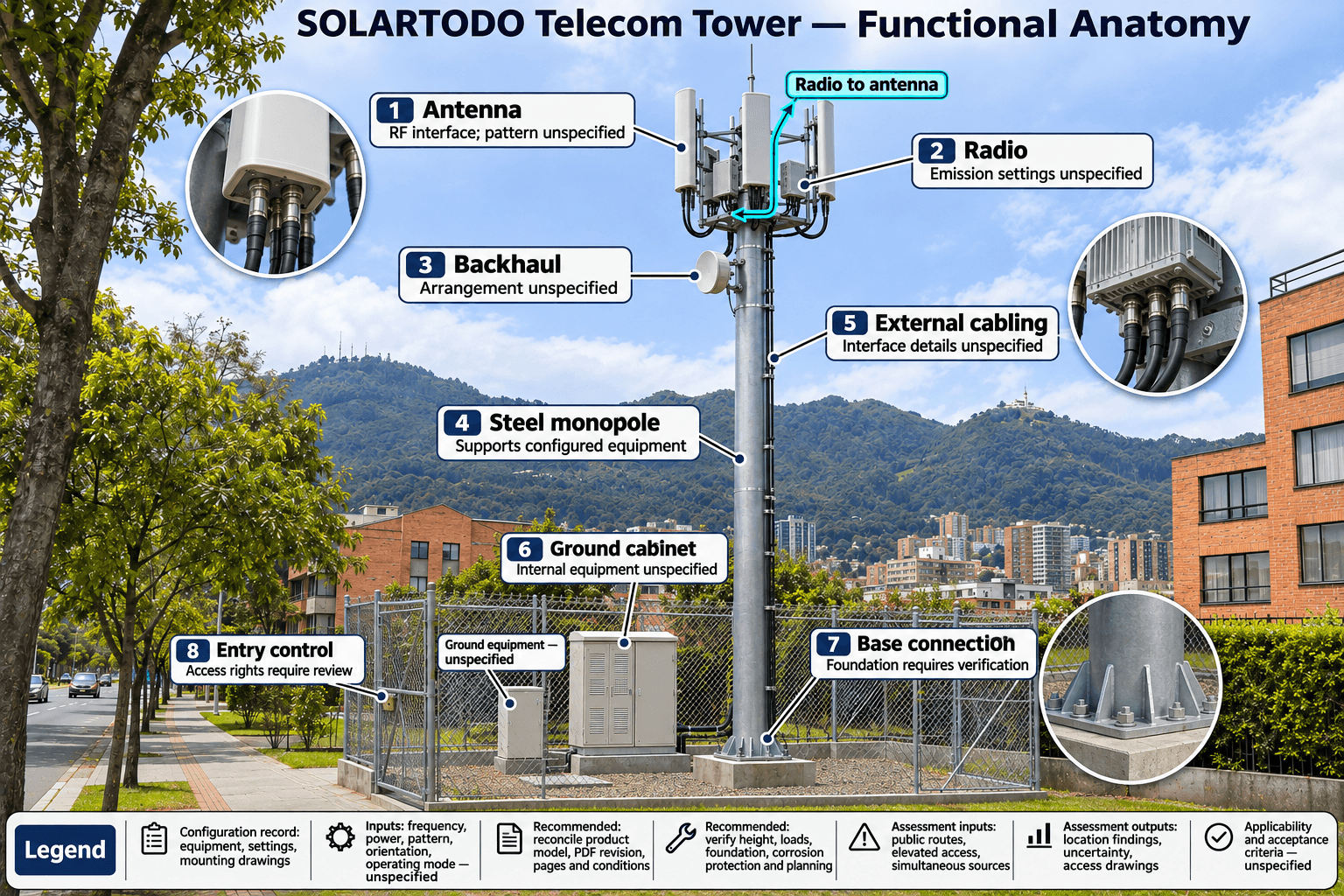
Antenna, radio and backhaul equipment are catalog configuration items. Their models, frequencies, powers, radiation patterns and mounting arrangements are unspecified in the supplied evidence. Request a supplier schedule identifying what is included, what the purchaser must select and who controls the final configuration record. See the SOLARTODO telecom-tower catalog and internal telecom-tower page.
The catalog identifies wind loading, antenna loading, height, foundation, corrosion protection and aviation or planning requirements as matters needing project-specific verification. Request coordinated structural and RF submissions, and ask the reviewers to reconcile their equipment schedules and drawing revisions before a buyer decision. The catalog establishes no universal weight per metre, load capacity or coverage radius.
Product document authority
Request the authoritative product PDF, governing model designation, revision, applicable pages and stated conditions. Where product descriptions conflict, request a documented supplier resolution against the governing product document. No PDF, model-specific page or operating condition is available in the supplied evidence.
Include the product-document references in the configuration record and ask the assessor to identify which supplied information was used. Keep receipt of product documents, RF configuration approval and permission to transmit as separate entries in the buyer's decision record.
Build the assessment in decision order
The following is a proposed buyer evaluation process. The supplied sources do not establish it as a Colombian regulatory procedure or demonstrate product performance.
Establish the applicable basis
Commission an applicability statement identifying the competent authorities, governing provisions, effective versions, exposure categories and accepted assessment procedures for the proposed Colombian site. Request authoritative support for the selected quantities, units, frequency-dependent criteria, averaging rules and treatment of simultaneous sources.
Ask the assessor to distinguish public-access conditions from controlled work activities and document unresolved interpretations. Under this proposed buyer process, hold the affected approval until its acceptance basis is established. No Colombian legal source or direct technical assessment-method document is supplied here, so no numerical limit or locally accepted method is selected in this article.
The supplied GSMA RF-EMF discussion states that international exposure guidelines apply across mobile technologies, including 5G. That policy background does not establish Colombian adoption of a particular guideline edition or acceptance of a site-specific assessment method.
Control the configuration and survey inputs
Link the equipment schedule to revision-controlled drawings. Ask the assessor to specify the input information needed, including proposed frequencies, powers, antenna characteristics, mounting positions, orientations and operating modes. Mark each submitted input as verified or provisional and identify its source.
Request an explicit description of the operating envelope covered by the assessment. For any proposed restriction on settings, assign implementation, checking and change-control responsibilities. Record the selected backhaul arrangement and ask the assessor to document its treatment; no backhaul technology or emission level is established by the supplied evidence.
Commission a survey covering the proposed parcel, boundaries, entry points, occupied spaces, relevant accessible elevated locations and maintenance routes. Request a record of access rights and foreseeable access changes. No site address or surveyed geometry was supplied, so do not infer surrounding conditions from the city name.
Request a report that supports a decision
Ask the assessor to justify the calculation or measurement method against the submitted geometry and operating conditions and to document its limitations. Request identification of relevant simultaneous transmitters, the treatment of cumulative exposure and explanations for excluded or unknown contributions.
For each location selected for assessment, request the operating condition, applicable criterion, result, uncertainty treatment and assessor's conclusion. Require drawing references that let the buyer locate each finding. Ask the assessor to state explicitly whether the report covers the proposed configuration and access arrangements.
Request a statement identifying any installation confirmation needed, its procedure, responsible party and relationship to permission to transmit. Keep predicted findings and installation-confirmation evidence separately identified in the submission.
Review the proposed access arrangements
Request drawings of any proposed restricted areas and identify who would maintain them. Ask for an implementation plan covering entry control, contractor instructions and responsibility for reporting access changes.
If signs are proposed, request their locations and wording alongside the entry-control arrangements for review. Do not treat a proposed sign or boundary as evidence that an access restriction has been implemented.
Ask the project team to check proposed restrictions against public routes and other parties' access rights. Refer unresolved conflicts to the assessor and responsible project parties for a revised submission before the buyer approves the affected arrangements.
Review package and release decisions
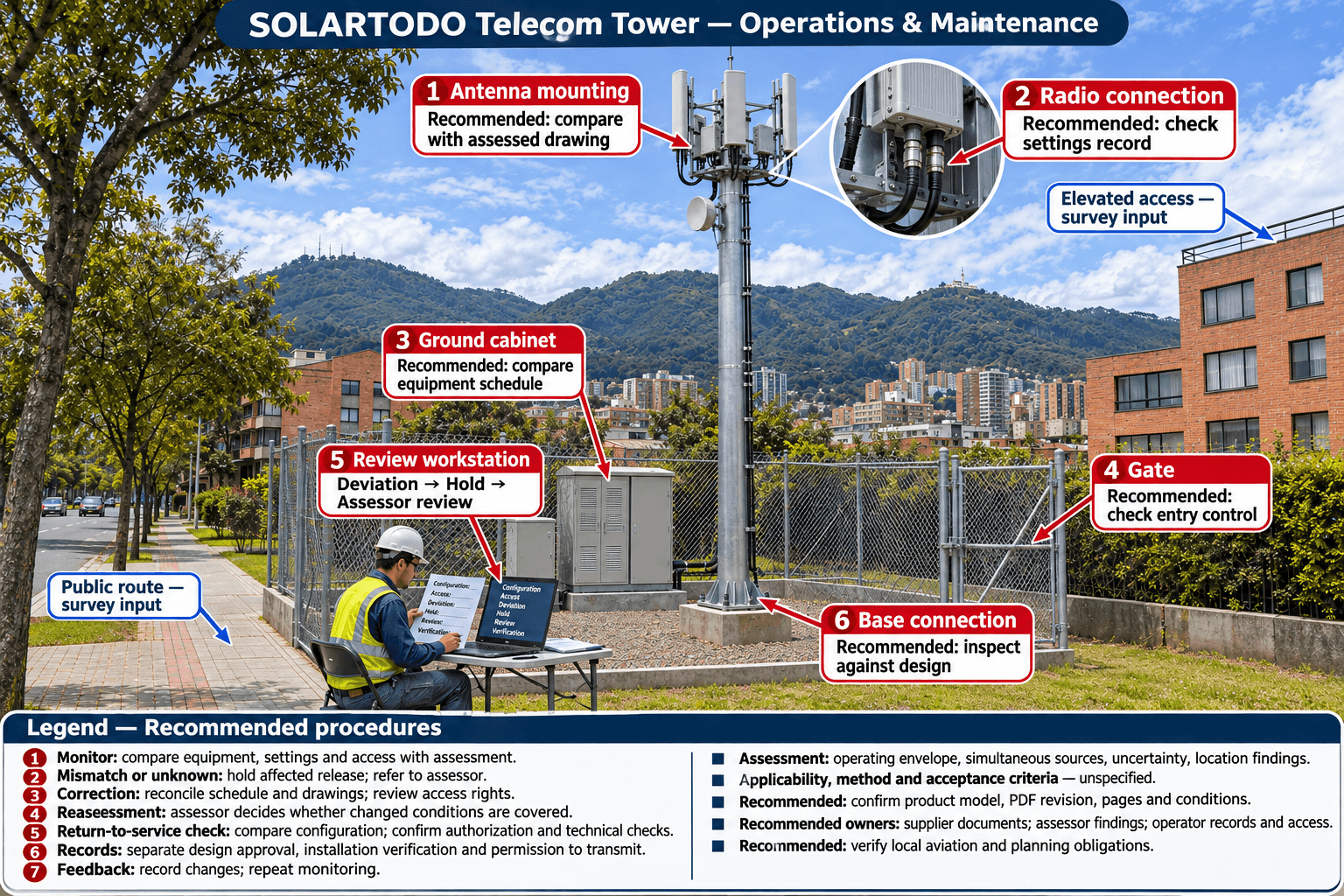
Use these proposed buyer checks to decide whether to accept a submission or request revision. They are purchasing review criteria, not established local legal requirements or guaranteed results.
- Applicability: Request the governing basis, accepted procedure, assessor qualifications and unresolved interpretations. Hold the affected decision if its acceptance criterion remains unsettled.
- Input traceability: Compare equipment, settings, survey inputs and drawing revisions with the assessment record. Refer discrepancies and unknowns to the assessor for disposition.
- Technical findings: Request a documented conclusion for each assessed public-access location, including the report's treatment of cumulative exposure and uncertainty.
- Access feasibility: Request drawings, an access-rights review, an accountable owner and evidence of implementation for any proposed restriction.
- Installation evidence: Compare installed equipment, placement and settings with the assessed design; submit deviations for technical review and a decision on reassessment.
- Decision record: State what the buyer approves, who approves it, the conditions attached and which outstanding items prevent the next stage.
For design approval, record the configuration and conditions reviewed on the available design evidence. For installation verification, record the comparison with the assessed design and the disposition of deviations. Before permission to transmit or operational acceptance, request confirmation of the applicable authorization and technical-confirmation requirements identified through the applicability review.
Propose that the supplier owns the product-document submission, the assessor owns the assessment basis and conclusions, and the operator owns installation records, access controls and change management. Confirm those responsibilities in the project agreement. Request a configuration-specific submission through contact.
FAQ
What should the buyer request before configuration approval?
Request a verified Colombian applicability statement, a controlled equipment and operating schedule, surveyed drawings and a configuration-specific RF report with location-specific conclusions and proposed access conditions. Under this buyer process, keep approval pending until these items are reviewed.
Who should establish the applicable rules and assessment responsibilities?
Assign an assessor to document the applicable Colombian provisions and take responsibility for the report. Request confirmation of any required qualifications, signatories and authority acceptance as part of that applicability review.
Which operating conditions should the submission identify?
Ask the assessor to specify the required inputs, including frequencies, powers, antenna characteristics, positions, orientations and operating modes. Request a defined assessment envelope and documented responsibilities for any proposed restriction on settings.
How should other transmitters and unknown inputs be addressed?
Request identification of relevant simultaneous sources, an explanation of cumulative-exposure treatment and disclosure of unresolved inputs. Refer unknowns to the assessor and hold the affected buyer decision until their disposition is documented.
What should accompany proposed public-access restrictions?
Request surveyed drawings linked to assessment findings, an access-rights review, an accountable owner and implementation evidence. If signs are proposed, include their locations and wording alongside the entry-control arrangements.
What should be checked in the product PDF?
Request the governing model designation, PDF revision, applicable pages and stated conditions, then reconcile the submission with the equipment schedule and drawings. No product PDF, model-specific page or operating condition was supplied.
When should installation checks and permission to transmit be addressed?
Define the proposed checks and responsible parties during design review. Request an installed-versus-assessed configuration comparison and confirmation of any authorization or technical-confirmation requirements before the relevant release decision.
How should subsequent changes be managed?
Route proposed equipment, emission-setting, antenna-placement, sharing or surrounding-access changes through a documented review. Ask the assessor to determine whether the existing assessment covers the revised proposal and record the resulting decision.
Evidence limits and jurisdiction
The supplied catalog establishes product-family scope only. GSMA supplies international RF-EMF policy background, not a product certification, direct technical assessment method or result for this proposal. Its broad statements about exposure do not establish exposure levels at the proposed site. The supplied GSMA text includes a historical expectation of WHO conclusions in 2024; that expectation is not evidence of the assessment's current status.
The FAA Obstruction Evaluation Overview describes a United States aeronautical process concerning objects that may affect airspace, air navigation facilities or airport capacity. It establishes no Bogotá requirement. Request separate verification of applicable Colombian aviation and planning obligations.
No site measurement, Colombian regulatory determination, customer deployment or configuration-specific exposure result was supplied. The evidence therefore does not establish approval of this proposed installation. This article supplies a buyer review framework, not technical or regulatory acceptance.
References
- SOLARTODO telecom-tower catalog: supplied catalog extraction
city-catalog-2026-11-01-v1; product-family scope and project-specific verification boundaries. - GSMA Mobile Policy Handbook: Business environment: supplied international RF-EMF policy context; no Colombian applicability determination.
- FAA Obstruction Evaluation Overview: United States obstruction-review context only.
Proposed Equipment
- SOLARTODO telecom-tower steel monopole — selected catalog form; governing model unspecified
- Antenna equipment — configuration item; model unspecified
- Radio equipment — configuration item; model unspecified
- Backhaul equipment — configuration item; model unspecified