Summary
For the proposed Buenos Aires pilot, confirm that the offered configuration can implement both scheduled and activity-responsive lighting before ordering. Compare their measured lighting energy under matched operating and activity conditions, while checking both against the same approved lighting criteria. Choose activity-responsive control only when acceptable lighting and measured savings justify its additional ownership cost. Otherwise, retain an acceptable scheduled strategy or extend an inconclusive evaluation.
Buenos Aires is a proposed site, with no installation or operating results established by the supplied sources. The brief assigns reference model smart-classic-twin-bronze; that identifier appears in supplied metadata, not in the catalog source text. Obtain model-specific documentation linking it to the described product before procurement.
Key Takeaways
- Obtain the authoritative product PDF, revision, and model-specific pages linking the brief's reference model to the offered configuration.
- Confirm scheduling, output adjustment, activity inputs, records, overrides, and fallback behavior in writing before designing the comparison around them.
- Agree site-specific lighting criteria, measurement locations, and acceptable operating states with the responsible project authority.
- Alternate the strategies across comparable periods and match activity patterns before attributing energy differences to control strategy.
- Measure lighting separately from auxiliary loads wherever practicable, and retain lighting failures, missing records, and fallback events in the evaluation account.
- Compare measured savings with quoted incremental ownership costs; select activity-responsive control only when both lighting acceptance and the purchaser's economic decision rule are satisfied.
Confirm product identity and the offered configuration
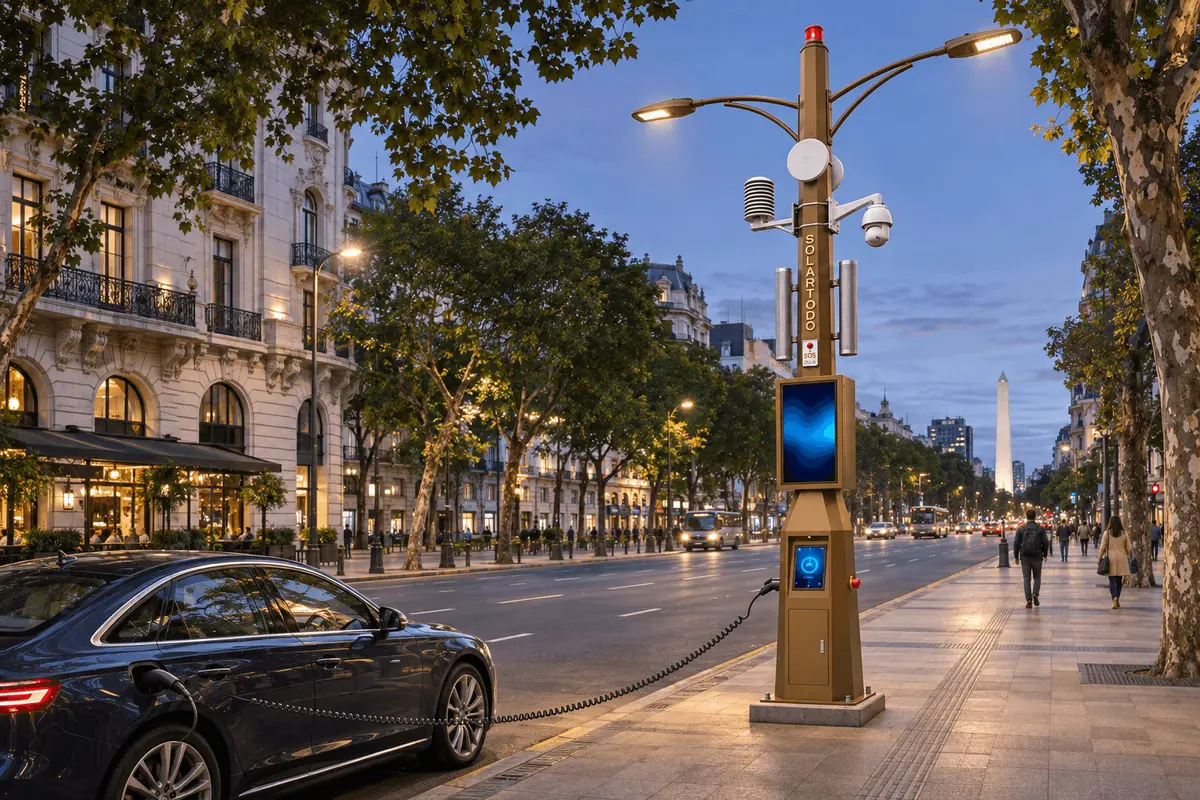
The supplied SOLARTODO catalog source, identified as city-catalog-2026-11-01-v1, describes the SOLARTODO classic twin-arm bronze smart streetlight. Its selected appearance comprises a bronze polygonal pole with two curved luminaire arms, PTZ camera, environmental sensor, display, audio/SOS, and integrated EV charging base. Grid-fed lighting and modular communications/control are catalog options. The smart streetlight product page provides product navigation.
The brief assigns the reference model smart-classic-twin-bronze. Although that identifier also appears in source metadata, the supplied catalog text does not contain it. The correspondence between that exact identifier, the catalog appearance, and the offered equipment therefore needs documentary confirmation.
The selected catalog appearance excludes a drone hangar, robot, wind turbine, and wrapped CIGS photovoltaic surface. It establishes no numerical height, power, charging rate, performance, standard compliance, or installed-project claim.
Request the authoritative product PDF, its revision, and the pages identifying the exact model and proposed configuration. No PDF URL or model-specific page reference was supplied. Reconcile the PDF, catalog, and quotation before relying on specifications for purchasing or test design.
Also request evidence of the offered scheduling functions, supported output settings, activity inputs, event records, manual overrides, communication-loss behavior, and access to recorded data. Data export is a requested function to verify, not an established capability. A listed PTZ camera does not establish activity detection or a lighting-control interface; the environmental sensor does not establish calibrated lighting measurement.
If either proposed strategy cannot be implemented or observed adequately, revise the comparison before committing to the pilot.
Establish lighting acceptance before comparing energy
For this proposed evaluation, ask the responsible project authority to agree the surveyed area, applicable requirements, measurement locations, acceptance method, and responsibility for approving control changes. Include roadway, walking, crossing, or interface areas where the actual survey warrants them. The supplied sources establish no numerical Buenos Aires lighting requirements.
Identify acceptable lighting states before setting either strategy. Check steady operation, dimmed operation, transitions, overrides, and relevant failures. Include observations before activity detection and during the response, rather than measuring only after the lights have brightened.
Record mounting geometry, obstructions, surrounding light sources, and measurement access as survey inputs. None is an established condition of the proposed Buenos Aires site. Agree how to repeat lighting checks after material configuration changes.
Define a fair comparison
Scheduled control would apply predetermined operating periods and approved output settings. Develop its schedule from the survey and agreed operating needs so that it represents a credible purchasing alternative.
Activity-responsive control would use verified activity inputs to request approved lighting states. Define the trigger, affected area, response, return delay, override, and fallback as proposed test requirements. These descriptions do not establish that the selected equipment supports those functions.
Keep luminaires, optics, mounting, electrical configuration, and auxiliary operating arrangements consistent between strategies. Record the configuration of both curved-arm luminaires. Where separate areas must be used, document their differences before deciding whether their results can be compared.
Assign both strategies across recurring operating windows and day types. Alternate their order across successive comparable periods, with switching boundaries that allow normal transitions and return behavior to be observed.
Record operating duration, activity intensity and timing, surrounding-light changes, overrides, and interruptions. Use an activity observation method that works comparably under both strategies. Do not assume that camera output or controller event counts measure actual activity accurately without verification.
Set matching rules before examining savings. Pair periods with similar operating windows, activity patterns, and relevant external conditions. Energy per valid operating hour can supplement this comparison, but should not substitute for matching activity conditions.
Report materially different periods separately and collect replacement matched observations where practical. If adequate matching remains impossible, leave the control comparison inconclusive. Agree test duration and reporting intervals after considering activity variability, measurement uncertainty, and access; no numerical duration is established here.
Measure lighting energy and maintained lighting together
Agree a metering boundary with the supplier and electrical designer before testing. State whether lighting energy includes drivers and any dedicated control electronics. Separately measure charging and other auxiliary consumption wherever the electrical arrangement permits it. Record whole-installation energy as an additional purchasing metric.
Use these proposed reporting boundaries:
- Lighting: luminaires, drivers, and explicitly identified dedicated control electronics.
- Auxiliary functions: separately identified non-lighting consumption where measurable.
- Whole installation: all consumption within the stated supply boundary.
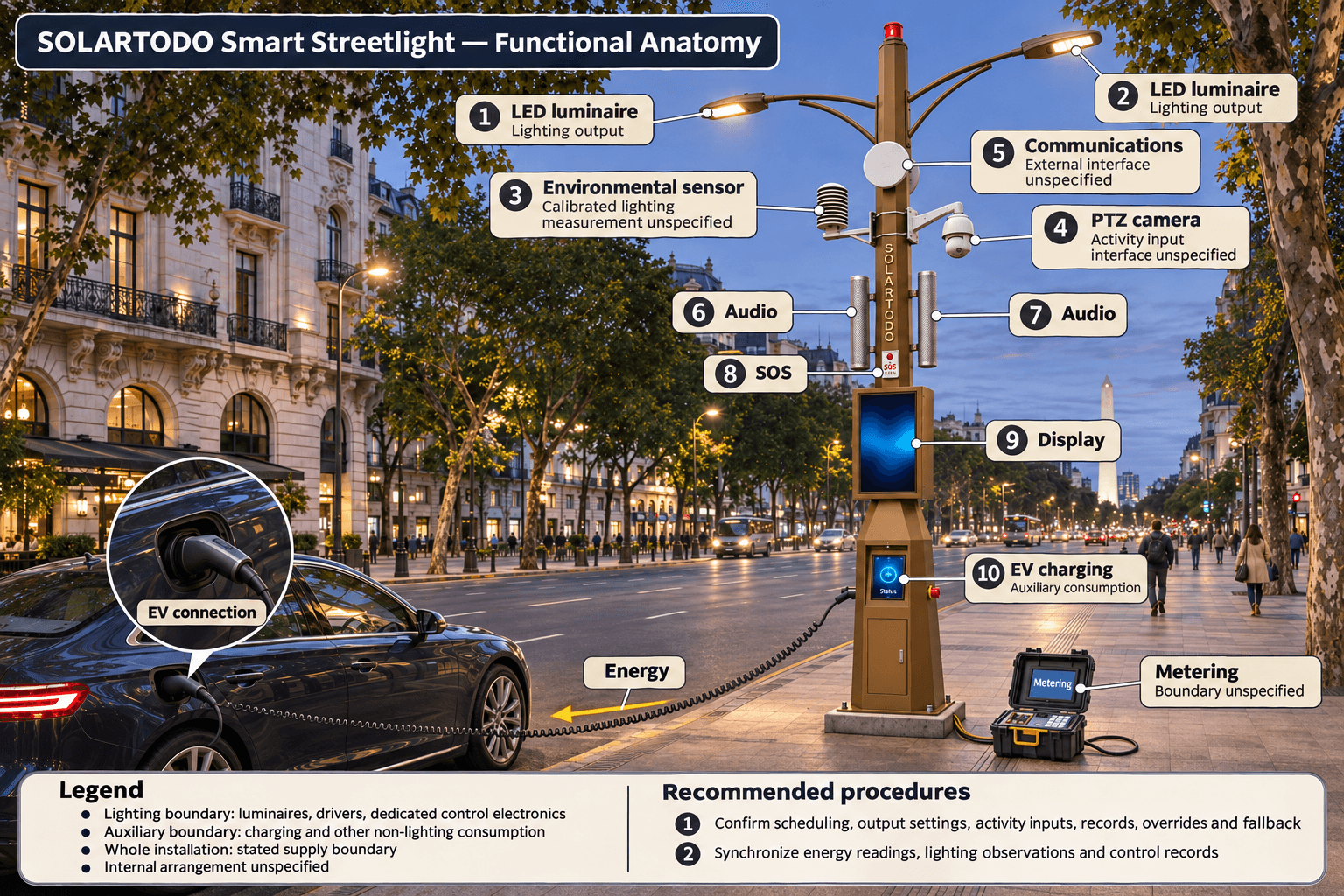
Proposed metering-boundary illustration. This is an evaluation concept, not a verified product wiring diagram.
Synchronize energy readings, lighting observations, and available control-event records. Verify measurement suitability and access to records before formal testing. Keep commanded output distinct from measured lighting and electricity consumption.
For each matched comparison, report lighting energy, valid operating hours, activity observations, lighting acceptance results, and available records of commanded states. Calculate the energy difference as scheduled lighting energy minus activity-responsive lighting energy. If reporting a percentage, divide that difference by scheduled lighting energy only when the denominator is positive and the matched comparison is valid.
Present the underlying readings and measurement uncertainty alongside any percentage. Treat a difference that cannot be distinguished from uncertainty as inconclusive. If auxiliary consumption cannot be separated or kept sufficiently comparable, state the resulting limit on attributing savings to lighting control.
Account for failures and incomplete evidence
Agree the following treatment before testing:
- Unmatched periods: retain them in the operating account, but exclude them from the matched savings estimate with the reason recorded.
- Missing or unsynchronized records: mark the affected comparison unavailable; do not infer successful lighting operation from absent readings.
- Lighting failures: record them against acceptance criteria even when associated energy data are unusable. Investigate and retest before accepting the strategy.
- Fallbacks and overrides: retain their consumption and event records as operational evidence, explaining any separate treatment in the matched analysis.
- Configuration changes: identify the revision and evaluate it separately rather than applying earlier results to changed equipment or settings.
Report how much observed operation the matched analysis represents and what it excludes. Consider unresolved failures and unrepresented conditions alongside the energy estimate.
The proposed decision sequence is: confirm capabilities, agree lighting criteria, commission and check failures, collect matched observations, assess lighting, assess energy and incremental cost, then select a strategy or extend testing.
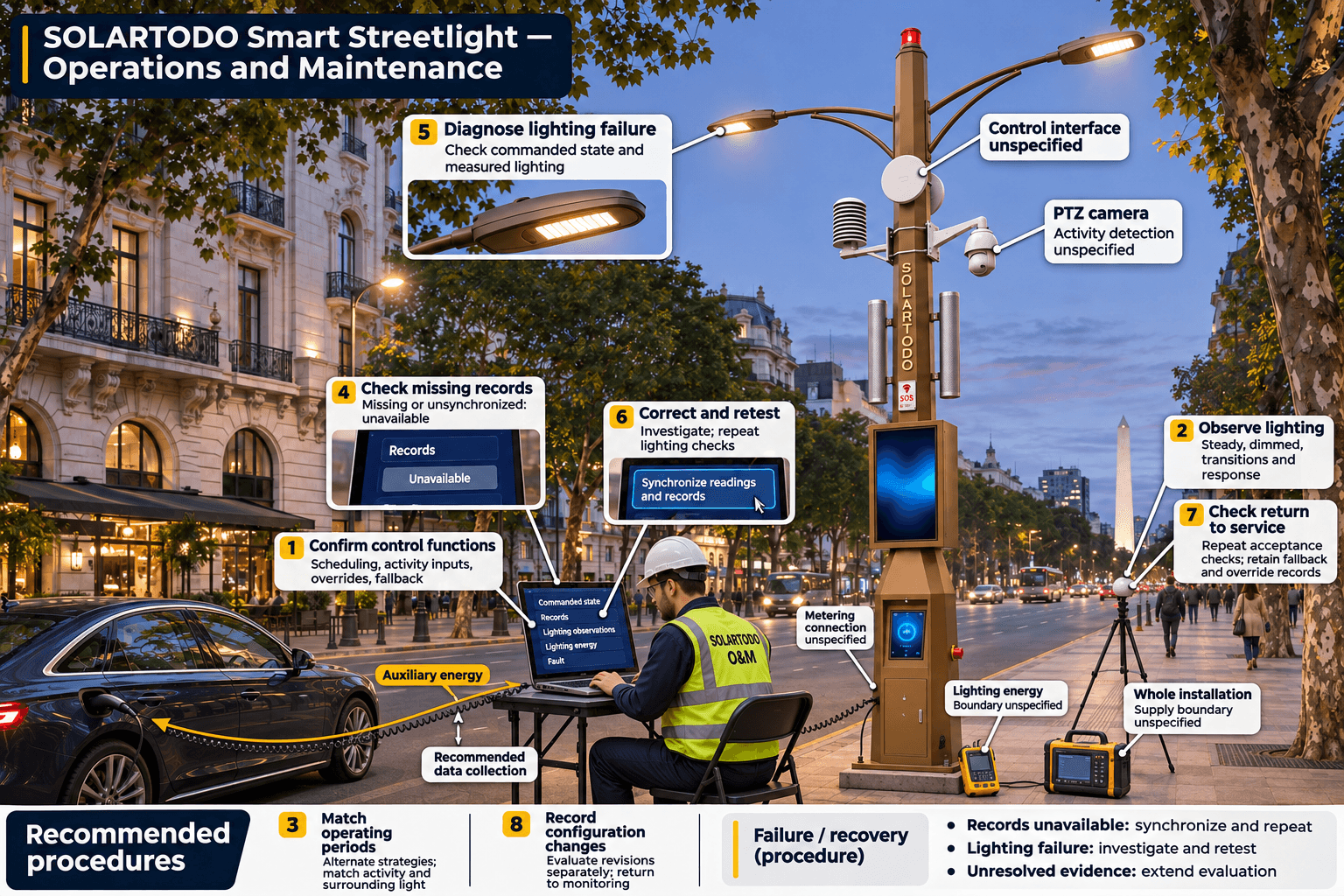
Proposed acceptance-flow illustration. Lighting acceptance precedes the energy and cost decision; unresolved evidence gaps require further verification.
Decide whether additional control is worth buying
Use the matched measured energy difference and the purchaser's applicable electricity tariff to estimate avoided lighting cost over an agreed evaluation period. Disclose assumptions when extending observations to other operating periods. An annual projection remains a projection, not a measured annual result.
Compare that benefit with quoted incremental ownership costs for activity-responsive operation relative to the scheduled alternative. Include configuration, communications, software, commissioning, support, and maintenance where applicable. Keep any auxiliary-service benefits separate unless independently evidenced and included in the purchasing brief.
Apply an agreed decision rule:
- Select activity-responsive control when lighting acceptance is satisfied and the supported energy benefit justifies its additional ownership cost.
- Retain scheduled control when it meets lighting criteria and the additional activity-responsive benefit does not justify its cost.
- Extend or redesign the evaluation when capability gaps, poor matching, uncertainty, or unresolved failures prevent a defensible decision.
Before ordering, consolidate the model identity documents, confirmed control scope, metering arrangement, itemized incremental costs, data-access terms, and acceptance responsibilities. Submit the evidence request through contact.
What the external sources establish
The supplied DOE connected-lighting overview describes research into whether connected systems deliver additional energy savings and sufficient value to justify investment. It describes the Portland, Oregon, connected lighting test bed as focused on electrical performance rather than reproducing real-world lighting environments. It supplies no performance result for this product or the proposed Buenos Aires site.
The supplied FEMP exterior-lighting guidance, identified in the excerpt as updated in June 2023, discusses potential savings from controls and the importance of relevant performance, cost, and reliability data. Its purchasing obligations concern U.S. federal procurement. Its worked economic example concerns wall-mounted luminaires under stated assumptions; it does not establish this twin-arm product's economics, qualification, or Argentine compliance.
The comparison method above is a proposed evaluation plan. Neither external source validates the offered control functions or establishes local activity, tariffs, communications availability, installation geometry, or maintenance arrangements. Obtain those inputs through supplier documentation, survey evidence, and purchaser decisions.
FAQ
Is Buenos Aires an existing installation of this product?
Buenos Aires is solely the proposed pilot site. The supplied sources establish no installation or operating results there.
Which product identity and capabilities are supported?
The catalog text describes the SOLARTODO classic twin-arm bronze smart streetlight under city-catalog-2026-11-01-v1, with grid-fed lighting and modular communications/control as options. The brief's reference model smart-classic-twin-bronze appears in metadata, not the catalog text; obtain documentation confirming the identity link and offered control functions.
What should engineers compare?
Compare measured lighting energy under scheduled and activity-responsive control using the same lighting configuration, matched operating and activity conditions, and the same approved lighting criteria.
What if the test periods are not comparable?
Report unmatched periods separately, explain the differences, and collect replacement matched observations where practical. Do not attribute their energy difference to control strategy or rely on operating-hour normalization alone.
Can the PTZ camera supply activity triggers?
That capability is unverified. Obtain evidence of the offered detection function and control interface, then observe the response before using the camera as an activity input.
Should EV charging consumption count as lighting energy?
Measure it separately wherever practicable. Report whole-installation consumption with its boundary stated; inseparable auxiliary loads limit attribution of savings to lighting control.
What lighting criteria and fallback behavior should apply?
Agree site-specific criteria and acceptable fallback states with the responsible project authority. Check dimmed operation, transitions, overrides, and communication failures. The supplied sources establish no Buenos Aires numerical requirements or model-specific fallback behavior.
How should incremental cost determine the purchase?
Compare matched measured energy savings at the purchaser's applicable tariff with quoted additional ownership costs over an agreed evaluation period. Select activity-responsive control only when lighting acceptance and the purchaser's economic decision rule are satisfied; extend testing when material uncertainty remains.
References
- SOLARTODO smart streetlight catalog: supplied extraction city-catalog-2026-11-01-v1 supports catalog appearance and options. Reference model smart-classic-twin-bronze is supplied in the brief and metadata, without a matching identifier in the source text.
- DOE Connected Lighting Systems: supplied excerpt on connected-lighting research and electrical testing.
- FEMP Purchasing Energy-Efficient Exterior Lighting: supplied U.S. federal acquisition-guidance excerpt and economic-example conditions.
- Product PDF: not supplied; no URL, revision, or model-specific page reference is available.
Proposed Equipment
- SOLARTODO classic twin-arm bronze smart streetlight described in catalog city-catalog-2026-11-01-v1; brief reference smart-classic-twin-bronze requires documentary identity confirmation
- Bronze polygonal pole with two curved luminaire arms in the selected catalog appearance
- PTZ camera in the selected catalog appearance; activity-trigger capability unverified
- Environmental sensor in the selected catalog appearance
- Display in the selected catalog appearance
- Audio/SOS in the selected catalog appearance
- Integrated EV charging base in the selected catalog appearance; charging rate unspecified
- Grid-fed lighting catalog option
- Modular communications/control catalog options; specific offered functions require confirmation