Summary
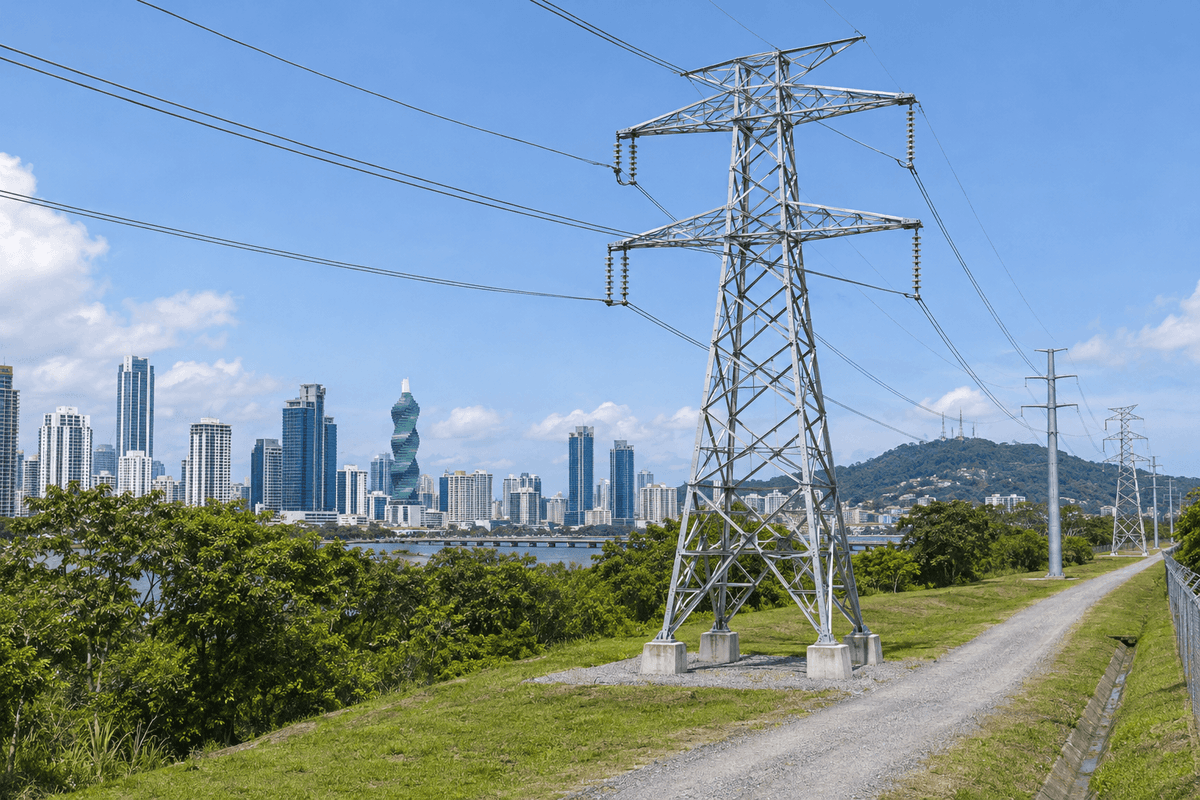
For a proposed power-tower application in Panama City, confirm the applicable Panamanian airspace review route before freezing steel tubular pole or lattice structure heights. Prepare support locations, ground elevations, provisional heights and top elevations, then ask which permanent and temporary construction geometry needs assessment. Keep final geometry and fabrication release conditional on resolving applicable review obligations and coordinating utility engineering and product documentation.
The supplied sources establish neither the local reviewing authority nor a site-specific screening result. The FAA process provides a U.S. evaluation example only.
Key Takeaways
- Assign a project representative to confirm the competent Panamanian reviewing authority, screening criteria and submission channel.
- Prepare a revision-controlled register of proposed support locations, ground elevations, provisional heights and top elevations.
- Ask which permanent elements and temporary construction envelopes need assessment and which reference systems and precision are required.
- Have the utility designer assess any proposed geometry change before finalizing support heights or configurations.
- Request the authoritative product PDF, exact offered model, page references and applicable conditions before binding selection.
- Tie fabrication release to coordinated drawings and resolved review questions; check whether subsequent geometry changes require reassessment.
The Buyer Decision
Continue preliminary engineering and supplier clarification while the review route and design inputs are being established. As a proposed buyer control, keep final height approval and fabrication release conditional on documented review obligations, engineering decisions and product evidence. This is a planning recommendation, not a confirmed Panamanian release procedure.
Panama City is solely a proposed site. The supplied material establishes no parcel, route, nearby airport, affected navigation facility or aviation conflict. A city name cannot supply the individual support geometry needed to frame a site-specific enquiry.
The EIA explanation of electricity delivery describes power lines as part of the system connecting electricity producers and consumers. It also identifies approval of new routes and acquisition of land as U.S. transmission-siting challenges. It supplies general electricity-delivery context, not evidence of project demand or network conditions in Panama City.
Product Scope and Selection Limits
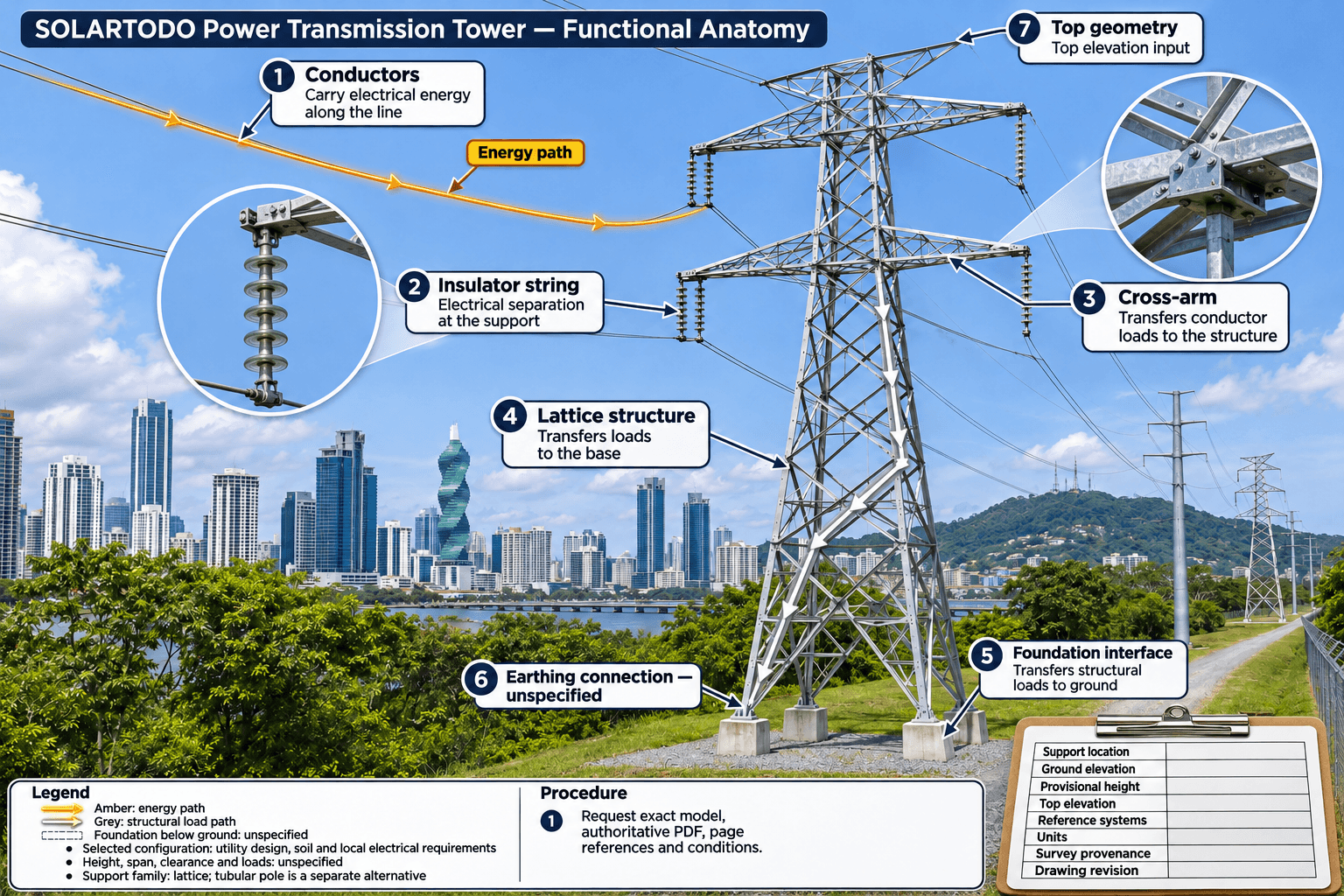
The supplied SOLARTODO power-tower catalog, identified as city-catalog-2026-11-01-v1, includes steel tubular poles and lattice structures, with single-circuit and double-circuit configurations. Selected conductors, insulators, cross-arms, earthing and foundation are part of a line design. This establishes catalog scope, not a complete bill of materials, certification or as-built performance.
Voltage alone does not establish tower height, weight, span, clearance or foundation. The catalog states that final utility design, soil, wind/ice and local electrical requirements must determine the selected configuration. Its wind/ice wording does not establish Panama City's climate or a project loading case.
Keep the support family explicit in drawings and supplier discussions. A steel tubular pole must remain a tubular pole in illustrations; lattice structures are a separate catalog alternative. Do not infer a height advantage or interchangeable design from their inclusion in the same catalog.
The internal power-tower product page is retained as a navigation reference. Before binding selection, request the authoritative product PDF and reconcile the offered model, exact page references and applicable conditions with the purchase specification. No product PDF, PDF URL, model designation or page reference is supplied, so model-specific verification remains unresolved. The FAA and EIA sources do not provide product specifications.
A Practical Review and Release Sequence
The following workflow is proposed for project planning. Its records and decision points are internal buyer controls, not established Panamanian submission requirements.
Confirm the review route
Assign a permitting representative to establish which Panamanian authority and office should address the actual proposed location. Seek confirmation of screening triggers, submission channels, required information and any coordination with other aviation stakeholders.
Ask what response or determination, if any, is needed before advancing the proposed geometry. Retain the instructions and the proposal revision to which they apply. If the response says no further review is required, record its stated scope and basis rather than treating it as unrestricted acceptance of future changes.
Prepare a traceable geometry package
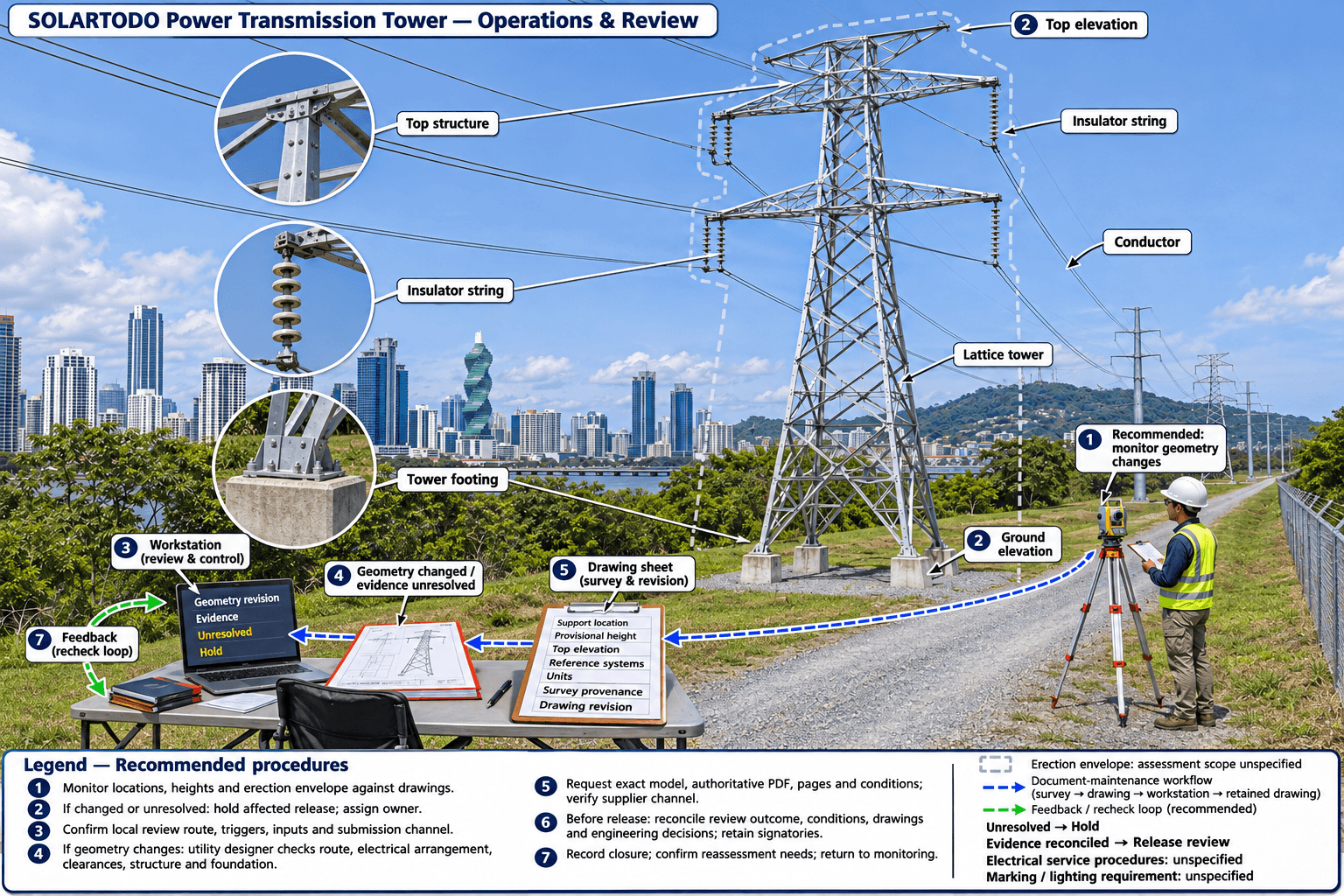
For preliminary coordination, prepare a support register linked to drawings. Distinguish each support's location, ground elevation, provisional height above ground and resulting top elevation. Record units, coordinate and elevation reference systems, survey provenance and drawing revision.
Describe the proposed permanent arrangement and ask how conductors, cross-arms and other elements should be represented. Describe the intended erection envelope and ask whether temporary locations and maximum working elevations need separate assessment.
These are suggested preparation steps. The applicable authority must confirm the submission content, format and precision; the supplied FAA overview does not establish those requirements for Panama.
Reconcile the outcome with utility engineering
Use the confirmed local route for any required screening or submission. Keep questions, responses and conditions linked to the geometry assessed.
If a response calls for a geometry change, ask the utility designer to evaluate the consequences for the route, electrical arrangement, clearances, structural design and foundation. Lowering a proposed support is not, by itself, evidence that the revised line design is suitable.
Track unresolved questions with an owner and a closure record. A complete internal document set does not establish aviation acceptance or engineering adequacy.
Define the buyer's release record
Designate a release owner and assemble the following before authorizing the affected purchase or fabrication decision:
- Confirmation of the applicable review route and any required screening or review outcome.
- The drawing revision covered by that outcome and the disposition of relevant conditions.
- The utility designer's decisions on the proposed configuration and its engineering inputs.
- The offered model, authoritative product PDF, page references and applicable conditions reconciled with the purchase specification.
- A release decision identifying responsible signatories and changes that need reassessment.
Keep affected decisions provisional when required evidence remains unresolved. When locations, heights or other assessed inputs change, confirm whether renewed screening or submission is necessary.
What the FAA Example Contributes
The FAA Obstruction Evaluation Overview describes U.S. aeronautical studies of objects that may affect national airspace, air navigation facilities or airport capacity. It identifies a Notice Criteria Tool, proposed-construction notice submissions, follow-up questions and downloadable determinations.
For this article, that sequence provides an evaluation example: establish whether notice is needed, supply the requested proposal information and retain the resulting determination. FAA forms, notice criteria, regulations and marking or lighting guidance belong to the U.S. process. The supplied page establishes neither Panamanian jurisdiction nor an equivalent local procedure.
Ask the applicable local authority whether marking or lighting needs consideration. The supplied sources establish no marking or lighting requirement, exemption or acceptable height for this proposed site.
Supplier Enquiry and Evidence Limits
Prepare a preliminary supplier enquiry that identifies the proposed support family and circuit arrangement, references the current geometry revision and distinguishes confirmed inputs from provisional ones. Request the exact offered model, supporting documentation and applicable conditions, and ask how a geometry revision would affect the offer.
Retained navigation reference: contact. The supplied sources do not establish this page's availability, functionality or ability to receive project enquiries; verify a supplier communication channel before relying on it.
The remaining gaps are specific: the local authority and procedure are unverified, site-specific geometry is not established, and model-specific product documentation is absent. These sources provide no basis for selecting an allowable height, clearance, load, span, foundation size or review duration. They also establish no local climate, customer deployment, certification or measured performance.
FAQ
What should happen before support heights are frozen?
Confirm the applicable local screening route, resolve any required airspace review and coordinate the outcome with utility engineering. As a buyer control, keep heights provisional until these decisions are documented against the relevant drawings.
Who should establish the local review route?
Assign a project permitting representative to seek confirmation of the competent Panamanian authority, screening criteria and submission channel. Their identity and requirements are not established by the supplied sources.
What should the preliminary geometry package contain?
Prepare support locations, ground elevations, provisional heights, top elevations, reference systems, units and drawing revisions for coordination. Ask the applicable authority to confirm required inputs, submission format and survey precision.
Does permanent-structure review cover temporary construction?
The supplied sources do not establish that coverage for Panama. Describe the proposed erection envelope and ask whether temporary locations and maximum working elevations need separate assessment.
Can voltage or the catalog determine the final support configuration?
No. Voltage alone does not establish height, weight, span, clearance or foundation. The catalog includes steel tubular poles and lattice structures in single-circuit and double-circuit configurations; final utility design, soil, wind/ice and local electrical requirements must determine selection.
What product evidence should the buyer request?
Request the authoritative product PDF, exact offered model, page references and applicable conditions. None of those model-specific references is supplied here, so product specification verification remains unresolved.
Who should authorize fabrication release, and what records are needed?
The buyer should designate a release owner to collect applicable review outcomes, utility engineering decisions and product documentation against coordinated drawings. This proposed internal record does not replace any required authority or engineering approval.
When should the airspace decision be revisited?
When a location, height, construction envelope or other assessed input changes, record the revision and ask whether renewed screening or submission is necessary before releasing the affected design.
References
- SOLARTODO power-tower catalog: supplied extraction city-catalog-2026-11-01-v1; product-family scope and selection limits, without a product PDF or model-specific specifications.
- FAA Obstruction Evaluation Overview: U.S. obstruction-evaluation example; no established Panamanian procedure or site-specific determination.
- EIA: How electricity is delivered to consumers: electricity-delivery explanation and U.S. siting context; no site-specific Panama City evidence.
Proposed Equipment
- Steel tubular poles
- Lattice structures
- Conductors selected through line design
- Insulators selected through line design
- Cross-arms selected through line design
- Earthing selected through line design
- Foundation selected through line design