Specify Streetlight Fallback and Gateway Restart Recovery

Cinn Song
Founder & Chief Solutions Architect
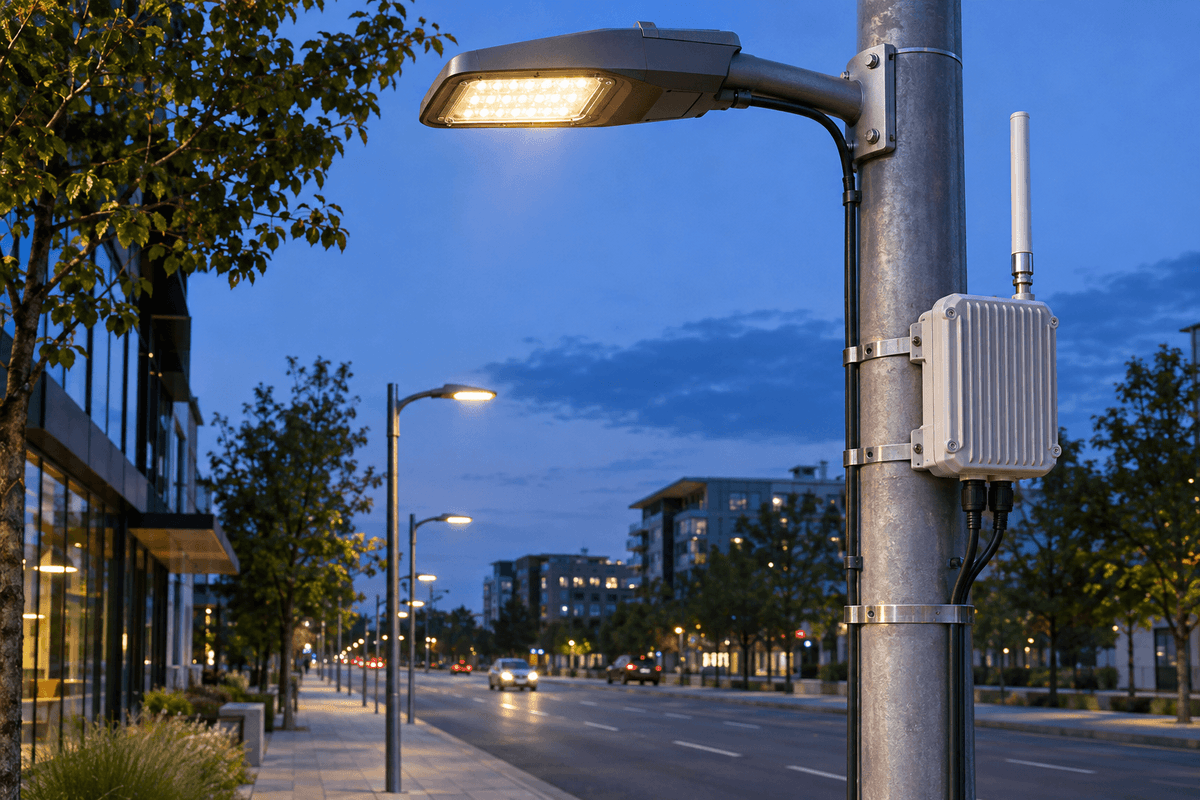
TL;DR
Yes. Use site schedules, power feeds and the offered device configuration to specify outage behavior and recovery limits. Cut only gateway power during acceptance, observe the energized luminaires, then verify a fresh central command after restart.
Require the backhaul tender to define luminaire behavior during gateway power loss and how central control resumes. Use the site's lighting schedules, power layout and proposed devices to set project-specific limits, then witness a gateway-only power interruption with the luminaires energized.
Summary
Require the backhaul tender to define luminaire behavior during gateway power loss and how central control resumes. Use the site's lighting schedules, power layout and proposed devices to set project-specific limits, then witness a gateway-only power interruption with the luminaires energized.
Key Takeaways
- Put both outage operation and return to central control in the tender.
- Map the power feeds and communications dependencies so the test isolates gateway power loss.
- Specify the required luminaire output and behavior across any scheduled change during the outage.
- Assign responsibilities across backhaul, field devices and central management, with one party accountable for the integrated test.
- Verify recovery with a fresh central command, an observed luminaire response and an updated central status.
- Agree on project-specific timing limits and record the tested device, firmware and configuration.
Specify streetlight operation during a gateway power outage and recovery
Yes. Put both behaviors in the wireless backhaul specification. Define how energized luminaires should operate while the gateway is unavailable, and define how the system should confirm that central control has resumed after the gateway restarts. Use the site's lighting requirements, operating schedules, power layout and proposed equipment configuration to set the acceptance criteria. Test the sequence by interrupting gateway power while keeping the luminaires energized.
Define the outage and assign responsibility
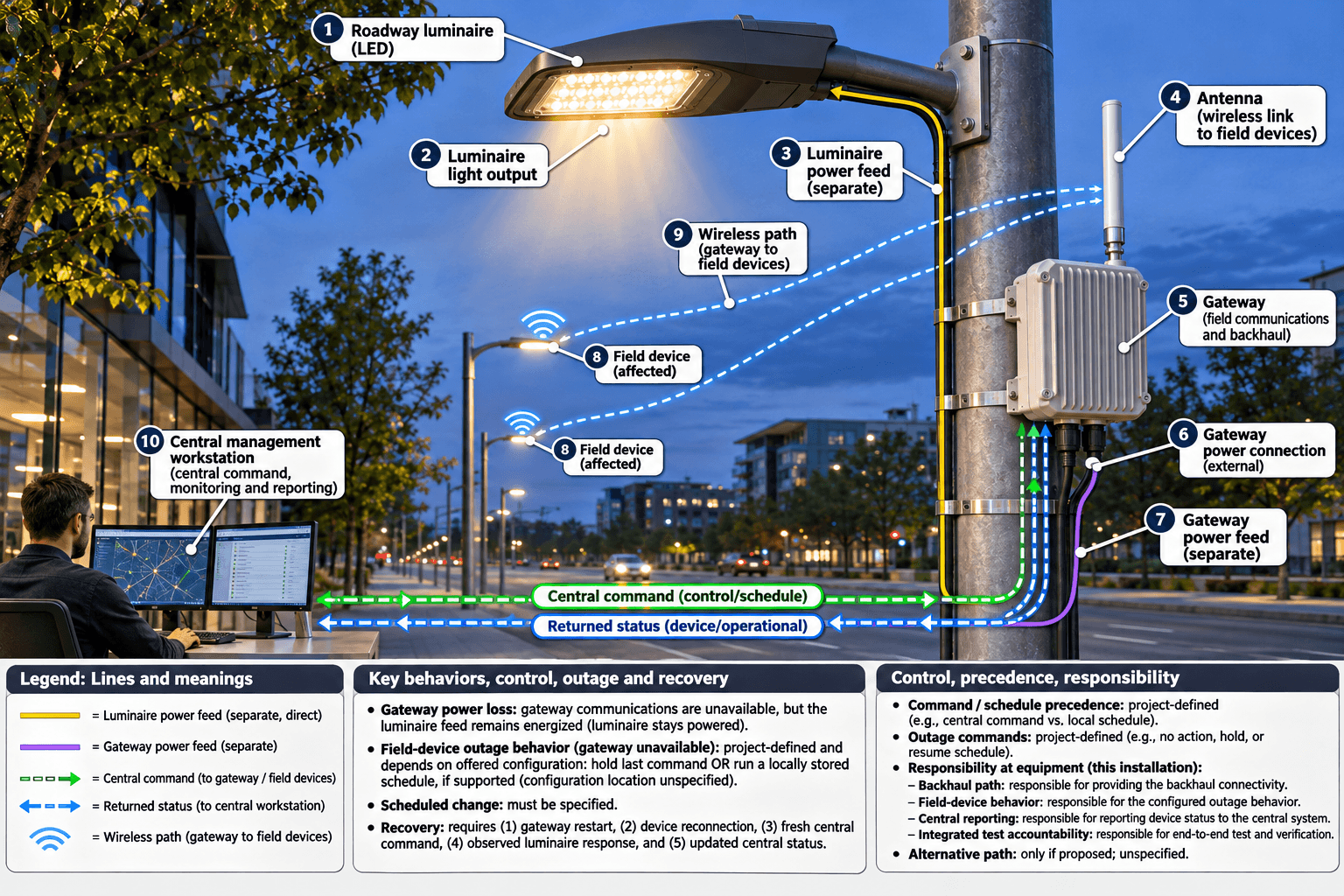
The U.S. Department of Energy's Model Specification for Networked Outdoor Lighting Control Systems, V2.0, introduces a backhaul communications section, separates start-up from commissioning, and supports separate bids for central management systems, backhaul networks and field devices. Use that structure as a tender template. Ask the backhaul bidder to identify the affected communications path, the field-device bidder to describe the proposed luminaire behavior, and the central management bidder to describe how the system will report and recover control. Assign responsibility for demonstrating the combined behavior at acceptance. DOE model specification, V2.0
Ask bidders to mark the gateway and luminaire power feeds on a diagram and identify which devices depend on the gateway. Define the test condition as loss of power to the gateway with the affected luminaires still energized. If the proposed design includes another communications path, ask bidders to show which devices would remain reachable and which would enter their specified outage mode.
Specify what the luminaires should do during the outage
Start with the lighting operation the site requires while the gateway is unavailable. State the required output or schedule for each affected group and what should happen if the outage spans a scheduled change. Ask bidders to identify where that behavior is configured and which offered field devices can execute it without the gateway. If the project allows more than one approach, request a comparison of options such as holding the last commanded level or following a locally stored schedule. Require bidders to demonstrate the option they offer on the proposed equipment and configuration.
Write down when the outage behavior should begin and how long it must be maintained. If the project requires an operator alarm, specify when the operator should see it and how the central system should label the last reported luminaire state while fresh data is unavailable. Set those criteria from the project's operating needs. Treat the fallback behavior, alarm timing and display behavior as requirements to verify during procurement.
Define when central control has resumed
Write separate acceptance checks for gateway restart, restored communication with the affected field devices, and successful central control. Require the bidder to explain which schedule or command should take precedence after reconnection, how commands issued during the outage will be handled, and what the operator should see if only part of the affected group reconnects. Where recovery time matters, define the start and end events for measurement. For example, the project could measure from restoration of gateway power to a verified response to a fresh central command.
The DOE V2.0 overview describes its backhaul and commissioning updates. The correct outage behavior and recovery timing for the proposed equipment remain open until the buyer specifies and verifies them. Ask each bidder to identify any V2.0 clause it relies on by section number and map that clause to its offered configuration and test evidence. For projects outside the United States, use the model as a reference and set acceptance criteria against the project's applicable local requirements. DOE model specification, V2.0
Witness a gateway-only power interruption
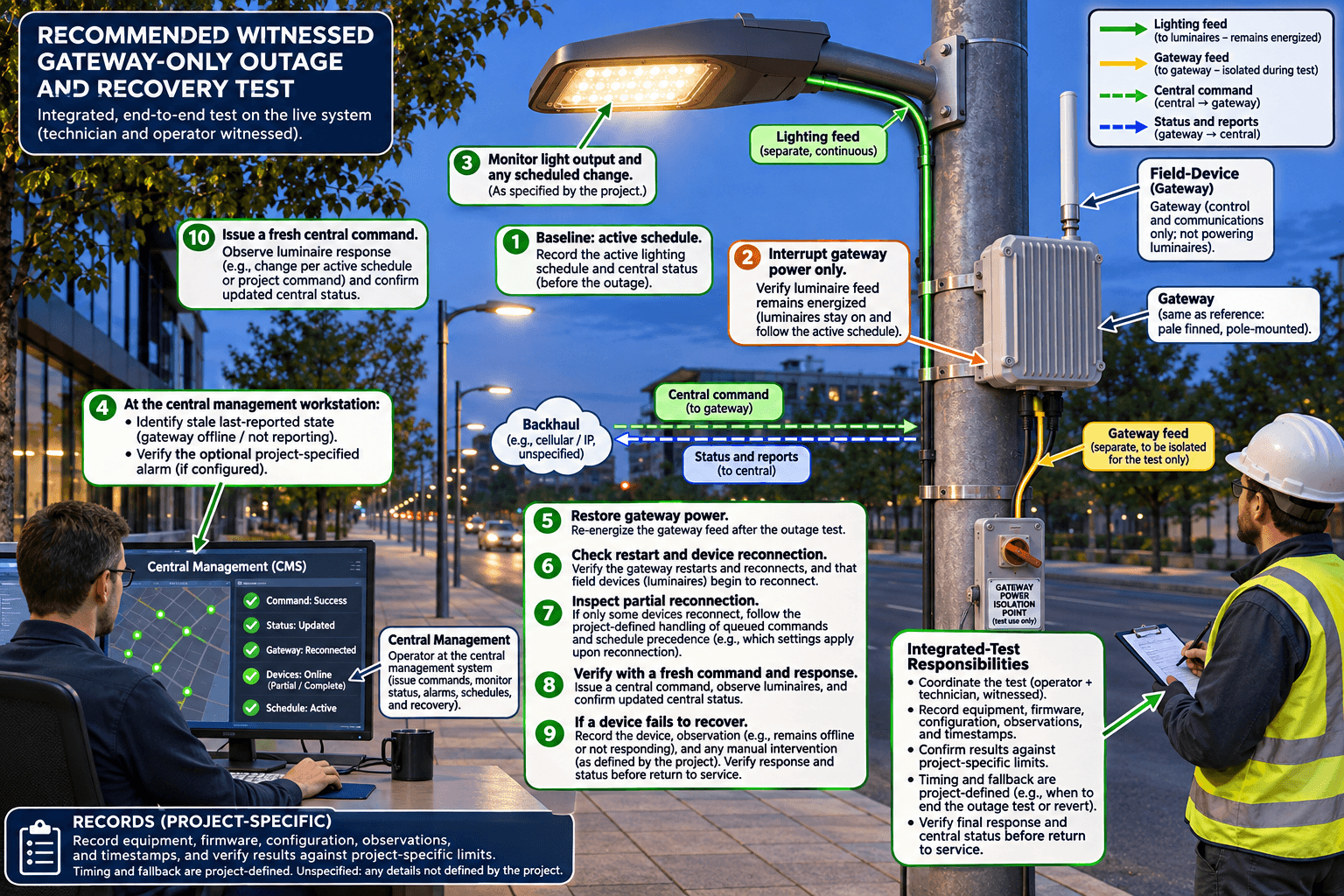
Agree on the equipment, firmware, configuration and expected results before the test. The DOE's Connected Lighting Systems overview describes a laboratory test bed focused on electrical performance, with streetlighting, wireless gateway and metering infrastructure. For procurement acceptance, use the offered configuration and verify any behavior that depends on the installed site during field commissioning. DOE Connected Lighting Systems
- Record normal luminaire operation, the active schedule and the central system's current status. Confirm that a central command produces the expected field response.
- Interrupt gateway power and confirm that the tested luminaires remain energized. Observe their operation against the specified outage behavior. If the requirement covers a scheduled change, keep the gateway off through that change and check the result.
- Restore gateway power. Record when the affected devices reconnect, check the agreed schedule or command precedence, and issue a fresh central command. Verify the response at the luminaire and check the corresponding status in the central system.
- Compare the observations and timestamps with the project limits. Record the tested configuration, any devices that failed to recover and any manual intervention required.
FAQ
Should the backhaul specification cover both outage operation and recovery?
Yes. Define both in the backhaul specification and reference the corresponding field-device and central management obligations.
What power condition should the acceptance test reproduce?
Interrupt power to the gateway while confirming that the affected luminaires remain energized.
Should the tender require a specific fallback light level?
Set the required output or operating schedule for the site. Ask bidders to demonstrate that their offered configuration can deliver it.
What if a dimming change is scheduled during the outage?
Specify the expected luminaire behavior at that change and include the transition in the witnessed test.
What should the operator see while field data is unavailable?
Specify any required alarm and how the central system should distinguish previously reported states from fresh device updates.
How should buyers handle commands sent while the gateway is offline?
Specify which commands should apply after reconnecting, which should expire and how they interact with the active schedule.
How can the buyer confirm that central control has returned?
Send a fresh central command, observe the expected response at the luminaire and check the updated central status against the agreed limit.
Can buyers outside the United States use DOE V2.0?
Use it as a reference for tender structure. Set binding criteria from the project's local requirements and verify them on the offered configuration.
Procurement paths
About the Author

Cinn Song
Founder & Chief Solutions Architect
Cinn Song founded SOLARTODO LIMITED and leads its smart-city infrastructure engineering — from solar, storage and integrated smart poles to the company's push into physical-AI city edge nodes: pole-mounted edge computing, vertical LLMs for smart cities, drone-based O&M with autonomous battery swapping, robotic maintenance, and high-speed counter-UAS interception. Since 2010, he has directed turnkey EPC + BOT delivery across 50+ countries, including telecom monopole supply for national grid operators, off-grid solar street-lighting for African municipalities, and integrated smart-pole programs for Gulf smart cities.
Cite This Article
Cinn Song. (2026). Specify Streetlight Fallback and Gateway Restart Recovery. SOLARTODO. Retrieved from https://solartodo.com/knowledge/when-a-wireless-backhaul-gateway-loses-power-but-the-streetlights-remain-energized-should-the-backhaul-specification
@article{solartodo_when_a_wireless_backhaul_gateway_loses_power_but_the_streetlights_remain_energized_should_the_backhaul_specification,
  title = {Specify Streetlight Fallback and Gateway Restart Recovery},
  author = {Cinn Song},
  journal = {SOLARTODO Knowledge Base},
  year = {2026},
  url = {https://solartodo.com/knowledge/when-a-wireless-backhaul-gateway-loses-power-but-the-streetlights-remain-energized-should-the-backhaul-specification},
  note = {Accessed: 2026-11-29}
}
Published: November 28, 2026 | Available at: https://solartodo.com/knowledge/when-a-wireless-backhaul-gateway-loses-power-but-the-streetlights-remain-energized-should-the-backhaul-specification
Subscribe to Our Newsletter
Get the latest solar energy news and insights delivered to your inbox.
View All Articles