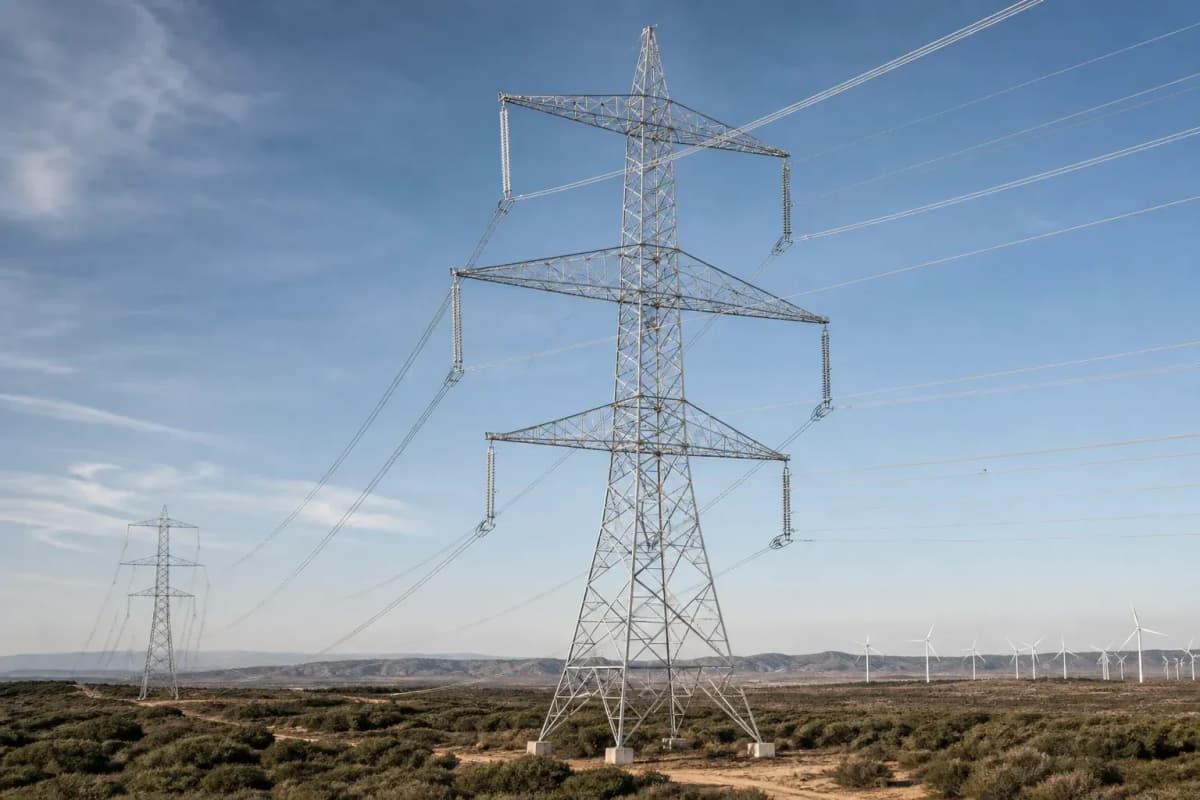
77m 500kV Heavy Lattice Tangent Tower Flanged - UHV Transmission Structure
Key Features
- 77 m tower height for 500 kV UHV AC overhead transmission corridors
- 462 m representative design span with 1 circuit and 4 conductors per phase
- EPC turnkey price range of USD 140,140-191,858 per installed tower
- Grounding target below 10 ohm standard or below 4 ohm in high-lightning areas
- 50-year design life with galvanized steel maintenance and periodic inspection
The 77m 500kV Heavy Lattice Tangent Tower Flanged is a galvanized steel suspension tower for 1-circuit UHV AC lines with 4 conductors per phase and a 462 m design span. EPC turnkey pricing is USD 140,140-191,858 per installed tower, including engineering, procurement, construction, commissioning, and a 1-year warranty.
Description
The 77m 500kV Heavy Lattice Tangent Tower Flanged is a 77 m galvanized steel suspension structure engineered for 500 kV ultra-high-voltage AC transmission, 1 electrical circuit, 4 bundled conductors per phase, and a 462 m representative span. SOLARTODO specifies this flanged heavy lattice tower for straight-line corridors where tangent towers can represent 70-80% of all structures on a typical overhead line, with EPC turnkey pricing from USD 140,140 to USD 191,858 per installed tower.
A 500 kV single-circuit corridor can typically transfer about 1,000-1,500 MW depending on conductor size, thermal limits, ambient temperature, and network stability criteria, so tower reliability is a grid-security item rather than only a steel procurement item. The 77 m height supports phase-to-ground clearance, bundle spacing, shield-wire geometry, and maintenance access for utility-scale solar export lines, wind interconnection lines, mining supply corridors, and cross-border backbone grids.
Product Definition and Grid Role
This product is a tangent, suspension, heavy steel lattice tower for straight transmission sections with a nominal 500 kV voltage class and 4-conductor-per-phase bundle geometry. Tangent towers primarily carry vertical conductor weight and transverse wind load rather than high line-angle loads, which is why they are normally the lowest-cost structure type across 70-80 towers in a 100-tower line segment.
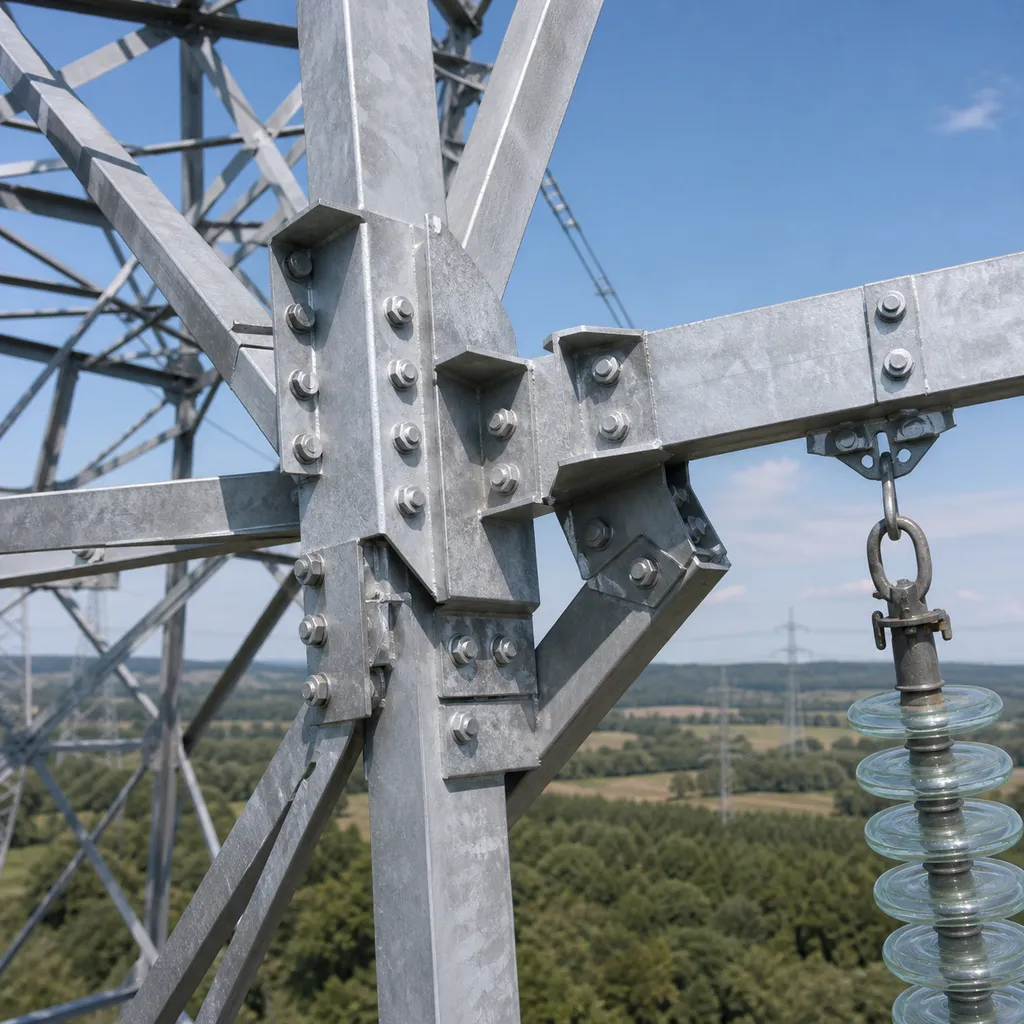
The flanged connection concept divides the 77 m tower into transportable galvanized modules with bolted field assembly, reducing site welding to 0 primary joints and improving dimensional control during erection. Compared with a conventional welded tubular monopole alternative for a similar 500 kV height class, a lattice tower can reduce steel tonnage by about 10-25% in many terrain and wind cases, while requiring a larger ground footprint and more bolted connections.
The tower is intended for UHV transmission applications where line planners need long-span capability, bundled ACSR or AAAC conductors, OPGW shield wires, and suspension insulator strings. For buyers comparing multiple structure families, View all Power Transmission Tower/Pole products to align tower height, voltage class, conductor bundle, foundation type, and corridor constraints before locking a 500 kV bill of quantities.
Technical Specifications
| Parameter | Specification |
|---|---|
| Tower height | 77 m |
| Nominal voltage | 500 kV AC |
| Tower type | Tangent / suspension |
| Structural form | Heavy galvanized steel lattice |
| Circuit count | 1 circuit |
| Conductors per phase | 4 bundled conductors |
| Design span | 462 m representative span |
| Connection type | Flanged and bolted modules |
| Wind and ice basis | Class B wind / 15 mm ice basis |
| Grounding target | Less than 10 ohm standard; less than 4 ohm in high-lightning areas |
| Design life | 50 years with inspection and galvanizing maintenance |
IEC 60826:2017 defines loading and strength requirements for overhead lines of 45 kV and above using reliability-based design principles, which is directly relevant to a 500 kV tower with a 462 m design span. ASCE/SEI 10-15 provides requirements for design, fabrication, and full-scale testing of latticed steel electrical transmission structures, making it a suitable structural reference for Q420/Q460 galvanized angle-steel members and bolted tower joints.
IEEE 738-2023 is used for calculating the current-temperature relationship of bare overhead conductors, which matters because a 4-bundle 500 kV phase can be thermally constrained by conductor temperature, wind speed, solar heating, and emergency loading duration. The tower geometry should be coordinated with conductor sag-tension tables, insulator swing envelopes, live-line clearance rules, and 1-in-50-year or project-specific climatic load cases.
System Architecture
A complete 500 kV tangent tower system includes 1 steel lattice body, 3 phase suspension assemblies, 2 shield-wire or OPGW attachment points, 12 conductor clamp interfaces for 4 bundled conductors across 3 phases, 1 grounding down-lead system, and 1 foundation set. The tower is not only a vertical support; it is a mechanical node that preserves electrical clearance, conductor separation, optical communication continuity, and lightning shielding over a 462 m span.
The preferred conductor arrangement uses quad-bundle ACSR or equivalent aluminum conductor technology to reduce corona, improve ampacity, and lower audible noise at 500 kV compared with 1 or 2 conductor-per-phase arrangements. For a representative 500 kV AC line, using 4 conductors per phase can reduce electric-field concentration at each sub-conductor surface and support higher MVA transfer without increasing nominal voltage above 500 kV.
Insulation is normally specified as porcelain suspension strings or composite polymer I-strings, with creepage distance and shed profile selected against 1 pollution class, 15 mm ice basis, and local altitude correction. Composite insulators can reduce string weight by about 40-60% versus porcelain strings in many 500 kV assemblies, but porcelain remains preferred by some utilities for established inspection routines and 30-50 year field histories.
The OPGW system combines 2 critical functions in 1 upper shield-wire path: lightning interception and fiber-optic communication for protection relays, SCADA, and line monitoring. Grounding should target below 10 ohm tower footing resistance in standard soil, while high-lightning or rocky corridors often specify below 4 ohm using counterpoise wire, chemical rods, or enhanced grounding grids.
Engineering, Standards, and Compliance
The structural calculation package should include dead load, conductor tension, transverse wind, ice accretion at 15 mm, erection load, maintenance load, and broken-wire load cases for at least 1 credible contingency condition. IEC 60826 and CIGRE overhead-line guidance emphasize local climatic data, because a 30 m/s wind site and a 45 m/s wind site can require materially different member sizes even when both lines operate at 500 kV.
For steel procurement, SOLARTODO normally references hot-dip galvanizing thickness, zinc coating adhesion, bolt-grade traceability, and mill certificates for 100% of primary leg and bracing members. A 50-year design life is practical only when galvanizing damage is repaired after erection, drainage details prevent standing water, and inspection cycles identify corrosion, bolt loosening, foundation settlement, and conductor hardware wear before critical capacity is lost.
The electrical rating should be coordinated with IEEE 738-2023 conductor thermal calculations, especially if the owner uses seasonal ratings, dynamic line rating, or N-1 emergency loading. NREL transmission planning research notes that transmission expansion and operating technologies such as dynamic line ratings can support renewable integration, which makes conductor clearance and thermal headroom important for 24-hour dispatch flexibility rather than only peak-load design.
Representative MENA Solar Farm Scenario
For a representative MENA solar farm scenario, assume a 1,200 MW solar-plus-storage export corridor using 500 kV AC, 1 circuit, quad-bundle ACSR, 462 m average tangent span, and 160 tangent towers across roughly 74 km of straight and mildly rolling terrain. In this scenario, tangent structures could account for about 75% of the tower count, while angle, dead-end, river-crossing, and substation gantry structures would make up the remaining 25%.
At an EPC turnkey midpoint of about USD 166,000 per tower, 160 tangent towers would represent about USD 26.6 million before line-angle towers, conductor, substations, reactive compensation, land, and permitting are fully counted. The ROI case is driven by avoided renewable curtailment, reduced diesel or gas generation, and faster interconnection of 1,000-1,500 MW per circuit, not by resale value of the steel structure alone.
Applications
The 77 m 500 kV heavy lattice tangent tower is suitable for utility-scale renewable export lines, independent power producer grid connections, national transmission upgrades, mining and industrial supply corridors, and regional interconnector sections with long straight alignments. Buyers can Configure your system online to compare 66 kV, 110 kV, 220 kV, 330 kV, and 500 kV tower families with span, conductor bundle, foundation, and corrosion-class inputs.
Cloud monitoring can be integrated through OPGW fiber, tower-mounted weather sensors, line temperature sensors, and inspection data from UAV flights at 1-month, 6-month, or 12-month intervals depending on owner policy. A practical monitoring package records wind speed, conductor temperature, tower tilt, ground resistance test history, and fault-location data to reduce outage investigation time from multiple hours to under 1 operational shift.
EPC Investment Analysis and Pricing Structure
EPC delivery includes 5 work packages: engineering, procurement, construction, commissioning, and a 1-year warranty. Engineering covers route-specific load confirmation, foundation selection, shop drawings, galvanizing inspection, and erection method statements; procurement covers steel, bolts, hardware, grounding, packing, and shipping; construction covers foundation works, tower erection, grounding, quality records, and mechanical completion.
| Pricing tier | Scope | Unit price range |
|---|---|---|
| FOB Supply | Equipment only, ex-works China | USD 86,887-130,463 |
| CIF Delivered | FOB plus ocean freight and insurance | USD 111,113-166,839 |
| EPC Turnkey | Installed, commissioned, and 1-year warranty | USD 140,140-191,858 |
| Order quantity | Discount from listed tier | Procurement note |
|---|---|---|
| 50+ towers | 5% | Batch galvanizing and container planning reduce unit cost |
| 100+ towers | 10% | Steel rolling, bolt procurement, and fixture reuse improve pricing |
| 250+ towers | 15% | Corridor-scale logistics and repeated foundations reduce EPC overhead |
ROI should be assessed over a 25-50 year transmission asset life, with payback normally linked to avoided curtailment, reduced network congestion, and deferred alternative generation rather than direct tower revenue. If a 500 kV corridor avoids only 2% curtailment on a 1,200 MW renewable plant at USD 35/MWh and 2,200 full-load hours, annual recovered energy value can exceed USD 1.8 million, which can offset a 160-tower tangent package in roughly 14-16 years before considering wider reliability benefits.
Compared with a lower-voltage 220 kV alternative, a 500 kV quad-bundle line usually requires larger towers and higher insulation cost, but it can transmit several times more power per corridor and reduce right-of-way duplication. In land-constrained projects, 1 high-capacity 500 kV circuit can avoid 2-3 parallel lower-voltage corridors, reducing permitting interfaces, access-road duplication, and long-term inspection mileage.
Payment terms are 30% T/T advance plus 70% against bill of lading, or 100% irrevocable L/C at sight for bankable buyers, with project financing discussion available for packages above USD 1,000,000. For site-specific BOQ, route drawings, soil reports, wind and ice data, and delivery schedules, Request a custom quotation or contact [email protected] with at least 6 route and design inputs.
Procurement and Quality Control
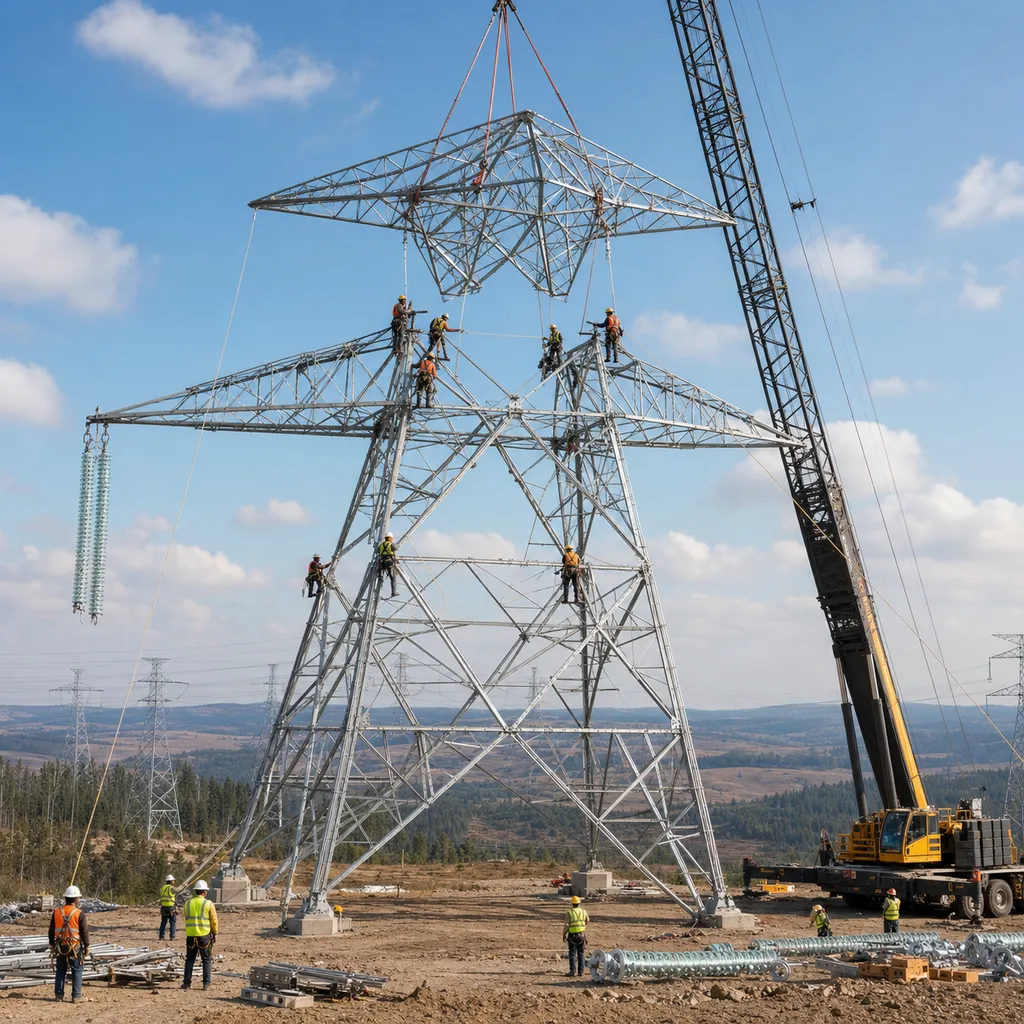
Factory QA should verify 100% member marking, hole position tolerance, flange flatness, bolt compatibility, trial assembly for representative tower sections, and galvanizing repair procedures before shipment. A 77 m tower can include hundreds of angle members and thousands of bolts, so packing lists, bundle IDs, and erection drawings must be synchronized to prevent 1 missing member from delaying a full construction crew.
The recommended inspection and test plan includes steel mill certificates, zinc coating checks, dimensional inspection, weld inspection for flange assemblies, bolt mechanical certificates, trial fit-up records, and pre-shipment photographic evidence. For owners planning harsh coastal, desert, or industrial corridors, coating class and maintenance intervals should be selected against chloride, sand abrasion, temperature cycles, and pollution severity over a 50-year operating period.
Knowledge and Buyer Resources
For technical background on conductor bundles, line rating, OPGW, tower footing resistance, and foundation selection, Learn about topic before comparing EPC bids. A bid that omits 15 mm ice, broken-wire loading, foundation quantities, galvanizing class, or commissioning tests can appear 8-18% cheaper at procurement stage but create higher variation-order risk during construction.
SOLARTODO supports B2B buyers across solar, energy storage, smart lighting, security, telecom, and power tower infrastructure with project-specific engineering coordination. The 77 m 500 kV Heavy Lattice Tangent Tower Flanged should be specified using actual route survey, 1 geotechnical report per representative foundation zone, 1 utility clearance standard, and 1 approved conductor data sheet before manufacturing release.
Technical Specifications
| Tower Height | 77m |
| Voltage Rating | 500kV |
| Tower Type | Tangent suspension tower |
| Material | Heavy galvanized steel lattice |
| Number of Circuits | 1circuit |
| Conductor Bundle | 4 x ACSR per phase |
| Design Span | 462m |
| Connection Type | Flanged bolted modules |
| Wind/Ice Load | Class B / 15mm ice |
| Foundation | Reinforced concrete tower foundation |
| Grounding Target | <10 standard, <4 high-lightningohm |
| Design Life | 50years |
| Standards | IEC 60826 / GB 50545 / ASCE 10-15 / IEEE 738-2023 |
Price Breakdown
| Item | Quantity | Unit Price | Subtotal |
|---|---|---|---|
| Galvanized heavy lattice tower steel package | 1 pcs | $104,000 | $104,000 |
| Flanged base plates, anchor bolts, and templates | 1 pcs | $6,200 | $6,200 |
| Reinforced concrete foundation package | 1 pcs | $16,000 | $16,000 |
| Grounding, down-leads, and OPGW attachment hardware | 1 pcs | $3,200 | $3,200 |
| 500kV suspension insulator and conductor clamp sets | 12 pcs | $450 | $5,400 |
| Engineering, shop drawings, and QC documentation | 1 pcs | $10,500 | $10,500 |
| Installation and commissioning labor | 1 pcs | $15,600 | $15,600 |
| 1-year warranty and project support | 1 pcs | $3,800 | $3,800 |
| Total Price Range | $140,140 - $191,858 | ||
Frequently Asked Questions
What does the EPC turnkey price include for this 77 m 500 kV tower?
Why use a tangent lattice tower instead of an angle tower?
Which standards are relevant for a 500 kV heavy lattice tower?
Can the tower support OPGW and cloud monitoring?
What information is needed for a final quotation?
Certifications & Standards


Data Sources & References
- •IEC 60826:2017, Design criteria of overhead transmission lines, https://webstore.iec.ch/en/publication/33148
- •IEEE 738-2023, Current-temperature relationship of bare overhead conductors, https://standards.ieee.org/ieee/738/10207/
- •ASCE/SEI 10-15, Design of Latticed Steel Transmission Structures, https://ascelibrary.org/doi/book/10.1061/asce10
- •IEA, Electricity Grids and Secure Energy Transitions, 2023, https://www.iea.org/reports/electricity-grids-and-secure-energy-transitions
- •IRENA, Tripling renewable power and doubling energy efficiency by 2030, https://www.irena.org/Digital-Report/Tripling-renewable-power-and-doubling-energy-efficiency-by-2030
- •NREL Transmission Planning, https://www.nrel.gov/grid/transmission-planning.html
- •CIGRE B2 Overhead Lines technical scope, https://www.cigre.org/article/b2---overhead-lines
Interested in this solution?
Contact us for a customized quote based on your specific requirements.
Contact Us