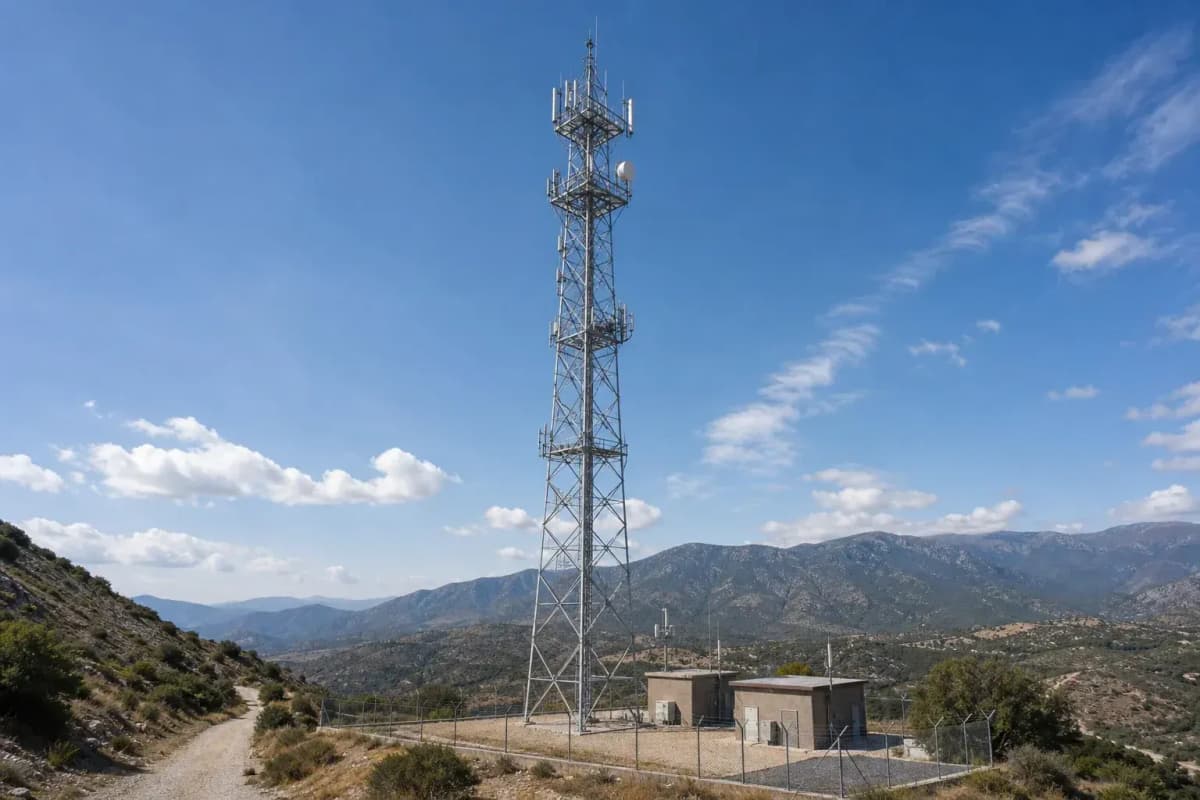
75m Lattice Tower Broadcast Telecom Slip-Joint - 51 m/s Wind-Rated EPC System
Key Features
- 75 m self-supporting lattice tower with 4 antenna platform levels
- 16 antenna capacity for broadcast telecom, 4G/5G, GPS, and microwave links
- 51 m/s design wind speed, equal to about 183.6 km/h or 114.1 mph
- Representative 2,400 kg total tip and appurtenance planning load
- EPC turnkey price range from $114,775 to $156,925 with 1-year warranty
The 75m Lattice Tower Broadcast Telecom Slip-Joint is a heavy angle-steel, self-supporting telecom tower for 16 antennas on 4 platforms, engineered for 51 m/s design wind speed and EPC turnkey delivery from $114,775 to $156,925. It is specified around TIA-222-H, EN 1993-3-1, IEC 62305 lightning protection, and hot-dip galvanized steel for a 30-year design life.
Description
The 75m Lattice Tower Broadcast Telecom Slip-Joint is a self-supporting heavy angle-steel tower for broadcast and telecom operators requiring 16 antenna positions across 4 working platforms. The 75 m structure is configured for 51 m/s design wind speed, 30-year service life, hot-dip galvanized corrosion protection, and EPC turnkey delivery from $114,775 to $156,925.
SOLARTODO supplies this 75 m telecom tower as part of its integrated solar, energy storage, smart lighting, security, telecom, and power tower portfolio at https://solartodo.com. Buyers comparing 30 m to 120 m towers can View all Telecom Tower products, Configure your system online, or Request a custom quotation for site-specific wind, soil, antenna, and foundation inputs.
System Architecture
The tower uses a 4-leg lattice architecture with Q345/Q420 hot-rolled angle steel, bolted bracing, modular transport sections, and slip-joint splice sleeves for 75 m erection sequencing. Compared with a single-pole broadcast structure of similar height, a lattice geometry typically reduces member stress concentration by distributing lateral wind loads through 4 legs and dozens of diagonal bracing paths, while increasing usable antenna mounting faces from 1 primary shaft to 4 structural elevations.
The slip-joint configuration is applied at modular leg and shaft splice zones where section alignment, field fit-up, and crane installation tolerance matter over a 75 m vertical assembly. Final structural resistance is achieved through engineered overlap length, bolt groups, gusset plates, and galvanizing-compatible contact surfaces, with shop trial assembly recommended for 1 tower in every production batch before container loading.
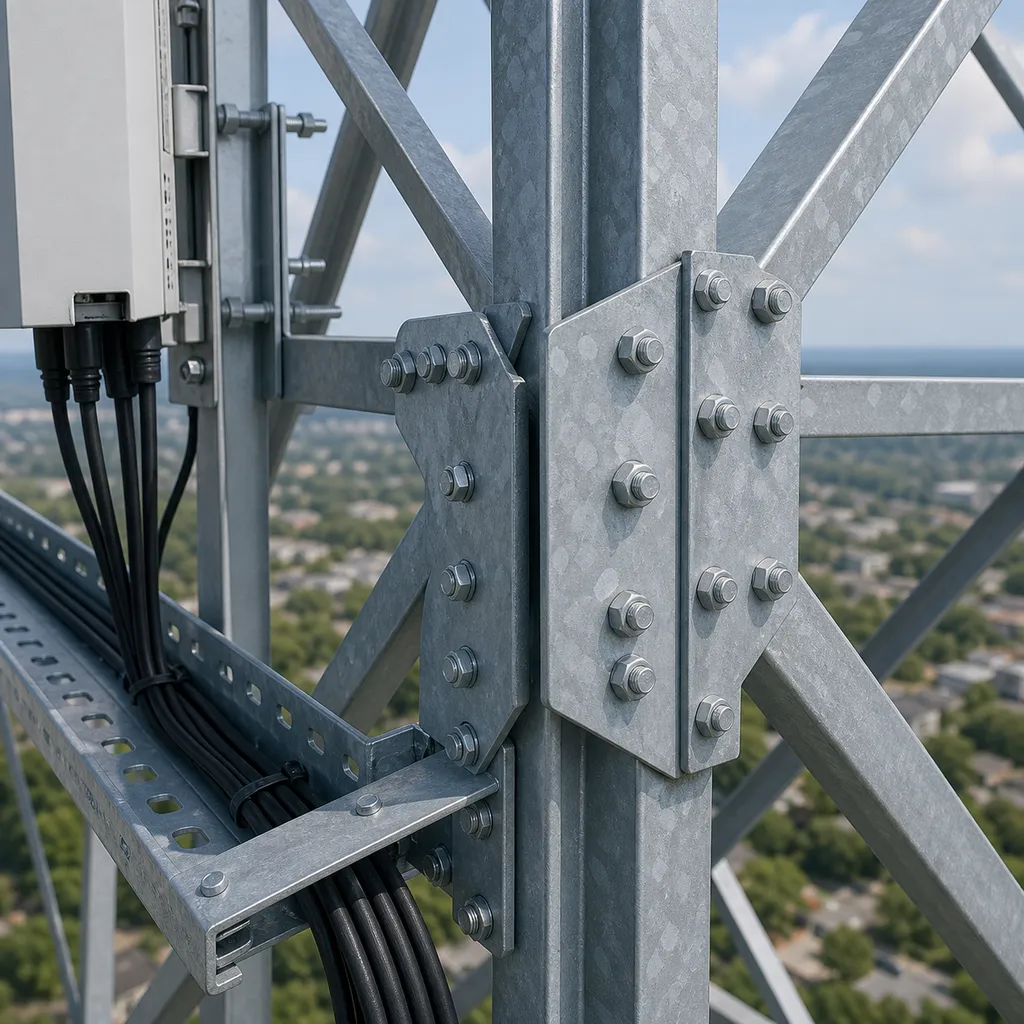
A standard 75 m package includes the tower body, 4 antenna platforms, 16 antenna mounts, 75 m climbing ladder with safety rail, 75 m cable tray, 1 lightning protection system, 2 aircraft warning light sets, and foundation anchor assemblies. The configuration is intended for macro telecom, broadcast relay, microwave backhaul, utility communications, public safety radio, and smart-infrastructure sites requiring 30-year structural availability.
Technical Specifications
The baseline structural design follows ANSI/TIA-222-H:2017, which addresses antenna supporting structures, appurtenance mounts, wind loading, foundations, climbing facilities, and existing-structure analysis. European projects can map the same engineering dossier to EN 1993-3-1:2006+A1/AC or the newer EN 1993-3:2026 framework for towers, masts, and chimneys, while China-based fabrication references GB 50135 for high-rise structural tower design.
| Parameter | 75m Broadcast Telecom Slip-Joint Configuration |
|---|---|
| Tower height | 75 m |
| Tower type | Self-supporting lattice tower |
| Main material | Q345/Q420 heavy angle steel |
| Connection type | Slip-joint section splice plus bolted bracing |
| Antenna platforms | 4 levels |
| Antenna capacity | 16 antennas |
| Design wind speed | 51 m/s |
| Representative total tip load | 2,400 kg |
| Foundation type | 4-leg reinforced concrete mat/stub foundation |
| Corrosion protection | Hot-dip galvanized, marine-grade option |
| Design life | 30 years with scheduled maintenance |
For wind classification, 51 m/s is equivalent to about 183.6 km/h or 114.1 mph at the design reference condition before local code conversion factors are applied. Engineering submittals should confirm exposure category, topographic factor, ice load, seismic zone, gust duration, antenna projected area, feedline count, and service deflection limits for each 1 project site.
Materials, Galvanizing, and Fabrication
The main load-bearing framework uses Q345/Q420 steel angle sections because lattice towers above 60 m require high axial capacity, repeatable bolted detailing, and economical hot-dip galvanizing. Using an assumed 65 metric tons of galvanized steel at $1,400 per ton, the representative structural steel value is about $91,000 before installation, foundation, engineering, freight, and warranty line items.
Corrosion protection is specified as hot-dip galvanizing after fabrication, with ISO 1461 and ASTM A123 commonly used as project references for zinc coating on structural steel. For coastal, desert, or industrial zones with chloride, sand, or SO2 exposure, SOLARTODO can specify thicker galvanizing, duplex paint, stainless hardware in selected zones, and 1 maintenance inspection interval every 12 months.
Bolted connections reduce site welding requirements to 0 routine structural welds during normal erection, which improves quality control in high-wind or remote environments. A practical factory QA package includes steel mill certificates, galvanizing reports, bolt lot records, section marking plans, packing lists, and dimensional inspection records for 100% of main leg and bracing assemblies.
Antenna and Broadcast Capacity
The 4 antenna platforms are designed for 16 antenna positions, with space allocation for 4G/5G panel antennas, microwave dishes, GPS antennas, aviation warning lights, and reserved future mounts. A typical loading review should include antenna weight, projected wind area, radial offset, azimuth orientation, feeder cable count, and 1 climb-safe access path to every installed platform.
The representative 2,400 kg total tip and appurtenance allowance is a planning value, not a substitute for project-specific structural analysis. If the final antenna schedule exceeds 16 panels, includes microwave dishes above 1.2 m diameter, or adds more than 30 feeder lines, SOLARTODO recalculates member utilization, bolt shear, platform serviceability, and foundation overturning before production release.
Foundation and Civil Works
The EPC reference design assumes a 4-leg reinforced concrete mat/stub foundation with about 90 m3 of concrete for normal soil conditions, priced at $300 per m3 in the component model. The final foundation may become larger or smaller after geotechnical testing defines allowable bearing pressure, groundwater depth, lateral resistance, soil class, and seismic design category for 1 site.
Civil scope normally includes excavation, rebar placement, anchor template installation, concrete pouring, curing, backfill, grounding ring installation, and as-built survey. For a 75 m tower in sandy or weak soil, engineering may add pile foundations, enlarged pads, soil replacement, or 4 separated reinforced stubs to control settlement and overturning under 51 m/s wind load.
Lightning, Grounding, and Safety
Lightning protection is specified around IEC 62305-1:2024 and the IEC 62305 series, with 1 air terminal, down conductors, bonding, surge protection coordination, and a grounding network targeting resistance below 4 ohms where soil conditions permit. Critical telecom loads should also use DC surge protection, AC surge protection, and 1 verified equipotential bonding plan for shelters, cabinets, cable trays, and antenna feeders.
Climbing safety includes a 75 m ladder, safety rail, rest platforms where required by local code, anti-climbing protection at about 3 m above grade, and optional CCTV or access control for unmanned sites. Aircraft warning lights are specified as 2 sets in the representative package, but final aviation marking must follow local civil aviation authority requirements and obstacle height thresholds.
Cloud Monitoring
Although the tower itself is passive steel infrastructure, SOLARTODO can integrate 1 cloud monitoring layer for aviation lights, cabinet power, battery voltage, PV generation, wind alarms, door status, temperature, and intrusion events. IEA’s Digitalisation and Energy analysis identifies digital systems as a major enabler for energy flexibility, while NREL has documented telecom-site PV and DC power testing for resilience and operating-cost reduction.
For monitored sites, data can be collected from 4 main subsystems: tower safety devices, telecom power cabinets, solar/battery systems, and perimeter security equipment. A common B2B configuration reports 15-minute telemetry, 24-hour alarm logs, 1-year warranty support records, and optional API integration for operator NOC or utility SCADA platforms.
Applications
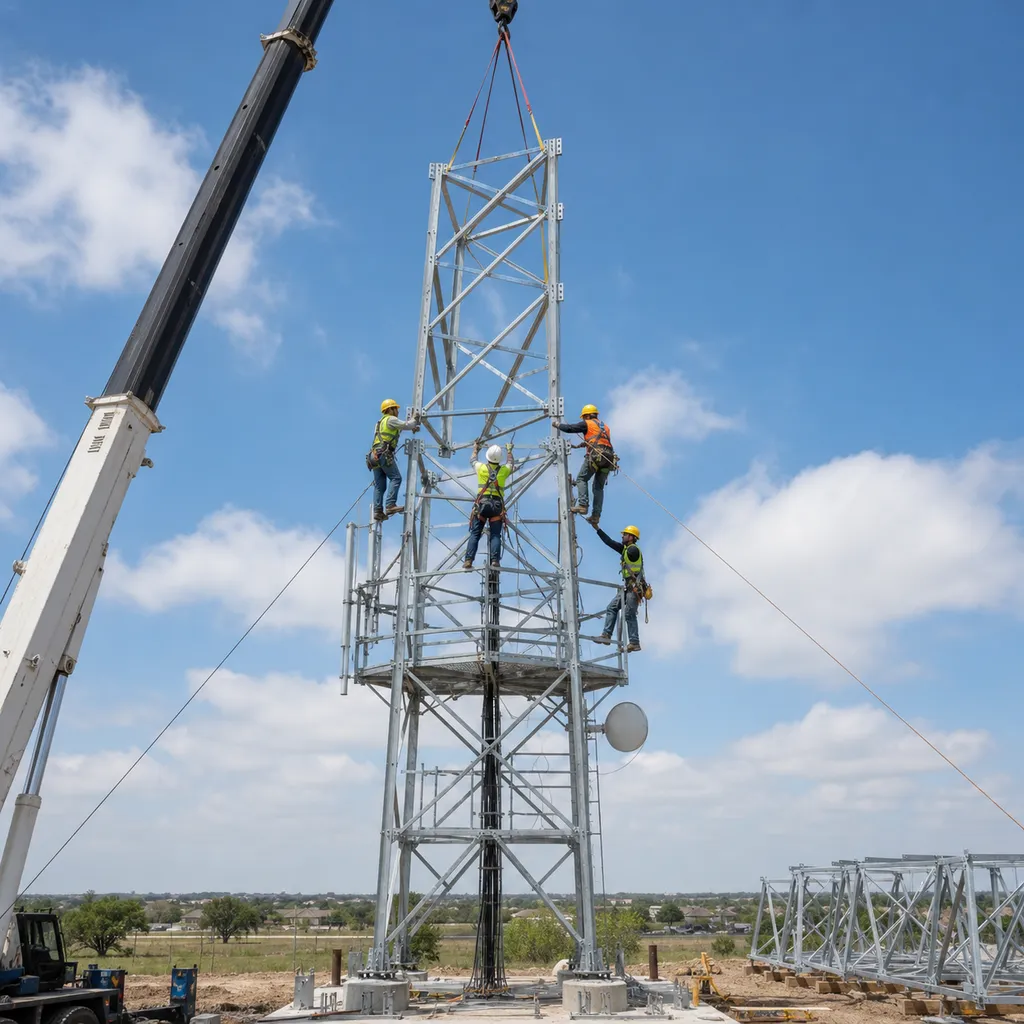
This 75 m lattice tower is suited to broadcast telecom, mobile network macro coverage, rural 4G/5G expansion, emergency communications, microwave relay, railway communications, oil-and-gas sites, port security, and utility grid telemetry. IRENA’s Off-grid Renewable Energy Statistics 2025 notes that off-grid renewables support telecommunications towers among other remote end uses, which makes hybrid PV, storage, and telecom tower packages relevant for 1-grid and off-grid deployments.
For a representative MENA solar farm scenario, a 75 m tower can host 16 antennas for site security radio, LTE/5G private network coverage, microwave backhaul, weather-station telemetry, and utility dispatch communications across a large fenced project area. If the tower avoids 2 smaller 35 m relay poles and 1 separate microwave mast, procurement can reduce foundation mobilizations from 3 to 1 and may reduce installed civil works by about 20% depending on soil and access roads.
EPC Investment Analysis and Pricing Structure
EPC turnkey delivery includes engineering, procurement, construction, commissioning, and 1-year warranty support for a fully installed 75 m tower. The scope normally covers structural calculation, shop drawings, steel fabrication, galvanizing, packing, ocean freight coordination when selected, civil foundation works, mechanical erection, grounding, aviation lights, climb-safety inspection, commissioning records, and handover documentation.
| Pricing tier | Scope | Price range |
|---|---|---|
| FOB Supply | Equipment only, ex-works China | $71,161 - $106,709 |
| CIF Delivered | Equipment, ocean freight, and insurance | $91,002 - $136,462 |
| EPC Turnkey | Installed, commissioned, and 1-year warranty | $114,775 - $156,925 |
| Volume quantity | Discount from base price |
|---|---|
| 50+ towers | 5% |
| 100+ towers | 10% |
| 250+ towers | 15% |
ROI depends on tower sharing, avoided duplicate civil works, diesel reduction, and reduced maintenance trips. In a representative operator model, hosting 4 tenants on 1 lattice tower instead of building 4 single-tenant poles can reduce land lease, grounding, and foundation duplication by 25% to 40%, while annual shared-site O&M savings of $8,000 to $18,000 can support a simple payback of about 6.4 to 14.4 years against a $114,775 EPC baseline.
Payment terms are 30% T/T deposit plus 70% against bill of lading, or 100% irrevocable L/C at sight for approved buyers. Project financing can be discussed for orders above $1,000K, subject to credit review, country risk, schedule, and EPC bankability documentation; procurement teams can contact [email protected] for 1 custom quotation package.
Standards, Compliance, and Engineering Documents
The engineering file can reference TIA-222-H, EN 1993-3-1, IEC 62305, ISO 1461, ASTM A123, and site-specific local building codes. For US projects, TIA-222-H alignment is especially important because it addresses ultimate gust wind speeds, foundations, climbing facilities, and appurtenance load requirements for antenna supporting structures.
A complete B2B submittal usually includes 12 document classes: structural calculation, general arrangement drawing, foundation drawing, antenna load table, bill of materials, galvanizing certificate, bolt certificate, weld inspection record, packing list, installation method statement, commissioning checklist, and 30-year maintenance recommendation. Buyers can also Learn about topic for tower selection, hybrid power, and telecom site design references.
Procurement Notes
Lead time depends on steel tonnage, galvanizing queue, port booking, foundation design approval, and antenna interface confirmation, with 45 to 75 days typical for fabrication after approved drawings. Containerization normally divides the 75 m lattice tower into marked bundles, bolt bags, platform assemblies, ladder sections, cable tray lengths, and 1 anchor template package for field identification.
Before issuing a purchase order, the buyer should confirm 10 inputs: coordinates, wind code, soil report, antenna schedule, microwave dish size, feeder route, power cabinet plan, access road limits, crane availability, and aviation marking rules. For structured pre-engineering, use Configure your system online or Request a custom quotation with at least 1 preliminary site drawing.
Maintenance and Lifecycle
A 30-year design life assumes scheduled inspection, corrosion maintenance, bolt torque checks, grounding tests, and antenna load control. Typical maintenance includes 1 annual visual inspection, 1 post-storm inspection after severe wind events, grounding resistance testing every 12 months, aviation light checks every 3 months, and structural recertification after any major antenna upgrade.
Lifecycle cost control is strongest when antenna sharing is planned from day 1 instead of retrofitted after saturation. A lattice tower with 4 platforms and 16 planned antenna positions gives operators a defined expansion envelope, reducing the risk of unplanned strengthening work when 5G densification, microwave upgrades, or public-safety radio additions occur over a 10-year network planning horizon.
Technical Specifications
| Tower Height | 75m |
| Tower Type | lattice |
| Material | Q345/Q420 heavy hot-rolled angle steel |
| Connection Type | slip-joint section splice plus bolted lattice bracing |
| Application | broadcast telecom |
| Antenna Platforms | 4levels |
| Antenna Capacity | 16antennas |
| Design Wind Speed | 51m/s |
| Total Tip Load | 2400kg |
| Foundation Type | 4-leg reinforced concrete mat/stub foundation, representative 90 m3 |
| Corrosion Protection | Hot-dip galvanized / marine grade option |
| Design Life | 30years |
| Standards | TIA-222-H / EN 1993-3-1 / IEC 62305 |
Price Breakdown
| Item | Quantity | Unit Price | Subtotal |
|---|---|---|---|
| Q345/Q420 galvanized heavy angle steel tower body | 65 tons | $1,400 | $91,000 |
| Steel antenna platform, installed | 4 pcs | $800 | $3,200 |
| Climbing ladder and safety rail | 75 m | $15 | $1,125 |
| Cable tray system | 75 m | $10 | $750 |
| Lightning protection system | 1 pcs | $500 | $500 |
| Aircraft warning light set | 2 pcs | $300 | $600 |
| Reinforced concrete foundation works | 90 m3 | $300 | $27,000 |
| Steel tower installation labor | 65 tons | $200 | $13,000 |
| Engineering, shop drawings and QC dossier | 1 pcs | $4,200 | $4,200 |
| Commissioning, handover and 1-year warranty support | 1 pcs | $2,600 | $2,600 |
| Total Price Range | $114,775 - $156,925 | ||
Frequently Asked Questions
What is included in the EPC turnkey price for the 75m lattice tower?
Can the 75m tower support more than 16 antennas?
What foundation is recommended for a 75m lattice telecom tower?
How does a lattice tower compare with a monopole for telecom use?
Which standards are referenced for design and lightning protection?
Certifications & Standards



Data Sources & References
- •Telecommunications Industry Association, TIA-222-H publication notice, 2017: https://standards.tiaonline.org/news-media/press-releases/tia-announces-publication-tia-222-h-standard-antennas-and-supporting
- •IEC 62305-1:2024 lightning protection standard: https://webstore.iec.ch/en/publication/27136
- •IEC 62305:2026 series listing: https://webstore.iec.ch/en/publication/6797
- •DIN EN 1993-3-1:2010-12 Eurocode 3 towers and masts listing: https://www.dinmedia.de/en/standard/din-en-1993-3-1/134851524
- •SIS SS-EN 1993-3:2026 Eurocode 3 towers, masts and chimneys listing: https://www.sis.se/en/produkter/construction-materials-and-building/eurocodes/eurocodes-others/ss-en-1993-32026/
- •NREL cellphone tower PV/DC power system prototype testing: https://www.nrel.gov/manufacturing/verizon-cell-phone-tower-power-system.html
- •IRENA Off-grid Renewable Energy Statistics 2025: https://www.irena.org/Publications/2025/Dec/Off-grid-Renewable-Energy-Statistics-2025
- •IEA Electricity 2025: https://www.iea.org/reports/electricity-2025
Interested in this solution?
Contact us for a customized quote based on your specific requirements.
Contact Us