Summary
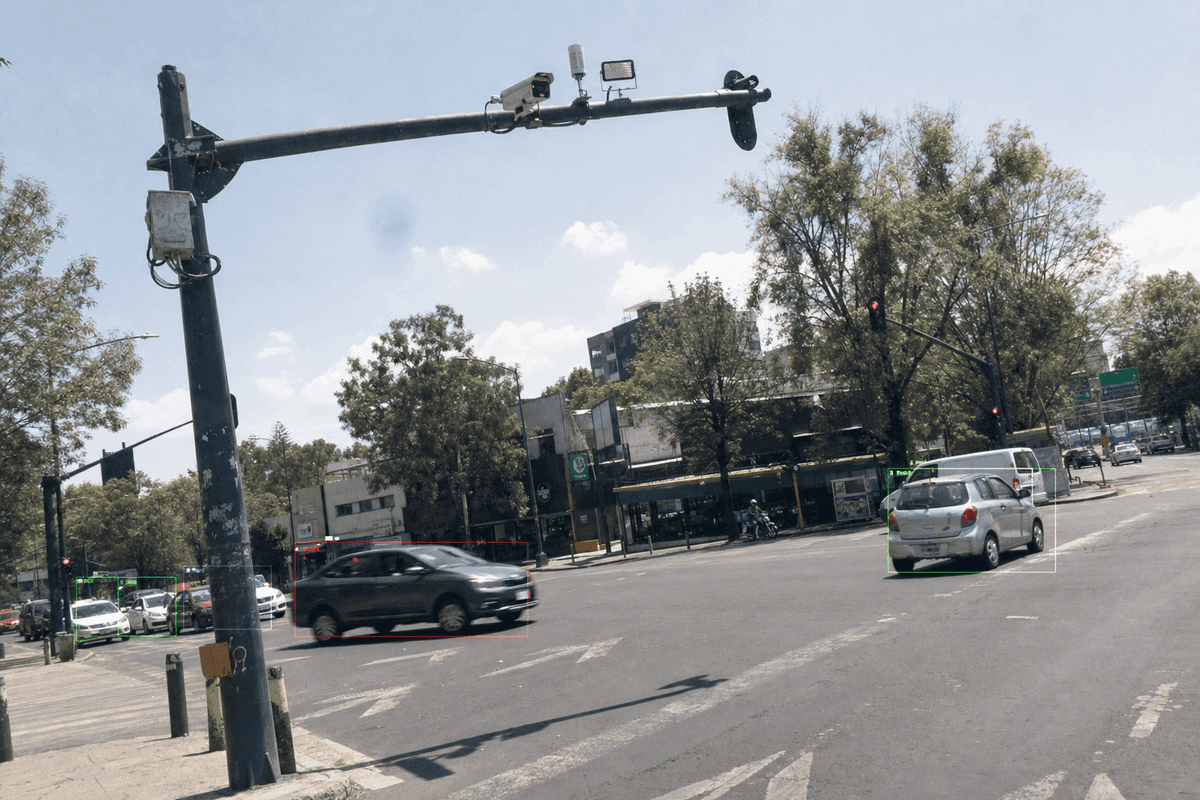
Mexico City needs a 19-intersection smart traffic package built around 6m L-arm poles, 4K AI cameras, 77GHz radar, and Jetson edge AI for a 9.2 million-resident, 75.9% congestion market at 2,240m elevation.
Key Takeaways
Answer Capsule: SOLARTODO’s best Mexico City fit is a 19-intersection, 6m smart-pole deployment focused on congestion, pedestrian safety, and flood-resilient roadside electronics.
- Mexico City had 9,209,944 residents in 2020, according to INEGI (2020), making compact intersection throughput more valuable than oversized highway pole height.
- The city reports about 18,000 primary intersections, with only 3,200 signalized, according to Gobierno CDMX mobility reporting.
- TomTom (2025) reports 75.9% average congestion and 184 rush-hour hours lost per driver, supporting adaptive signal timing as a measurable ROI lever.
- The recommended deployment uses approximately 19 intersections, with 4-12 poles per intersection, or roughly 76-152 primary pole positions before site survey refinement.
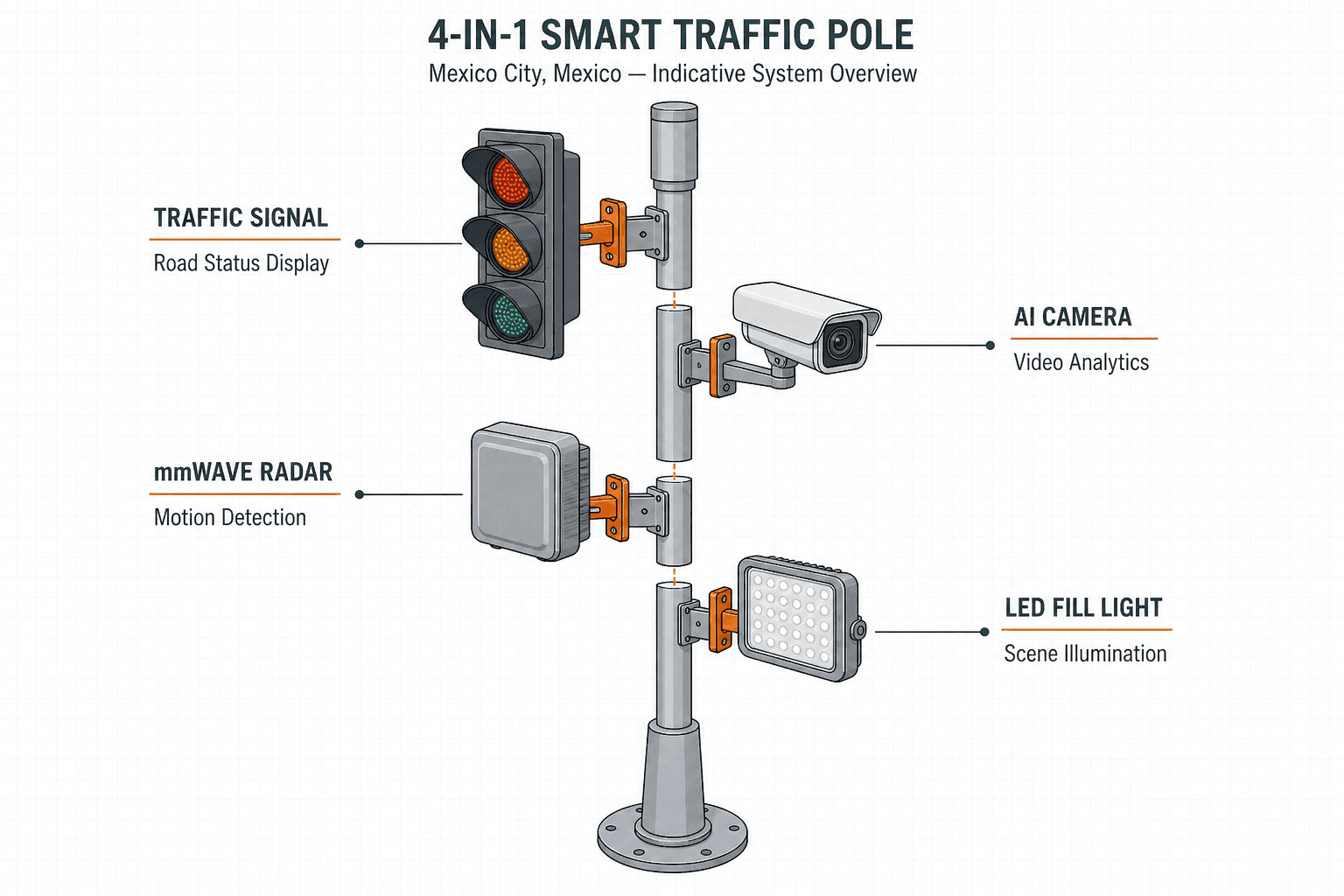
- Each SOLARTODO pole should combine 1 4K AI camera, 1 77GHz mmWave radar, 1 LED fill light, and 1 LED signal head on a 6m hot-dip galvanized L-arm structure.
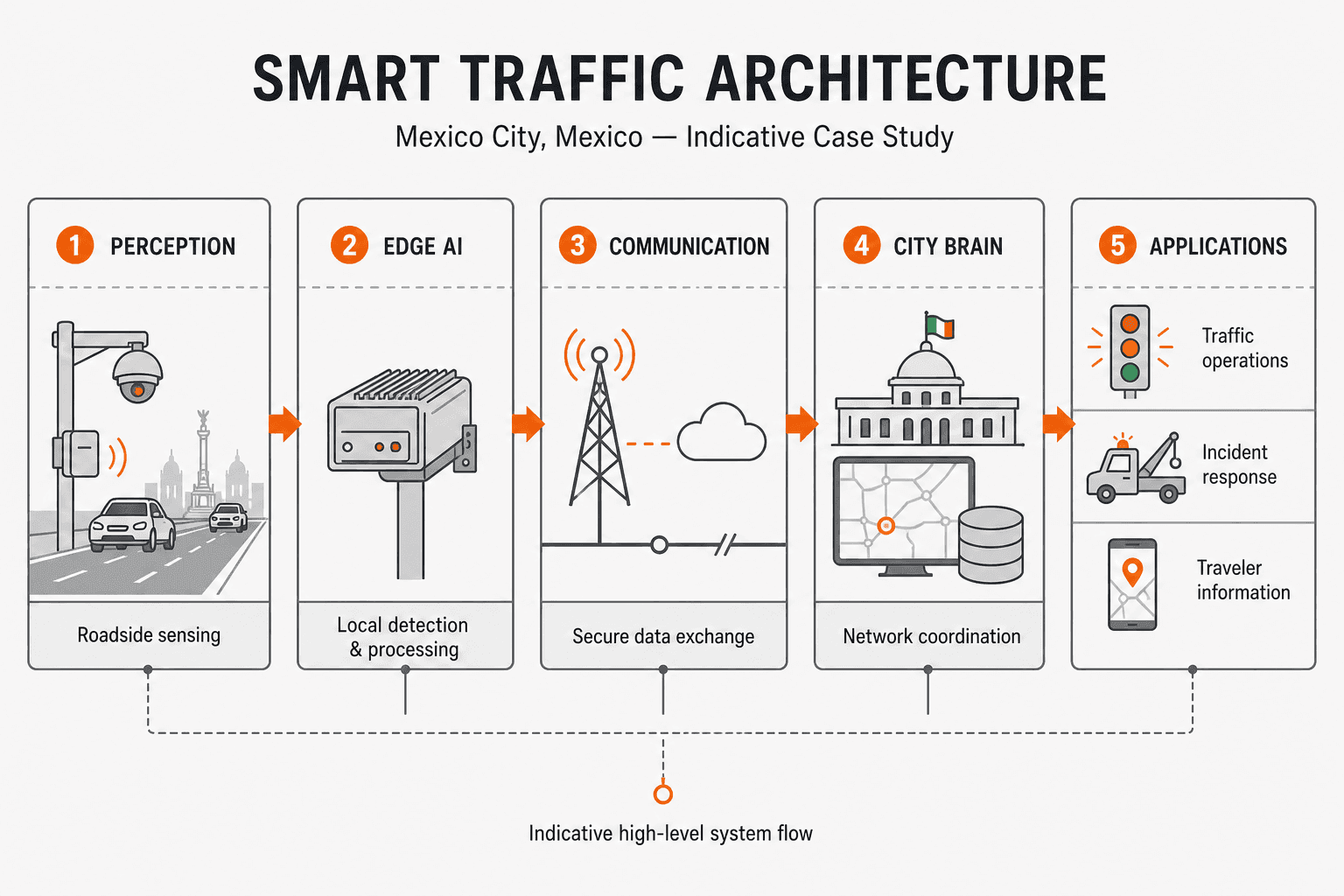
- Edge processing should target sub-50ms local response through NVIDIA Jetson hardware before sending structured metadata to TrafficGPT over 5G or fiber.
- IEC 60529 supports enclosure planning for outdoor equipment up to 72.5kV rated equipment context, making IP-rated cabinet and sensor protection relevant for rainy-season corridors.
- The preferred commercial model is BOT zero-upfront CAPEX, while SOLARTODO can also quote FOB, CIF, and EPC packages for procurement comparison.
Mexico City Deployment Context
Answer Capsule: Mexico City combines 9.2 million residents, 18,000 primary intersections, and 2,240m altitude, so smart traffic design must prioritize dense urban reliability.
This article frames SOLARTODO’s recommendation as market analysis, not a completed project claim. According to INEGI (2020), Ciudad de Mexico recorded 9,209,944 residents, while INEGI density data also shows multiple alcaldías above 11,000 people/km². That density increases the value of pedestrian detection, queue sensing, and dependable signal cycles at compact intersections.
According to Gobierno CDMX mobility reporting, Mexico City has about 18,000 primary intersections, but only 3,200, or 17.8%, are signalized. The same reporting states that the Intersecciones Seguras program reduced recorded traffic incidents at treated intersections from 330 in 2018 to 265 in 2019, a 20% reduction. This supports a targeted corridor package rather than a generic citywide hardware narrative.
According to TomTom (2025), Mexico City recorded 75.9% average congestion, 184 rush-hour hours lost per driver, and an average 10km travel time of 34 minutes 29 seconds. For a 19-intersection pilot, those numbers make delay reduction, incident response, and signal-cycle compliance more meaningful than equipment count alone.
Recommended SOLARTODO System Architecture
Answer Capsule: The recommended architecture uses 6m L-arm poles, 4-in-1 sensing modules, Jetson edge AI, and TrafficGPT across 19 intersections.
For this Mexico City profile, SOLARTODO should standardize on 6m dark-grey hot-dip galvanized L-arm steel poles, not 8m or 10m highway variants. The 6m height better fits pedestrian crossings, curbside bus movement, historic street geometry, and camera sightlines in mixed-use corridors. Each intersection should be surveyed for approach count, pedestrian crossings, medians, turning pockets, and existing controller cabinet locations.
Each pole should integrate a 4K AI camera, 77GHz mmWave radar, LED fill light, and LED signal head. NVIDIA Jetson edge AI should run pedestrian detection, adaptive signal optimization, queue detection, and incident auto-alert logic near the intersection. TrafficGPT should then aggregate structured data for operator dashboards, alert review, and natural-language traffic queries.
According to NREL (2021), optimized traffic signal settings in a simulated corridor showed potential energy reduction of up to 17%, with field results showing up to 16% fuel-use reduction in a limited deployment context. This does not guarantee the same result in Mexico City, but it supports using adaptive signal control as a measurable engineering target. SOLARTODO should therefore define KPIs before installation, not after commissioning.
Technical Specifications
Answer Capsule: A 19-intersection system should specify 76-152 primary poles, 4K video, 77GHz radar, sub-50ms edge response, and 5G/fiber backhaul.
| Specification Area | Recommended Requirement | Mexico City Rationale |
|---|---|---|
| Pole form | 6m L-arm, hot-dip galvanized steel | Dense urban sightlines and pedestrian crossings |
| Pole quantity | 4-12 per intersection | 76-152 primary positions across 19 intersections |
| Detection | 4K AI camera + 77GHz radar | Better coverage in rain, glare, and mixed traffic |
| Edge compute | NVIDIA Jetson | Local inference before central upload |
| Response target | Under 50ms device-level event path | Supports real-time detection and alerting |
| Backhaul | 5G and fiber ready | Fiber for corridors, 5G where trenching is constrained |
| Platform | SOLARTODO TrafficGPT | Query, dashboard, alert, and reporting layer |
| Electrical | 127/220V, 60Hz design coordination | Aligns with common Mexican low-voltage service practice |
| Standards | NTCIP, IEC 60529, IEEE 802.3, GB 25280 | Interoperability, enclosure, network, and signal alignment |
According to IEC (2013), IEC 60529 defines enclosure protection classifications for electrical equipment, which is directly relevant to roadside sensor housings, cabinets, and junction boxes. Mexico City is inland, so salt-air corrosion is secondary, but rain splash, dust, vibration, UV exposure, and cabinet sealing remain critical. The system should specify sealed glands, elevated cable entries, surge protection, grounding, and serviceable access panels above splash level.
According to IEEE (2026), IEEE 802.3 remains the working-group family for Ethernet operation and governance, making Ethernet-based fiber backhaul a mature choice for fixed traffic corridors. For traffic controllers, NTCIP should be referenced for device communication interoperability. For LED signal heads, GB 25280 can be used where supplied equipment is evaluated against that signal-lamp technical requirement.
Implementation Approach
Answer Capsule: Deployment should follow 4 phases: survey, factory validation, field installation, and 30-day corridor tuning before performance acceptance.
Phase 1 should cover site survey, intersection drawings, foundation review, controller interface mapping, power availability, and TrafficGPT cybersecurity requirements. Survey teams should document lane geometry, pedestrian volumes, bus stops, curb extensions, underground utilities, existing poles, cabinet positions, and fiber or 5G handoff points. This phase determines the final pole count before fabrication.
Phase 2 should cover manufacturing, hot-dip galvanizing inspection, module integration, serial-number tracking, and factory acceptance testing. Cameras, radars, LED fill lights, LED signal heads, and Jetson units should be tested as integrated pole packages. NTCIP communication checks and TrafficGPT data schemas should be validated before shipment.
Phase 3 should cover logistics, customs documentation, road-work permits, foundation preparation, pole erection, grounding, power connection, and backhaul activation. For Mexico City, installation windows should avoid peak arterial congestion and rainy-season drainage failures where possible. Cabinets and junction boxes should be elevated in flood-prone low points.
Phase 4 should cover signal timing integration, AI calibration, pedestrian detection validation, incident alert threshold tuning, operator training, and a 30-day stabilization period. Acceptance should include latency tests, uptime reports, camera/radar calibration logs, controller integration results, and TrafficGPT role-based access records.
Performance, Sustainability, and ROI
Answer Capsule: ROI should be measured through 95% uptime, sub-50ms detection, queue reduction, faster incident response, and lower upfront CAPEX under BOT.
The recommended KPI set should include 95% device uptime, under-50ms edge detection response, corridor-level delay reduction, incident alert precision, pedestrian detection validation, and maintenance visit frequency. TomTom’s 184 hours lost metric gives Mexico City a clear congestion baseline for public reporting. SOLARTODO should report performance by corridor, time window, and intersection type.
According to IEA (2023), transport remains a major source of global energy-related emissions, so reducing stop-and-go congestion has energy and climate relevance beyond travel time. According to NREL (2021), intelligent congestion controls using sensors, analytics, and machine learning can reduce energy waste when applied to the right corridor. These sources support adaptive control, but Mexico City results should be verified through measured before-and-after data.
According to IRENA (2024), renewable power accounted for about 86% of global power capacity additions in 2023, strengthening the case for efficient electrified roadside infrastructure and low-carbon power procurement where available. According to BloombergNEF (2024), electric-vehicle adoption continues to change urban load and mobility patterns, which makes intersection power planning and data integration more important. For SOLARTODO, sustainability should be documented through uptime, energy use, maintenance reduction, and congestion KPIs rather than broad green claims.
Commercial Model and Procurement Comparison
Answer Capsule: BOT is the strongest fit for 19 intersections because it reduces upfront CAPEX while preserving EPC, CIF, and FOB alternatives.
| Procurement Model | What It Includes | Best Use Case | Main Trade-Off |
|---|---|---|---|
| FOB Supply | Equipment ex-works China | Buyer controls freight and installation | Lowest SOLARTODO scope |
| CIF Delivered | Equipment, ocean freight, insurance | Buyer wants delivered hardware pricing | Local works remain separate |
| EPC Turnkey | Engineering, procurement, installation, commissioning, 1-year warranty | Municipality wants one delivery owner | Higher upfront contract value |
| BOT | Financing, build, operate, performance period | Budget-constrained corridor modernization | Requires KPI and revenue/payment rules |
| Joint Venture | Shared local delivery and operations | Long-term scale-up beyond 19 intersections | Requires governance alignment |
BOT is the recommended structure for a 19-intersection Mexico City package because it allows the city to evaluate performance before scaling. SOLARTODO can finance and operate the initial deployment while reporting uptime, congestion indicators, incident response, and maintenance data. EPC remains appropriate where the buyer has approved CAPEX and wants full ownership at commissioning.
Pricing should be quoted only after survey because pole count may vary from 76 to 152 primary positions. The quotation should separate poles, sensors, signal heads, Jetson edge units, cabinets, foundations, backhaul, TrafficGPT platform access, commissioning, training, warranty, and maintenance. This structure makes BOT, EPC, CIF, and FOB comparisons transparent.
Frequently Asked Questions
Answer Capsule: Buyers should evaluate this system through 10 practical questions covering price, specifications, logistics, warranty, installation, standards, ROI, and alternatives.
1. What is the recommended pole height for Mexico City?
The recommended standard is a 6m dark-grey hot-dip galvanized L-arm steel pole. Mexico City’s target corridors are dense, pedestrian-heavy, and constrained by sidewalks, bus movement, turning vehicles, and older street geometry. An 8m or 10m pole may be useful for highway-style visibility, but it is not the default fit for a 19-intersection urban deployment.
2. How many poles are required for 19 intersections?
A planning estimate is 4-12 poles per intersection, or about 76-152 primary pole positions across 19 intersections. The final number depends on approach count, lane width, median islands, pedestrian crossings, left-turn pockets, camera sightlines, and existing signal-head locations. SOLARTODO should confirm the bill of materials only after a site survey and controller cabinet review.
3. What sensors and modules are included?
Each smart pole should integrate a 4K AI camera, 77GHz mmWave radar, LED fill light, and LED signal head. The camera supports visual classification and pedestrian detection, while radar improves object tracking in rain, glare, and low-light conditions. The LED fill light improves evidentiary video quality, and the signal head keeps sensing and signaling within one maintainable pole envelope.
4. How fast is the detection response?
The target device-level response is under 50ms for local camera/radar events processed through NVIDIA Jetson edge AI. This target refers to local detection and decision-path latency before structured metadata is sent to TrafficGPT. Actual end-to-end platform latency depends on network quality, controller integration, cybersecurity inspection, and whether the site uses fiber, 5G, or both.
5. How should pricing be requested?
Pricing should be requested as a structured quotation with separate lines for poles, cameras, radar, LED signal heads, edge compute, cabinets, foundations, power works, backhaul, TrafficGPT access, commissioning, training, warranty, and maintenance. SOLARTODO can quote FOB Supply, CIF Delivered, EPC Turnkey, or BOT. BOT is best when the buyer wants lower upfront CAPEX and KPI-based evaluation.
6. What logistics model fits Mexico City?
For 19 intersections, logistics can use assembled pole packages or CKD shipment depending on customs, road access, and local assembly capability. CIF delivery simplifies freight and insurance, while EPC adds installation and commissioning responsibility. The logistics plan should include module serial numbers, packing lists, customs documents, spare parts, lifting requirements, and a staged delivery schedule that matches road-work permits.
7. What warranty should be expected?
Under the stated EPC model, a 1-year warranty is the baseline assumption for installed and commissioned equipment. Warranty scope should identify poles, galvanizing, cameras, radar, LED modules, Jetson units, cabinets, power supplies, and platform access separately. BOT contracts may use service-level commitments instead, such as uptime, repair time, spare-parts availability, and monthly performance reporting.
8. How difficult is installation in Mexico City?
Installation is technically manageable but site-constrained. Crews must coordinate foundations, underground utilities, sidewalk clearance, lane closures, CFE power service, grounding, surge protection, controller interfaces, and 5G or fiber backhaul. Mexico City’s rainy season, localized flooding, high altitude, and historic-street constraints make survey quality and permit sequencing as important as hardware availability.
9. How does SOLARTODO compare with camera-only upgrades?
A camera-only upgrade can detect visual events, but it is more exposed to glare, rain, occlusion, and night conditions. SOLARTODO’s 4K AI plus 77GHz radar stack provides sensor redundancy and stronger object tracking. The Jetson edge layer also supports faster local inference, while TrafficGPT adds central queries, alerts, dashboards, and corridor-level reporting beyond basic video analytics.
10. Which standards should be referenced?
The specification should reference NTCIP for traffic-controller communications, IEC 60529 for enclosure protection planning, IEEE 802.3 for Ethernet/fiber network alignment, and GB 25280 for LED signal-head technical requirements where applicable. Local electrical work should also align with Mexican NOM requirements, CFE service practice, grounding rules, surge protection, and municipal traffic engineering approvals.
References
- INEGI (2020), Censo de Poblacion y Vivienda: Ciudad de Mexico population and density data.
- Gobierno CDMX mobility reporting, Intersecciones Seguras: 18,000 primary intersections, 3,200 signalized intersections, and 20% incident reduction at treated 2019 intersections.
- TomTom Traffic Index (2025), Mexico City: 75.9% average congestion, 184 rush-hour hours lost, and 34 min 29 s average 10km travel time.
- NREL (2021), machine-learning traffic control research: up to 17% simulated energy savings and up to 16% field fuel-use reduction in a limited corridor deployment.
- IEC (2013), IEC 60529: Degrees of protection provided by enclosures for electrical equipment.
- IEEE (2026), IEEE 802.3 Ethernet Working Group: Ethernet governance and operating framework for wired network infrastructure.
- IEA (2023), transport and energy-related emissions reporting for mobility-sector decarbonization context.
- IRENA (2024), Renewable Capacity Statistics: renewable power represented about 86% of global power capacity additions in 2023.
- BloombergNEF (2024), electric-vehicle market outlook and urban electrification context.
- NTCIP (2024), traffic management device and control-center interoperability framework.
- GB 25280 (2016), road traffic signal lamp technical requirements for LED signal heads.
Equipment Deployed
- 19 intersections × 6m L-arm hot-dip galvanized steel poles, dark grey finish
- 4-in-1 Smart Traffic Pole with 4K AI camera, 98% accuracy, <50ms response
- 77GHz mmWave radar for vehicle, pedestrian, and incident sensing
- Integrated LED fill light plus LED signal head on each pole
- NVIDIA Jetson edge AI module with pedestrian detection and adaptive signal optimization
- 5G/fiber backhaul to TrafficGPT central platform with natural language queries
- Incident auto-alert workflow for traffic management center escalation
- Standards alignment: NTCIP, GB 25280, and Mexico electrical context under NOM-001-SEDE / NMX-J-098-ANCE
- Cooperation model: BOT zero upfront for municipal or concession-based procurement