Summary
For a proposed Santiago rooftop, choose module-level microinverters only if position-linked shading records, documentation for the offered equipment, and a comparison with disclosed common inputs together support the choice—and the quoted cost and maintenance arrangements meet the buyer’s requirements. If that evidence is incomplete or inconclusive, defer equipment selection and keep the string-inverter option open. This is a proposed purchasing rule, not a source-established performance threshold.
DOE explains that independent panel operation can be useful when some modules might be shaded, while a single inverter is generally less expensive and easier to cool and service. That tradeoff supports investigating microinverters; it does not establish a winner for this proposed roof. DOE: Solar Photovoltaic System Design Basics.
Key Takeaways
- Commission a shading assessment tied to identifiable positions on the proposed roof layout.
- Require the assessor to separate observed shadows from projections and explain the periods each record covers.
- Obtain exact equipment models and authoritative documentation supporting the claimed response to shading.
- Compare string and microinverter proposals using common inputs where feasible, with differences disclosed.
- Review itemized quotations alongside cooling, service access, and replacement arrangements.
- Select an architecture only when the evidence supports its tradeoffs against your stated purchasing requirements; otherwise request the missing work.
FAQ
What evidence would justify choosing microinverters?
As a proposed purchasing rule, require position-linked shading records, documented behavior of the offered equipment, and a comparison with disclosed common inputs that supports microinverters. Then decide whether the quoted cost and service arrangements meet your requirements. The sources provide no universal selection threshold.
Does the evidence show that the Santiago roof is shaded?
No. Santiago is solely a proposed site. Request a dated assessment linked to the proposed module layout before treating shading as a reason to choose equipment.
What should the shading assessment deliver?
Request a marked layout, dated observations, identified obstructions, separately labeled projections, and an explanation of the periods covered and remaining uncertainty. These are suggested procurement deliverables, not a source-validated assessment method.
Is a shadow photograph enough to choose an inverter?
Do not use a photograph alone as the purchasing basis. Ask the assessor to explain its location, timing, coverage, representativeness, and unrepresented periods, then connect it to the equipment comparison. The supplied sources establish no test of photographic sufficiency.
Why retain a string-inverter proposal?
DOE describes a single inverter as generally less expensive and easier to cool and service. Request a project-specific quotation and service plan so those tradeoffs can be assessed alongside any documented shading-related case for microinverters.
How should different module layouts be compared?
Request a labeled layout for each alternative and common evaluation inputs where feasible. Require explanations of changed assumptions so you can distinguish a layout change from an inverter choice. No supplied evidence establishes the outcome of relocating modules here.
Which product documents are needed before selection?
Request exact module, mounting, and inverter models, authoritative product documents, relevant pages, and operating conditions. The supplied catalog establishes family and configuration scope but provides no exact model or product PDF.
Do these sources establish Chilean approval or project returns?
No. Obtain separate evidence for applicable Chilean requirements and site engineering, and request disclosed inputs for any yield or financial estimate. DOE provides U.S. educational context, not Chilean approval authority or a return forecast for this project.
The architecture decision
The procurement question is whether documented shading provides a sufficient reason to choose module-level microinverters over a string-inverter arrangement for a proposed roof-supported SOLARTODO PV system.
DOE’s independent-operation rationale supplies a reason to investigate, not a quantified energy advantage. A useful recommendation must connect the assessed shading to the documented behavior of the offered equipment, then explain the comparative result and its uncertainty. A report that merely identifies a shadow leaves that purchasing question unanswered.
Use the following decision sequence as a buyer-defined evaluation approach:
- Assess the roof: establish what shading is observed or projected at proposed module positions.
- Check the equipment: identify which documented characteristics support the designer’s explanation of each arrangement’s response.
- Compare the alternatives: review results under disclosed common inputs and identify whether differences arise from equipment, layout, or assumptions.
- Judge the tradeoff: decide whether the supported case for microinverters warrants its quoted cost and service arrangements under your requirements.
If the comparison does not distinguish the alternatives convincingly, ask the designer what additional evidence would resolve the uncertainty before committing. No supplied source defines a required improvement or acceptable premium.
Product scope and proposed configuration
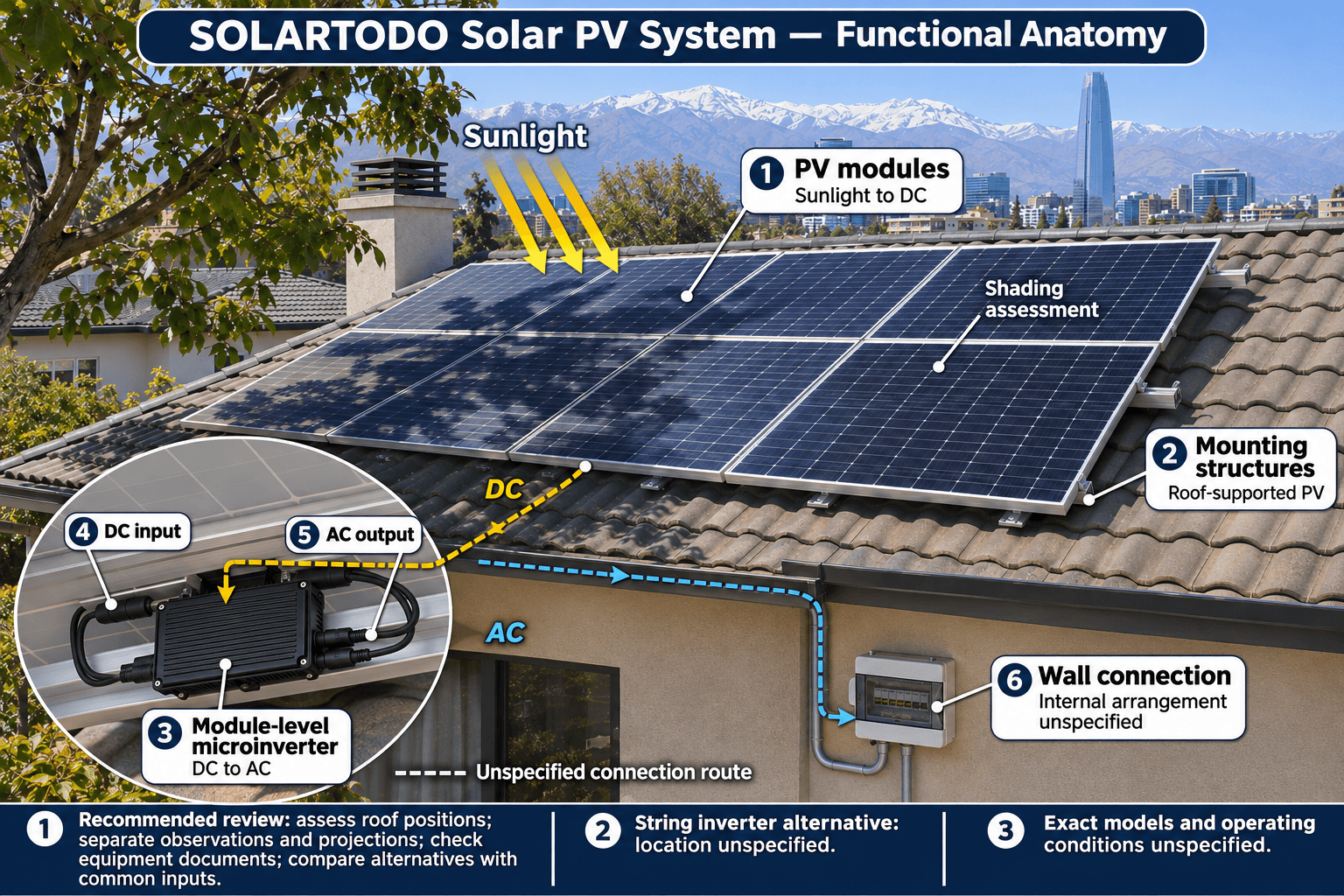
The supplied SOLARTODO catalog extraction, city-catalog-2026-11-01-v1, includes PV modules, mounting structures, and string, microinverter, and hybrid configurations. See SOLARTODO solar PV and the public SOLARTODO photovoltaic system catalog.
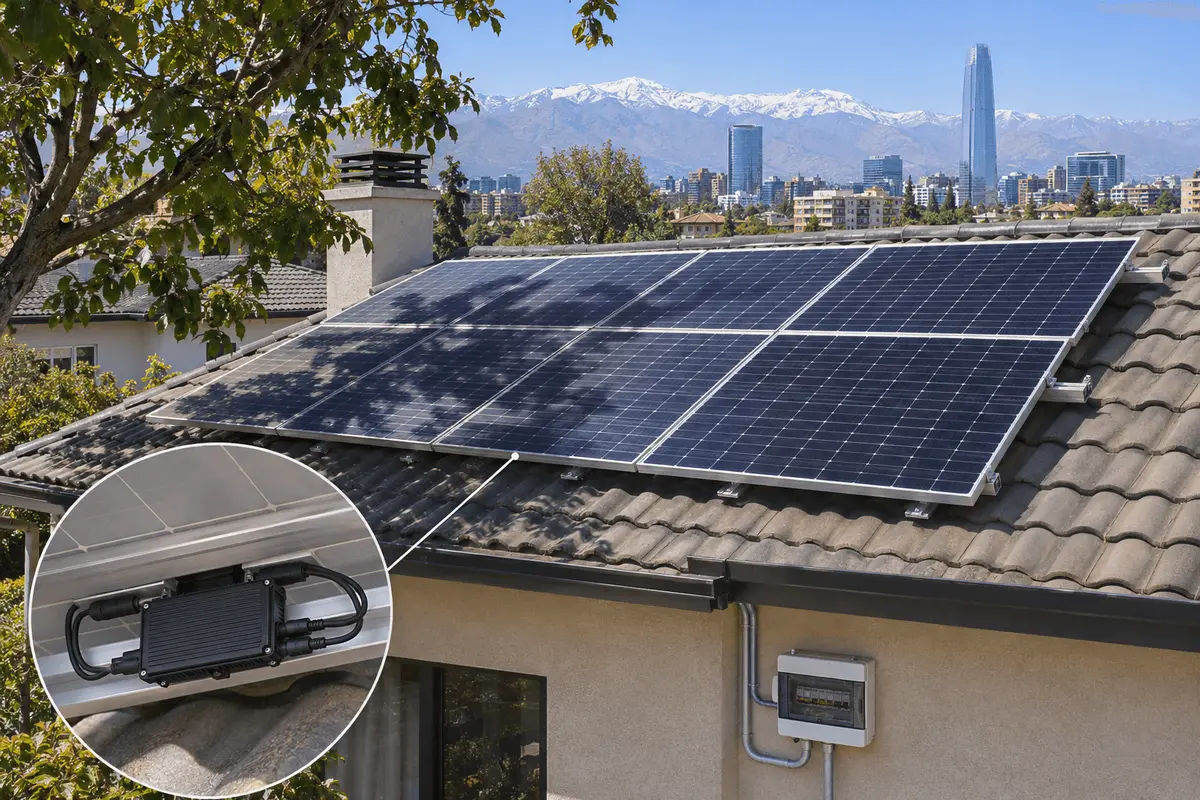
The configuration evaluated here is roof-supported PV, with string and module-level microinverter alternatives. Hybrid configurations remain part of the catalog scope; no requirement for one is established for this question. Catalog inclusion does not establish compatibility, structural acceptance, grid approval, or project performance.
Modules are only part of a complete PV system, which also includes mounting and components that convert direct-current electricity to alternating current. DOE: Solar Photovoltaic Technology Basics.
Procurement deliverables and what to review
Request one coordinated assessment and proposal package. The following deliverables are suggested buyer requirements, not validated assessment procedures or regulatory acceptance criteria.
- Roof layout and shading record. Request confirmation of the property and roof area, identifiable proposed module positions, dated observations, and identified obstructions. Review whether the claimed shading is linked to the positions used in the proposal.
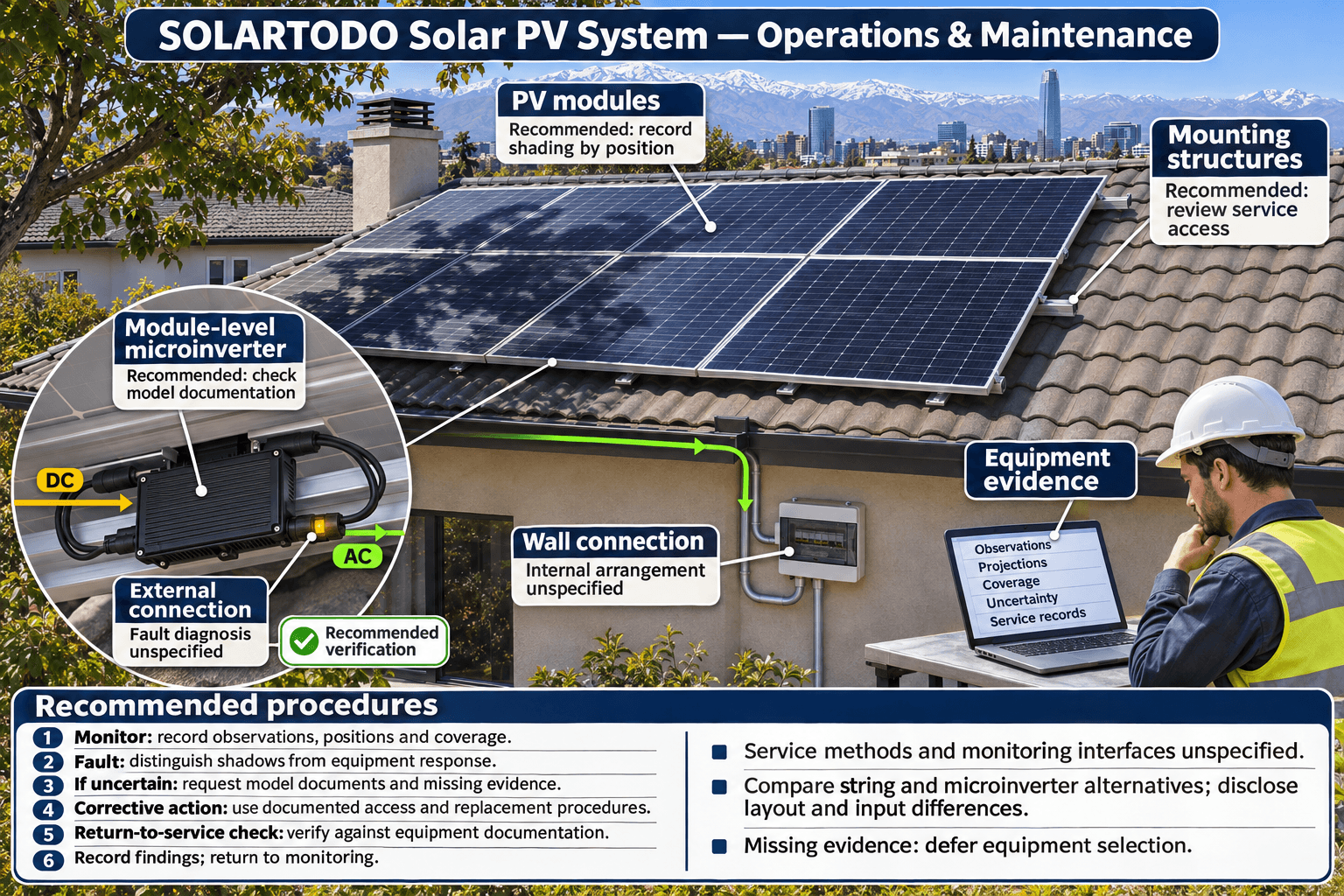
- Coverage and uncertainty statement. Request a distinction between observations and modeled projections, the periods considered, photograph coverage where used, assumptions, and unresolved information. Review what the assessment can support and what remains unexamined.
- Equipment evidence. Request exact module, mounting, and inverter models with authoritative documents, relevant pages, and operating conditions. Review whether each claimed equipment response is documented for the offered configuration rather than inferred from a general architecture description.
- Comparable alternatives. Request string and microinverter proposals using the same proposed layout and common evaluation inputs where feasible. Require disclosure of how shading is represented and all material differences. If layouts change, request separately labeled comparisons so the recommendation explains the contribution of each change.
- Cost and service proposals. Request itemized purchase and installation quotations, proposed inverter locations, cooling arrangements, access and replacement procedures, included work, exclusions, responsibilities, and maintenance-cost assumptions. Review these against your purchasing requirements; DOE’s general cost and service observations do not determine the actual project terms.
- Recommendation and outstanding approvals. Request a written conclusion connecting the shading record, equipment evidence, comparison, and quoted tradeoffs. Separately request structural suitability and applicable approval evidence, with unresolved questions identified before procurement.
Any modeled result should remain labeled as a projection with its inputs and limitations. It is not measured production. Record which tradeoffs you accept and which missing deliverables prevent a decision.
Evidence limits and next step
No specific roof survey, shading condition, demand profile, comparative yield, project return, or installed Santiago customer project is established. Exact equipment models, authoritative product PDFs, page-specific specifications, and operating conditions were not supplied. Those gaps prevent a project-specific equipment recommendation.
The catalog extraction establishes product-family scope; DOE supplies external educational context. Neither substitutes for model documentation or project engineering. DOE’s U.S. context does not establish Chilean installation or approval requirements, and its northern-hemisphere orientation discussion is not a design instruction for Santiago.
Use the contact page to request the coordinated assessment and both architecture proposals. Ask the designer to identify the evidence supporting the recommendation and the unresolved items that must be closed before equipment selection.
References
- SOLARTODO solar-PV catalog: supplied extraction city-catalog-2026-11-01-v1; establishes product-family and configuration scope.
- DOE: Solar Photovoltaic System Design Basics: general independent-operation, cost, cooling, and service considerations.
- DOE: Solar Photovoltaic Technology Basics: modules, mounting, and conversion components within a PV system.
Product PDF reference: not supplied; no PDF URL, exact model, page reference, or operating conditions are available.
Proposed Equipment
- PV modules within the SOLARTODO solar-PV catalog; exact model unresolved
- Mounting structures within the SOLARTODO solar-PV catalog; proposed roof support subject to engineering
- String-inverter configuration within the SOLARTODO solar-PV catalog; exact equipment unresolved
- Microinverter configuration within the SOLARTODO solar-PV catalog; exact equipment unresolved