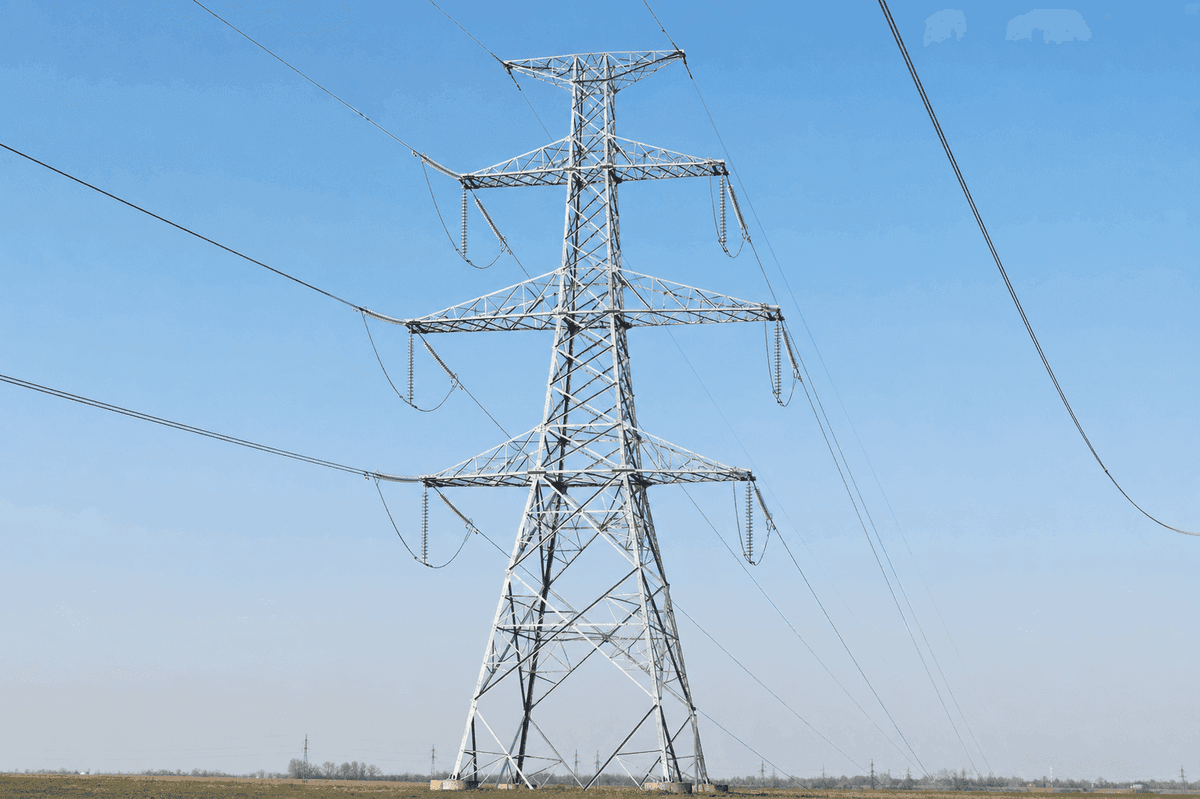
Pylône tangent lourd en treillis 71m 500kV à brides - Structure de transmission UHT
Caractéristiques Clés
- Pylône lourd en treillis d’acier galvanisé 71m pour transmission UHT 500kV à circuit unique
- La portée de conception 497m réduit le nombre de pylônes d’environ 12-18% par rapport aux configurations à portée plus courte
- 4 conducteurs par phase prennent en charge les corridors typiques de transport massif 1000-1500MW
- Base vent Classe B et glace 15mm avec conception alignée sur IEC 60826 / GB 50545
- Fourchette EPC clé en main de $129,220-$176,908 avec assistance sous garantie 1 an
Le pylône tangent lourd en treillis 71m 500kV à brides est un pylône de suspension UHT à circuit unique pour portées 497m, phases ACSR à 4 faisceaux, vent Classe B et charge de glace 15mm. Il est conçu pour un service de 50 ans sur des corridors 500kV en ligne droite transportant environ 1000-1500MW par circuit.
Description
The 71m 500kV Heavy Lattice Tangent Tower Flanged is a 71m galvanized steel lattice suspension structure for single-circuit 500kV UHV transmission lines using 4 conductors per phase and a 497m design span. It is configured as a tangent tower for straight-line sections, where suspension I-string insulators, OPGW shielding, and flanged steel connections support bulk power transfer of about 1000-1500MW per circuit under IEC 60826 loading practice.
Product Overview
A 500kV transmission corridor normally uses tangent or suspension towers for 70-80% of the route length because straight-line structures carry vertical conductor weight and transverse wind loads without the higher longitudinal load case of angle or dead-end towers. This 71m heavy lattice tower is specified for UHV transmission, renewable-energy evacuation, interregional grid reinforcement, and industrial-load supply where a 497m nominal span reduces the number of structures required per 100km route by roughly 12-18% compared with a 420m baseline span.
SOLARTODO supplies this product for B2B buyers who need integrated engineering, fabrication, galvanizing, export packing, construction support, and commissioning under 1 EPC package. Buyers can View all Power Transmission Tower/Pole products, Configure your system online, or Request a custom quotation when the final route profile, wind map, conductor type, and foundation class are available.
Technical Specifications
The tower uses heavy galvanized steel lattice members, typically Q420-grade angle steel with hot-dip zinc protection, bolted and flanged for repeatable field assembly across 1 tower position. The 71m geometry supports a 500kV single circuit with 4-bundle ACSR conductors per phase, OPGW or shield wire above the phase envelope, and suspension strings sized for electrical clearance, mechanical swing angle, pollution class, and 15mm ice loading.
| Parameter | Specification |
|---|---|
| Tower height | 71 m |
| Voltage class | 500 kV |
| Tower type | Tangent suspension tower |
| Circuit configuration | 1 circuit |
| Conductors per phase | 4 bundled conductors |
| Design span | 497 m |
| Loading basis | Class B wind / 15 mm ice |
| Connection type | Flanged and bolted steel |
| Grounding target | <10 ohm standard, <4 ohm high-lightning sites |
| Design life | 50 years with inspection and coating maintenance |

System Architecture
A 500kV tangent tower is not a standalone steel product; it is 1 structural node in an overhead transmission system made of foundations, tower body, crossarms, insulator strings, conductor hardware, OPGW, grounding, access roads, and commissioning tests. The tower carries 3 phase positions with 4 sub-conductors per phase, so the mechanical design must account for 12 conductor attachment points, wind pressure on bundled conductors, vertical weight, ice accretion, and the broken-wire condition defined by the project design code.
The flanged connection system improves erection repeatability because pre-drilled plates and bolted interfaces align large tower sections before final torque checks. Compared with conventional site-spliced angle assemblies using more small members, a flanged modular approach can reduce crane hook time by about 10-20% on accessible terrain, while keeping transport packages compatible with 40ft containers and standard export trucks.
Standards and Engineering Basis
The structural loading basis follows IEC 60826 for overhead transmission-line design criteria, while conductor thermal behavior can be coordinated with IEEE 738 for bare overhead conductor current-temperature calculation. Structural detailing can also be cross-checked against ASCE 10-15, galvanizing against ISO 1461, and regional compliance against GB 50545 for overhead transmission line design in China-based manufacturing programs.
The 500kV UHV application aligns with grid-expansion priorities noted by the IEA Electricity Grids and Secure Energy Transitions 2023 report, which estimated that about 80 million km of power lines may need to be added or refurbished globally by 2040. The IRENA World Energy Transitions Outlook 2024 also links renewable integration to expanded transmission, and NREL transmission integration studies show that high-capacity lines can reduce curtailment and congestion when renewable resource zones are 100-1000km from load centers.
Materials, Corrosion Protection, and Design Life
The primary structure is heavy steel lattice, selected because a 71m UHV suspension tower must resist combined compression, buckling, bolt shear, wind-induced vibration, and foundation interface loads over a 50-year design life. Hot-dip galvanizing provides sacrificial corrosion protection, and the maintenance plan normally includes inspection at 1 year after energization, then 3-5 year intervals depending on coastal salinity, industrial pollution, and measured zinc loss.
For severe coastal or desert corridors, SOLARTODO can specify increased zinc thickness, sealed bolt packs, anti-theft nuts, bird diverters, and composite insulator hardware for 1 project-specific bill of materials. In regions with high ground flash density, the grounding design should target less than 4 ohm tower footing resistance instead of the typical 10 ohm value, reducing lightning back-flashover risk across a 500kV insulation system.
Electrical Performance and Conductor Interface
A 4-bundle conductor configuration improves corona performance and reduces electric-field intensity compared with a 1-bundle or 2-bundle conductor arrangement at the same 500kV voltage class. Bundle spacing, spacer-damper placement, and suspension clamp geometry must be coordinated with conductor diameter, sag-tension tables, ambient temperature, wind speed, solar heating, and current rating, with IEEE 738 used for ampacity modeling when dynamic line rating is required.
For a 497m span, conductor sag can vary by several meters between low-temperature tension cases and high-temperature emergency rating cases, so tower height, crossarm length, and ground clearance must be verified against the final route survey. OPGW integration provides 2 functions in 1 cable: lightning shielding for the phase conductors and fiber-optic communication for SCADA, protection relays, weather sensors, and line-monitoring equipment.
Applications
This tower is best suited for UHV renewable-energy evacuation, interprovincial grid reinforcement, 500kV substation interconnection, mining power supply, hydrogen hub infrastructure, and long-distance industrial load corridors. A solar farm operator in the MENA region, for example, could deploy 200 tangent towers of this class on a 99.4km 500kV export line, using 497m spans to connect a 1.2GW solar-plus-storage plant to a national-grid substation with fewer angle towers and lower route maintenance demand.
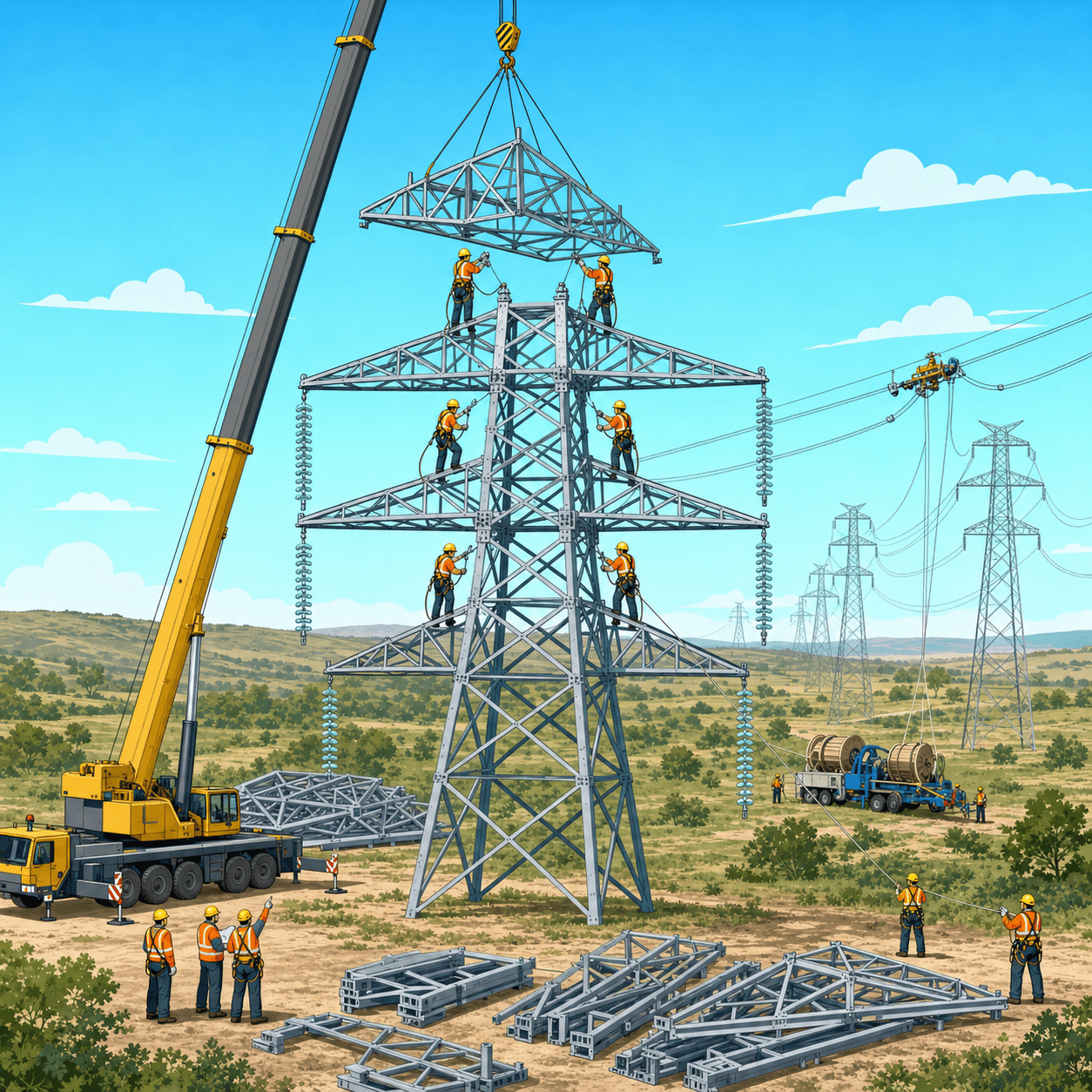
Cloud Monitoring
Although the tower body is passive steel, modern 500kV corridors increasingly use digital monitoring on 5-20% of critical structures for conductor temperature, wind speed, galloping, inclination, vibration, grounding resistance, and OPGW communication status. SOLARTODO can integrate tower-mounted sensors, solar-powered gateways, and cloud dashboards for EPC projects above 50 structures, allowing operators to compare real conductor behavior with IEEE 738 thermal assumptions and maintenance thresholds.
Cloud monitoring is especially useful on long corridors with 100km or more of remote terrain because inspection labor can be redirected from routine patrols to exception-based work orders. A typical monitoring package may include 1 weather node per 5-10km, 1 inclination sensor on selected towers, and 1 gateway linked to fiber or cellular backhaul, depending on the communication plan and cybersecurity requirements.
Comparison with Conventional Alternatives
Compared with a lighter 500kV tangent lattice tower designed for a shorter 420m span, the 71m heavy flanged design can reduce tower count by approximately 15 structures per 100km while increasing steel mass per structure. This trade-off is often favorable where foundation access, land acquisition, and right-of-way disturbance cost more than the additional steel weight, especially on desert, agricultural, or mountainous routes.
Compared with tubular steel monopoles, a heavy lattice tower usually requires a wider footprint but offers lower steel cost per kN of structural capacity and easier member replacement after localized damage. For a 500kV UHV line, lattice construction also provides greater flexibility for crossarm geometry, phase spacing, OPGW placement, maintenance climbing paths, and repair logistics across a 50-year operating period.
EPC Investment Analysis and Pricing Structure
EPC Turnkey pricing includes 5 major scopes: engineering, procurement, construction, commissioning, and 1-year warranty support. For this 71m tower, EPC work covers route-specific structural checks, shop drawings, steel fabrication, hot-dip galvanizing, export packing, logistics coordination, foundation construction, tower erection, grounding installation, torque verification, QA documentation, and final commissioning support.
| Pricing tier | Scope | Unit price range |
|---|---|---|
| FOB Supply | Equipment only, ex-works China | $80,116-$120,297 |
| CIF Delivered | FOB plus ocean freight and insurance | $102,454-$153,839 |
| EPC Turnkey | Installed, commissioned, and 1-year warranty | $129,220-$176,908 |
| Order volume | Discount | Commercial impact |
|---|---|---|
| 50+ towers | 5% | Reduces EPC procurement exposure on 24.85km of 497m spans |
| 100+ towers | 10% | Supports about 49.7km of straight-line UHV route |
| 250+ towers | 15% | Supports about 124.25km of bulk-transmission corridor |
ROI depends on avoided towers, avoided foundations, reduced outage risk, and lower maintenance dispatch cost over 50 years. If the 497m span reduces a 100km line by 15 structures versus a 420m conventional layout, and each avoided installed structure costs $120,000-$160,000, the gross capital reduction can reach $1.8M-$2.4M before route-specific access-road effects; for a 1,200MW corridor, this can shorten grid-connection payback by 6-18 months when congestion costs are material.
Standard payment terms are 30% T/T deposit plus 70% against bill of lading, or 100% irrevocable L/C at sight for bank-approved buyers. Project financing can be reviewed for EPC packages above $1,000K, and commercial requests should be sent to [email protected] with 1 route profile, 1 wind and ice basis, conductor schedule, soil report, and required delivery window.
Procurement and Quality Control
Procurement documentation normally includes 1 general arrangement drawing, 1 tower loading tree, 1 bill of materials, 1 bolt list, 1 galvanizing certificate set, 1 packing list, and inspection records for steel grade, hole tolerance, trial assembly, coating thickness, and torque procedure. Factory acceptance can include sample assembly of critical flanged joints, dimensional checks, and zinc-thickness measurement before container loading.
For project developers and EPC contractors, the main procurement risk is not the tower price alone but the interface between structural loading, foundation geotechnics, conductor sag, OPGW hardware, and local utility standards. SOLARTODO recommends locking the electrical and structural assumptions before mass fabrication, because a late change from 15mm to 20mm ice or from 4-bundle to 6-bundle conductors can change crossarm forces and steel tonnage by several percentage points.
Related Knowledge and Buyer Resources
Engineers comparing tower families can Learn about topic for overhead-line design basics, conductor selection, grounding practice, and EPC checklist items. Procurement teams can also use Learn about topic to align 500kV tender documents with IEC 60826 loading cases, IEEE 738 conductor ratings, ASCE 10-15 structural checks, and ISO 1461 galvanizing inspection requirements.
This 71m 500kV Heavy Lattice Tangent Tower Flanged is a practical fit when the project requires long-span straight-line support, 4-bundle conductor compatibility, 50-year galvanized steel service life, and integrated EPC delivery between $129,220 and $176,908 per installed tower. For final pricing, SOLARTODO needs at least 6 inputs: route location, wind speed, ice thickness, conductor type, soil report, and delivery Incoterms.
Spécifications Techniques
| Hauteur du pylône | 71m |
| Tension nominale | 500kV |
| Type de pylône | Tangent suspension |
| Matériau | Heavy galvanized steel lattice |
| Nombre de circuits | 1circuit |
| Faisceau de conducteurs | 4 x ACSR per phase |
| Portée de conception | 497m |
| Charge vent/glace | Class B / 15mm ice |
| Type de connexion | Flanged and bolted |
| Fondation | Reinforced concrete tower foundation |
| Durée de vie de conception | 50years |
| Normes | IEC 60826 / GB 50545 / ASCE 10-15 / IEEE 738 |
Détail des Prix
| Article | Quantité | Prix Unitaire | Sous-total |
|---|---|---|---|
| Acier de pylône lourd en treillis galvanisé Q420 | 54 tons | $1,400 | $75,600 |
| Plaques de connexion à brides et jeux de boulons | 1 lot | $6,500 | $6,500 |
| Chaînes d’isolateurs composites de suspension 500kV | 12 pcs | $150 | $1,800 |
| Provision pour accessoires OPGW et quincaillerie de câble de garde | 1 lot | $6,500 | $6,500 |
| Système de mise à la terre | 1 set | $500 | $500 |
| Fondation en béton | 62 m3 | $350 | $21,700 |
| Main-d’œuvre d’installation et de montage | 54 tons | $200 | $10,800 |
| Documentation d’ingénierie et de contrôle qualité | 1 lot | $9,500 | $9,500 |
| Transport, grutage et mise en service | 1 lot | $18,000 | $18,000 |
| Garantie et assistance 1 an | 1 lot | $2,500 | $2,500 |
| Fourchette de Prix Total | $129,220 - $176,908 | ||
Questions Fréquentes
Qu’est-ce qui est inclus dans le prix EPC clé en main ?
Pourquoi utiliser un pylône tangent pour une ligne 500kV ?
Quelle configuration de conducteurs ce pylône prend-il en charge ?
Quelles normes s’appliquent à la conception du pylône ?
Quelle est la durée de vie attendue ?
Certifications et Normes


Sources de Données et Références
- •IEC 60826 Design Criteria of Overhead Transmission Lines
- •IEEE Std 738 Standard for Calculating the Current-Temperature Relationship of Bare Overhead Conductors
- •ASCE 10-15 Design of Latticed Steel Transmission Structures
- •IEA Electricity Grids and Secure Energy Transitions 2023
- •IRENA World Energy Transitions Outlook 2024
- •NREL transmission and grid integration studies
- •ISO 1461 Hot Dip Galvanized Coatings on Fabricated Iron and Steel Articles
Intéressé par cette solution ?
Contactez-nous pour un devis personnalisé selon vos besoins spécifiques.
Contactez-nous